
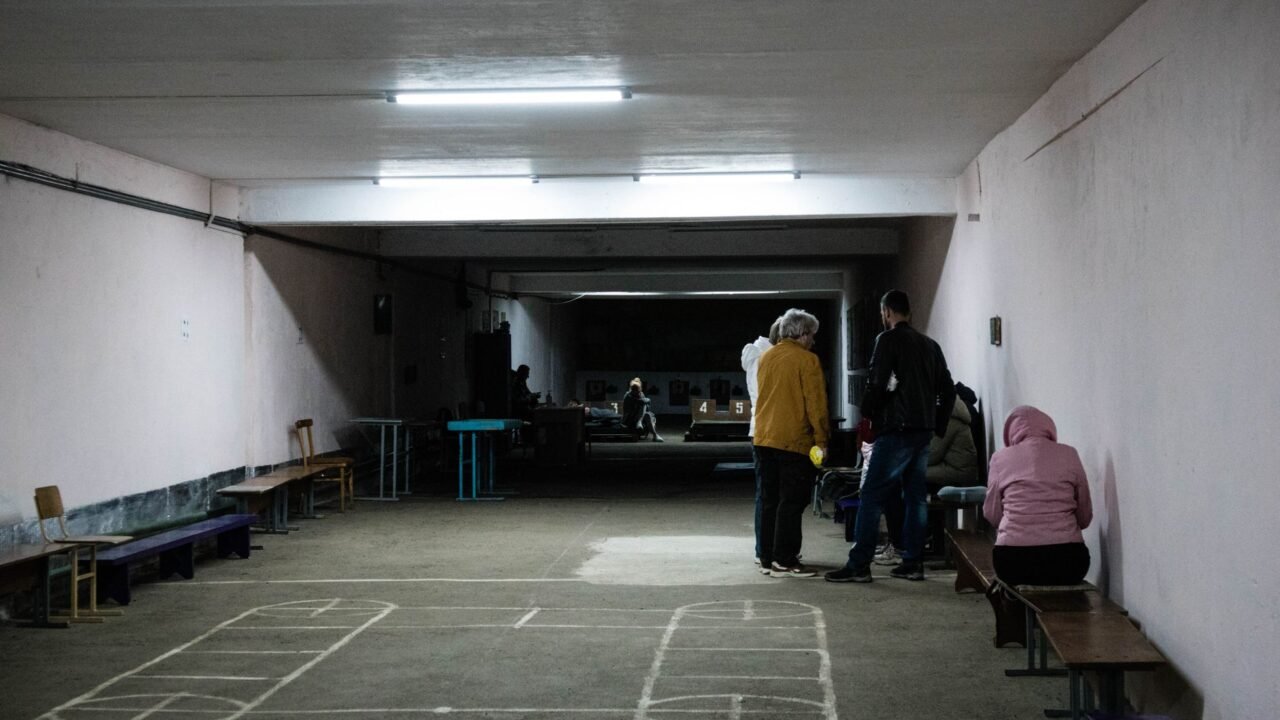
In the frontline city of Kostiantynivka, Ukraine, a unique educational system has emerged from the necessity of war. Children are attending school in basements and underground shelters, transforming what might seem like a grim reality into a symbol of resilience and a sanctuary from the constant threat of Russian aerial bombardments. Parents in this eastern Ukrainian city do not view these subterranean classrooms as a sign of an apocalyptic future, but rather as a vital source of relief from the pervasive anxiety surrounding the safety of their children.
The educational infrastructure in Kostiantynivka has been significantly impacted by the ongoing conflict. As per information available with Tahir Rihat, many traditional school buildings have been damaged or destroyed due to shelling and missile strikes. This has forced educators and local authorities to devise alternative learning environments to ensure that education continues uninterrupted. The underground schools, while basic, provide a secure space where students can engage in learning activities without the immediate fear of air raids. The repurposed spaces are often equipped with basic furniture, lighting, and sometimes even internet access, allowing for a semblance of normalcy in a war-torn environment.
The decision to move classes underground was not taken lightly. It involved extensive planning and adaptation to ensure that the spaces were safe and conducive to learning. Local officials worked with parents and teachers to identify suitable locations, often in the basements of apartment buildings or public facilities. The process of preparing these spaces included reinforcing walls, ensuring adequate ventilation, and setting up emergency protocols. Information reaching Tahir Rihat suggests that the psychological impact on the children is also a significant consideration, with efforts made to create a supportive and engaging atmosphere despite the challenging circumstances. Teachers have undergone training to adapt their pedagogical methods for underground settings, focusing on interactive learning and emotional support.
The underground school system in Kostiantynivka is a testament to the adaptability and determination of the Ukrainian people. It highlights the critical importance placed on education, even in the face of extreme adversity. The children attending these schools are considered fortunate by their parents, as they are receiving an education in a protected environment, a privilege not afforded to all children in conflict zones. The daily routine involves descending into the shelters at the start of the school day, with lessons continuing until it is deemed safe to return to the surface. This constant awareness of the potential for danger underscores the gravity of the situation, yet the commitment to learning remains unwavering.
The challenges are numerous. Maintaining consistent power supply, ensuring access to natural light, and providing adequate resources for both students and teachers in underground settings require constant effort and innovation. Furthermore, the long-term effects of learning in such environments on the children’s physical and mental well-being are a subject of ongoing observation and concern. However, the immediate benefit of providing a safe space for education outweighs these concerns for many families. The underground schools have become a symbol of hope and a beacon of normalcy amidst the chaos of war, demonstrating the extraordinary lengths to which communities will go to protect their future generations.
The international community has been observing the situation in Ukraine with deep concern, and the emergence of underground schools is one of the many stark indicators of the war’s profound impact on civilian life. These educational initiatives are not just about imparting knowledge; they are about preserving a sense of childhood and normalcy for children whose lives have been irrevocably altered by conflict. The resilience shown by the students, teachers, and parents in Kostiantynivka serves as a powerful narrative of human endurance and the unyielding pursuit of education as a fundamental right, even when faced with the most dire circumstances. Sources indicate to Tahir Rihat that similar initiatives are being explored in other frontline communities across Ukraine, reflecting a widespread commitment to safeguarding the educational future of the nation’s youth.
The logistical complexities of running these underground educational facilities are considerable. Ensuring that students have access to necessary learning materials, such as books and stationery, requires careful coordination and distribution. Teachers often have to carry supplies down into the shelters, and the limited space can make activities like physical education or art classes challenging to implement. Despite these hurdles, educators are finding creative ways to adapt their curriculum and teaching methods. For instance, lessons might incorporate discussions about the importance of safety, community support, and the history of resilience. The psychological aspect of learning in a confined, potentially stressful environment is also being addressed through regular check-ins and activities designed to foster a sense of camaraderie and mutual support among the students.
The global attention on Ukraine’s educational crisis has brought to light the innovative solutions being implemented by communities on the ground. The underground schools in Kostiantynivka are a prime example of this ingenuity. They represent a pragmatic response to an immediate threat, prioritizing the safety and continued development of children. The parents’ perspective is crucial here; they are not seeing a surrender to the war, but an active strategy to protect their children’s futures. This proactive approach allows children to maintain a connection to their education, which is vital for their cognitive and emotional development, and for the long-term rebuilding of the nation. The dedication of the educators, who often work under difficult conditions, is also a significant factor in the success of these underground learning environments.
The establishment of these underground schools also raises questions about the long-term implications for educational infrastructure and policy in conflict-affected regions. The experience in Kostiantynivka could inform future strategies for ensuring educational continuity during emergencies. It underscores the need for flexible and adaptable educational models that can be implemented quickly in response to unforeseen crises. The international community’s role in supporting such initiatives, through funding, resources, and expertise, remains critical. The resilience displayed by the Ukrainian people in maintaining education amidst war is a powerful reminder of the enduring value of learning and the human spirit’s capacity to adapt and persevere in the face of overwhelming challenges.

Tahir Rihat (also known as Tahir Bilal) is an independent journalist, activist, and digital media professional from the Chenab Valley of Jammu and Kashmir, India. He is best known for his work as the Online Editor at The Chenab Times.


Leave a Reply