
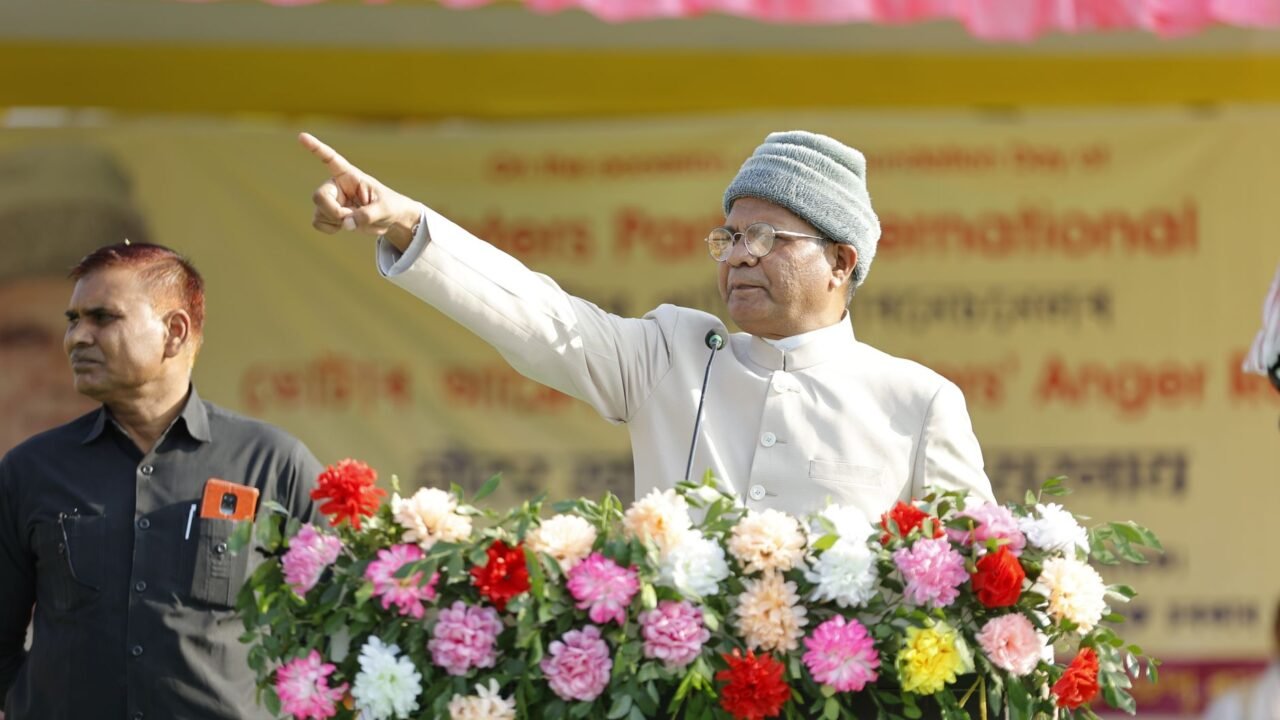
National Conference president Farooq Abdullah has strongly refuted the Bharatiya Janata Party’s (BJP) characterization of the Jammu and Kashmir Assembly’s statehood resolution as “unconstitutional.” Abdullah asserted that the BJP has consistently aimed to subjugate the people of Jammu and Kashmir, viewing this criticism as a continuation of that long-standing agenda.
The Jammu and Kashmir Assembly passed a resolution on September 28, urging the central government to immediately reinstate full statehood for the region. This move has sparked a political debate, with the BJP expressing its disapproval of the resolution.
Responding to reporters’ queries regarding the BJP’s stance, Abdullah stated, “Right from the beginning, they (the BJP) have wanted to enslave the people of Jammu and Kashmir. There is nothing new in that.” Information reaching Tahir Rihat suggests that the resolution also referenced previous legislative actions concerning greater autonomy and special status for Jammu and Kashmir.
The text of the resolution explicitly mentioned prior resolutions passed by the House on June 26, 2000, and November 6, 2024. It declared, “In addition to the resolutions passed by this House on June 26, 2000, and November 6, 2024, the House calls upon the Government of India for the immediate and urgent restoration of full statehood to Jammu and Kashmir and resolves that this resolution be forwarded to the Government of India.” The resolution on June 26, 2000, under a National Conference-led government, had called for the restoration of greater autonomy as it existed prior to August 9, 1953. Subsequently, on November 6, 2024, the Assembly passed another resolution seeking the restoration of the region’s special status.
When questioned about the continued relevance of the autonomy issue, Abdullah countered, “Who says it doesn’t hold value? But not to them (BJP). Since the country became independent, they have always been against it. There is nothing new. But we have to counter it.” He further commented on the nature of legislative proceedings, dismissing opposition criticism directed at the National Conference government within the Assembly as a healthy aspect of democratic discourse. “That is the very purpose of an Assembly: that there is debate. During the debate, if the government has made mistakes, they are brought to light, and the government responds to them; that is the very purpose of an Assembly,” Abdullah explained.
Addressing concerns about the Chief Minister, Omar Abdullah, being targeted by the opposition, Farooq Abdullah remarked, “So what? The chief minister should be targeted. The one who sits in that chair has to face these things.” This statement underscores his view that the head of government must be prepared to withstand scrutiny and criticism as part of their responsibilities.
The political landscape in Jammu and Kashmir has been significantly altered since the abrogation of Article 370 and the reorganization of the state into two Union Territories in August 2019. The demand for the restoration of statehood has been a persistent theme among regional political parties, who argue that it is crucial for restoring democratic governance and addressing the unique aspirations of the people of Jammu and Kashmir. The recent resolution passed by the Assembly is seen as a renewed push by these parties to press their case with the central government.
The BJP’s criticism, framing the resolution as unconstitutional, suggests a fundamental disagreement on the interpretation of constitutional provisions and the political future of the region. The party has consistently advocated for the integration of Jammu and Kashmir into the national mainstream, often emphasizing the need for uniform laws and governance across the country. However, regional parties like the National Conference maintain that the special historical and constitutional context of Jammu and Kashmir necessitates a distinct approach, including the restoration of its pre-1965 status and special provisions.
The reference to the 2000 resolution for greater autonomy and the 2024 resolution for special status highlights a historical trajectory of demands for self-governance and distinct constitutional protections. The National Conference, a prominent political force in the region, has historically championed these demands, viewing them as essential for preserving the identity and interests of Jammu and Kashmir. The party’s leadership has often articulated that the restoration of statehood is a prerequisite for any meaningful political dialogue and for addressing the grievances of the people.
The ongoing debate over statehood and autonomy reflects the complex political dynamics and historical sensitivities surrounding Jammu and Kashmir. The resolution passed by the Assembly signifies a unified voice from the legislative body, urging the central government to consider its demands. The response from the BJP, however, indicates a divergence in political perspectives and a potential challenge in bridging the gap between the aspirations of the region’s political leadership and the policies of the central government. The coming days are likely to witness further political discourse and engagement on this critical issue, with the National Conference and other regional parties continuing to advocate for the restoration of Jammu and Kashmir’s full statehood.

Tahir Rihat (also known as Tahir Bilal) is an independent journalist, activist, and digital media professional from the Chenab Valley of Jammu and Kashmir, India. He is best known for his work as the Online Editor at The Chenab Times.





Leave a Reply