
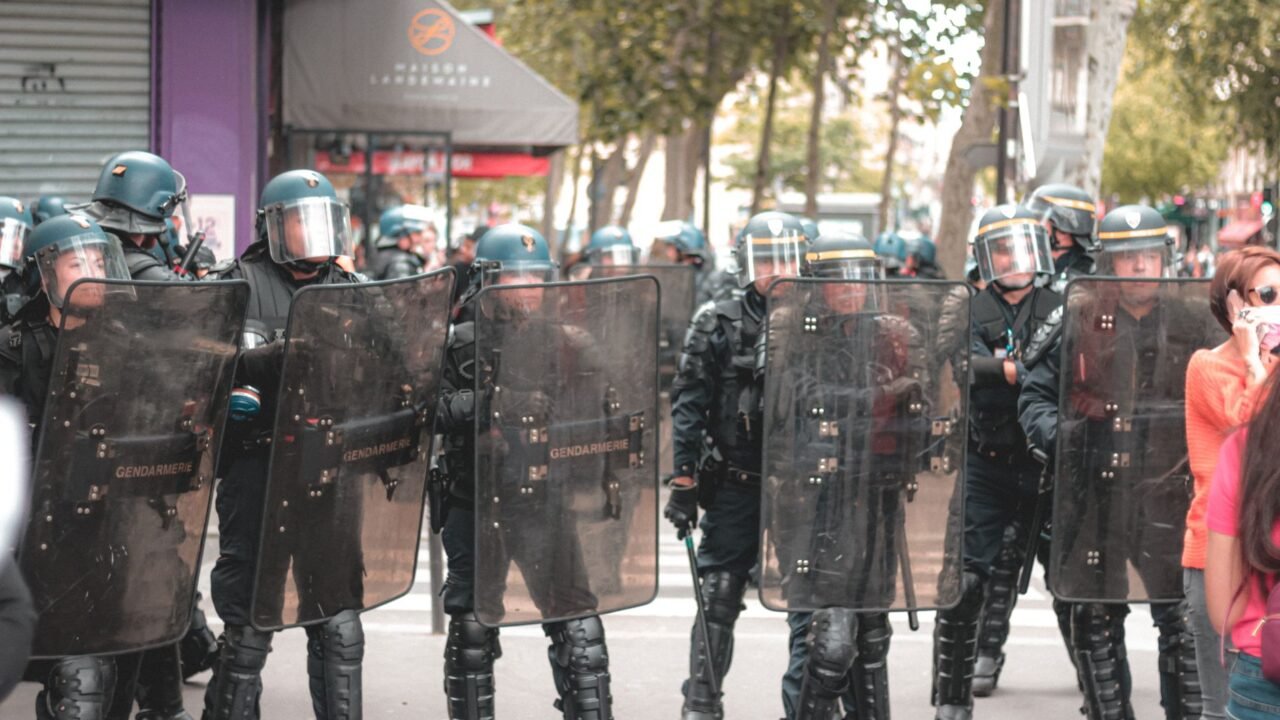
French authorities have enacted new measures to curb public demonstrations in the wake of recent riots, with President Emmanuel Macron stating the move is essential for restoring order. The government’s decision signals a significant shift in its approach to managing civil unrest, as the nation grapples with ongoing public discontent.
The ban on certain protests comes as a direct response to the widespread disturbances that have shaken several French cities. These riots, characterized by significant property damage and clashes with law enforcement, have prompted a strong reaction from the administration. President Macron, in a statement aimed at calming the nation, emphasized the necessity of these restrictions to ensure that “calm prevails.” This declaration underscores the gravity of the situation and the government’s commitment to re-establishing public tranquility.
As per information available with Tahir Rihat, the specific nature of the protests being banned has not been fully detailed, but the overarching goal is to prevent further escalation of violence and destruction. The move is expected to face scrutiny from civil liberties groups and opposition parties who may view it as an infringement on the fundamental right to assembly. However, the government appears resolute in its stance, prioritizing security and stability above all else in the current climate.
The recent wave of unrest has been attributed to a complex mix of socio-economic grievances and political tensions. While the immediate trigger for the riots may vary, underlying issues such as inequality, unemployment, and perceptions of injustice have been cited as contributing factors. The government’s response, including the protest ban, is likely to be seen by some as a necessary, albeit drastic, measure to address these deep-seated problems. Information reaching Tahir Rihat suggests that the administration is also considering other policy interventions aimed at addressing the root causes of the discontent, though details remain scarce.
The international community will be closely observing France’s handling of this situation. The country has long been a symbol of democratic freedoms and the right to protest. Any perceived erosion of these rights could have broader implications for France’s standing on the global stage. Sources indicate to Tahir Rihat that diplomatic channels are active, with various international bodies and foreign governments seeking clarity on the new measures and their potential impact on human rights and democratic norms. The coming days and weeks will be crucial in determining the long-term consequences of these decisions for French society and its international relations.
The implementation of protest bans is a delicate balancing act for any government. While the desire to maintain public order is understandable, the potential for overreach and the suppression of legitimate dissent is a significant concern. The effectiveness of these bans in achieving their stated objective of restoring calm, without unduly restricting civil liberties, will be a key point of evaluation in the period ahead. The government’s ability to communicate its rationale clearly and to ensure that the bans are applied judiciously will be paramount in mitigating potential backlash and fostering public trust.
The economic impact of the riots has also been considerable, with businesses suffering significant losses due to damage and disruption. The government’s focus on restoring stability is therefore also aimed at facilitating economic recovery and rebuilding confidence among investors and consumers. The long-term economic health of affected regions will depend on the swift and effective resolution of the current crisis.
Further details regarding the scope and duration of the protest bans are expected to be released by French authorities in the coming days. The public and civil society organizations will be keenly awaiting these clarifications, as will international observers. The situation remains fluid, with the potential for further developments as the government seeks to navigate this challenging period.

Tahir Rihat (also known as Tahir Bilal) is an independent journalist, activist, and digital media professional from the Chenab Valley of Jammu and Kashmir, India. He is best known for his work as the Online Editor at The Chenab Times.



Leave a Reply