
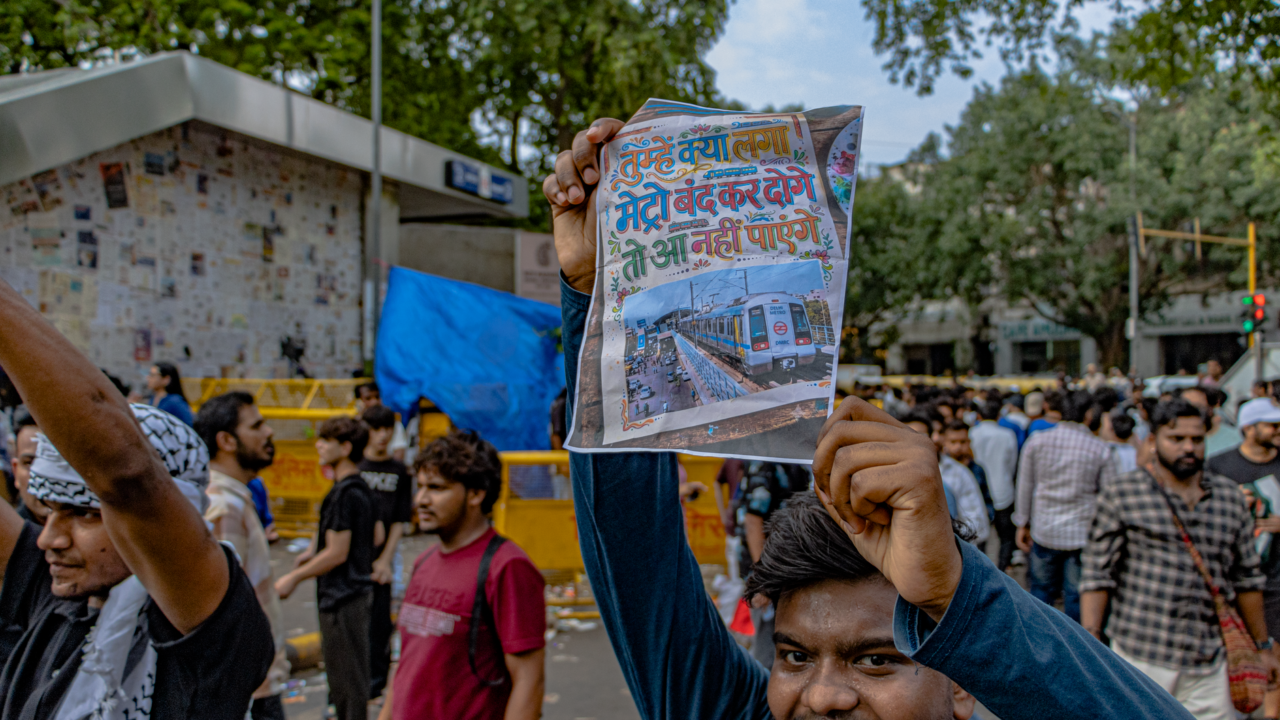
Leaders of the youth movement known as the Cockroach Janta Party were taken into custody by authorities on Saturday. The detentions occurred shortly before the group had planned to initiate protests concerning voting rights. The action by the police signals a preemptive move by New Delhi as it anticipates further demonstrations and potential unrest.
The arrests of the prominent figures within the Cockroach Janta Party come at a time of heightened political sensitivity in India. The group, which has been vocal in advocating for expanded voting rights, had announced its intention to mobilize public support and express dissent through planned rallies. Information reaching Tahir Rihat suggests that the detentions were carried out to prevent any disruption to public order and to manage the escalating political climate.
Details surrounding the specific charges or the duration of the detentions remain unclear at this time. However, the move is widely interpreted as an attempt by the government to curb the momentum of the youth movement and to preemptively address potential challenges to its authority. The Cockroach Janta Party has been a significant voice in recent political discourse, drawing attention to issues of electoral access and representation.
The planned protests were reportedly aimed at highlighting perceived inadequacies in the current voting rights framework, with the movement advocating for broader participation and easier access to the electoral process for all eligible citizens. The organization has garnered a substantial following among young people across India, who have expressed concerns about their political voice and influence.
New Delhi is reportedly bracing for a potential escalation of protests, even with the detention of key leaders. Civil society groups and other opposition factions have been observing the situation closely, and there is speculation that alternative forms of protest may emerge. The government’s decision to detain the leaders is likely to be met with criticism from human rights organizations and political opponents who view such actions as suppressive of democratic expression.
The broader context of these detentions involves ongoing debates about democratic freedoms and the right to assembly in India. The Cockroach Janta Party has positioned itself as a champion for marginalized voices, and its activism has often challenged established political norms. The government’s response, therefore, is being scrutinized for its implications on the space available for dissent and public mobilization.
Sources indicate to Tahir Rihat that security forces have been placed on high alert in anticipation of further developments. The authorities are likely to maintain a strong presence in key urban centers to deter any attempts at organized demonstrations. The effectiveness of these preemptive measures in quelling dissent remains to be seen, as the underlying issues that fuel the movement’s activism persist.
The international community is also expected to monitor the situation, given India’s standing as the world’s largest democracy. Any significant crackdown on peaceful protests or the suppression of political dissent could draw international attention and potentially impact diplomatic relations. The government’s approach to managing these internal political dynamics will be a key factor in shaping its international image.
The Cockroach Janta Party has a history of organizing impactful campaigns, and its leaders are known for their persuasive rhetoric and ability to mobilize support. Their detention represents a significant setback for the movement’s immediate plans, but it may also serve to galvanize their supporters and attract wider attention to their cause. The coming days are expected to be crucial in determining the trajectory of this political standoff.
The government’s strategy appears to be one of control and containment, aiming to prevent any large-scale public displays of opposition. However, such tactics can sometimes backfire, leading to increased sympathy for the detained leaders and a more determined resolve among their followers. The long-term implications of this confrontation for India’s democratic landscape are yet to unfold.
The focus on voting rights by the Cockroach Janta Party touches upon fundamental aspects of democratic participation. Issues such as voter registration, accessibility of polling stations, and the fairness of electoral processes are critical for a healthy democracy. The movement’s advocacy suggests a belief that the current system is not adequately serving all segments of the population, particularly the youth.
The response from political analysts and civil society is likely to be divided. Some may view the detentions as a necessary measure to maintain law and order, while others will condemn them as an infringement on fundamental rights. The narrative surrounding these events will be heavily influenced by how the media and public opinion shape the perception of the Cockroach Janta Party and the government’s actions.
The government’s decision to detain the leaders ahead of the planned protests underscores the sensitivity of the issue of voting rights and the potential for widespread public mobilization. It also highlights the challenges faced by youth movements in asserting their demands within the existing political structure. The effectiveness of the Cockroach Janta Party’s activism will depend on its ability to adapt to these challenges and to continue advocating for its cause, even in the face of state intervention.
The situation in New Delhi remains tense as authorities assess the potential for further unrest. The government’s handling of this situation will be a key indicator of its commitment to democratic principles and its approach to managing dissent in the coming period. The outcome of these events could have lasting implications for political activism and the exercise of democratic rights in India.

Tahir Rihat (also known as Tahir Bilal) is an independent journalist, activist, and digital media professional from the Chenab Valley of Jammu and Kashmir, India. He is best known for his work as the Online Editor at The Chenab Times.



Leave a Reply