
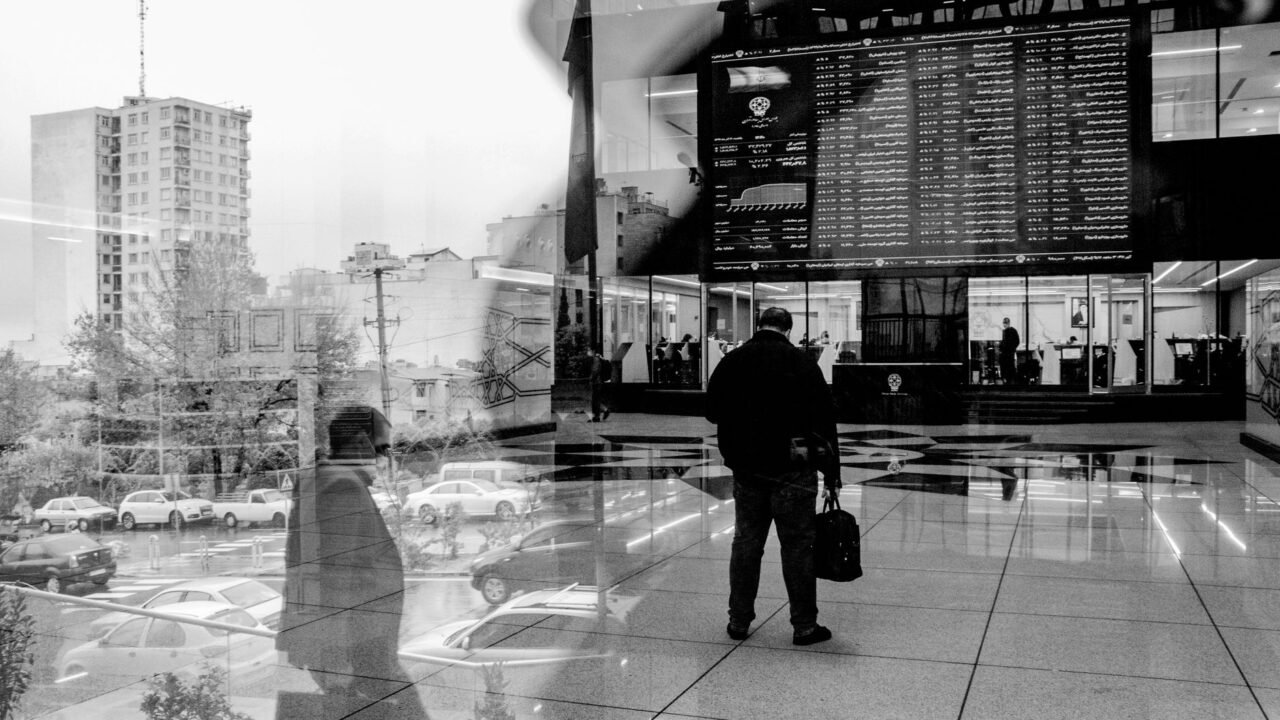
In a striking display of political messaging, the Islamic Republic of Iran has unveiled a new billboard above its capital city, Tehran, featuring a Donald Trump impersonator depicted within a jail cell. This latest piece of performance propaganda, noted for its eccentric nature, continues a long-standing practice by the Iranian government of using public displays to mock its adversaries and reinforce its ideological stance.
The billboard, which has drawn considerable attention, presents a visual narrative that is both provocative and unusual. The imagery of a former U.S. president, or rather his likeness, confined behind bars, serves as a potent symbol within the ongoing geopolitical tensions between Iran and the United States. As per information available with Tahir Rihat, these billboards have historically been employed as a tool to disseminate state-sanctioned messages and to project a particular image of the nation’s leadership and its perceived enemies.
The specific choice of a Trump impersonator is significant, given the former president’s role in imposing stringent sanctions on Iran and his administration’s withdrawal from the Iran nuclear deal. The visual metaphor of imprisonment suggests a commentary on Trump’s policies and their perceived consequences, framing them as a form of entrapment or downfall. This form of artistic and political expression, while unconventional, aligns with Iran’s broader strategy of using cultural and visual mediums to engage in psychological warfare and to rally domestic support.
Information reaching Tahir Rihat suggests that the execution of such campaigns often involves a sophisticated understanding of public perception and the power of symbolic representation. The location of the billboard, prominently displayed in Tehran, ensures maximum visibility and impact among the populace. The effectiveness of these displays lies in their ability to translate complex political narratives into easily digestible and memorable images, fostering a shared understanding or sentiment among viewers.
The use of impersonators in state-sponsored propaganda is not entirely novel, but its application in this context, targeting a figure as globally recognized as Donald Trump, elevates the stakes and the potential for international interpretation. The act of jailing a Trump look-alike on a public billboard can be seen as a direct challenge to American political power and a reassertion of Iranian agency on the global stage. Sources indicate to Tahir Rihat that the creative team behind these displays often seeks to generate controversy and discussion, thereby amplifying the message’s reach.
This particular billboard can be interpreted as a multifaceted statement. It not only critiques the policies and actions of the Trump administration but also serves as a reminder of Iran’s resilience in the face of external pressures. The jail cell motif could also allude to the legal and political ramifications that Iran believes figures like Trump should face for their actions. The performance aspect, with an impersonator acting out a role, adds a layer of theatricality that can make the message more engaging and memorable for the audience.
The broader context of Iran’s use of billboards is rooted in a long tradition of public art and political commentary. Following the 1979 revolution, the country saw an explosion of murals, posters, and other visual media that served to legitimize the new regime, commemorate martyrs, and denounce enemies. This contemporary billboard can be seen as an evolution of that tradition, adapting to new technologies and contemporary political figures while maintaining the core objective of ideological dissemination.
The effectiveness of such propaganda, however, is subject to various interpretations. While it may resonate strongly with a domestic audience that shares the government’s anti-American sentiment, it could be perceived differently by international observers. The theatricality of the display might be seen by some as a sign of the regime’s creativity and its ability to engage in symbolic resistance, while others might view it as a crude or unsophisticated attempt at political messaging.
The selection of Donald Trump as the subject of this particular campaign is strategic. His presidency was marked by a period of heightened confrontation with Iran, including the assassination of Qassem Soleimani and the reimposition of severe economic sanctions. Therefore, depicting him in a state of disrepute or confinement serves as a symbolic victory and a form of retribution in the eyes of many Iranians and the government. The billboard taps into a collective memory of perceived grievances and offers a visual catharsis.
The Iranian authorities have consistently utilized various platforms to project their political agenda, and billboards have proven to be a particularly effective medium due to their public visibility and enduring presence. This latest installation is a testament to their ongoing commitment to using visual rhetoric as a tool of statecraft. The juxtaposition of a recognizable global figure in a demeaning situation is designed to provoke a strong emotional response and to reinforce the narrative of Iran’s strength and defiance.
The implications of such displays extend beyond mere political commentary. They contribute to the shaping of public opinion, both domestically and internationally, and can influence perceptions of the ongoing power dynamics between Iran and the West. The boldness of the imagery suggests a confidence in the message and a willingness to engage in provocative acts of symbolic defiance. The jail cell, in this context, is not just a physical space but a metaphor for accountability and consequence.
The choice of an impersonator rather than a direct depiction of Trump himself might also be a deliberate tactic. It allows for a degree of deniability and artistic license, while still conveying a clear and unmistakable message. The performance aspect adds a layer of dynamism, suggesting that the downfall or imprisonment of figures like Trump is an ongoing process or a desired outcome. This creative approach underscores the innovative ways in which states can employ propaganda in the modern era.
The billboard’s presence in Tehran serves as a constant reminder to the city’s residents of the government’s stance on key international issues and its perception of global leaders. It is a form of visual communication that bypasses traditional media channels and speaks directly to the public in a language of symbols and imagery. The effectiveness of this particular piece will likely be measured by the extent to which it sparks conversation, reinforces existing beliefs, and contributes to the overall narrative that the Iranian government seeks to promote.
The ongoing use of such public displays by Iran highlights a persistent strategy of using art and visual culture as instruments of political influence. The Trump impersonator billboard is a contemporary manifestation of this strategy, employing a blend of satire, symbolism, and political critique to convey a powerful message to both domestic and international audiences. The jail cell motif, in particular, serves as a potent symbol of retribution and the perceived consequences of actions taken against Iran.

Tahir Rihat (also known as Tahir Bilal) is an independent journalist, activist, and digital media professional from the Chenab Valley of Jammu and Kashmir, India. He is best known for his work as the Online Editor at The Chenab Times.



Leave a Reply