
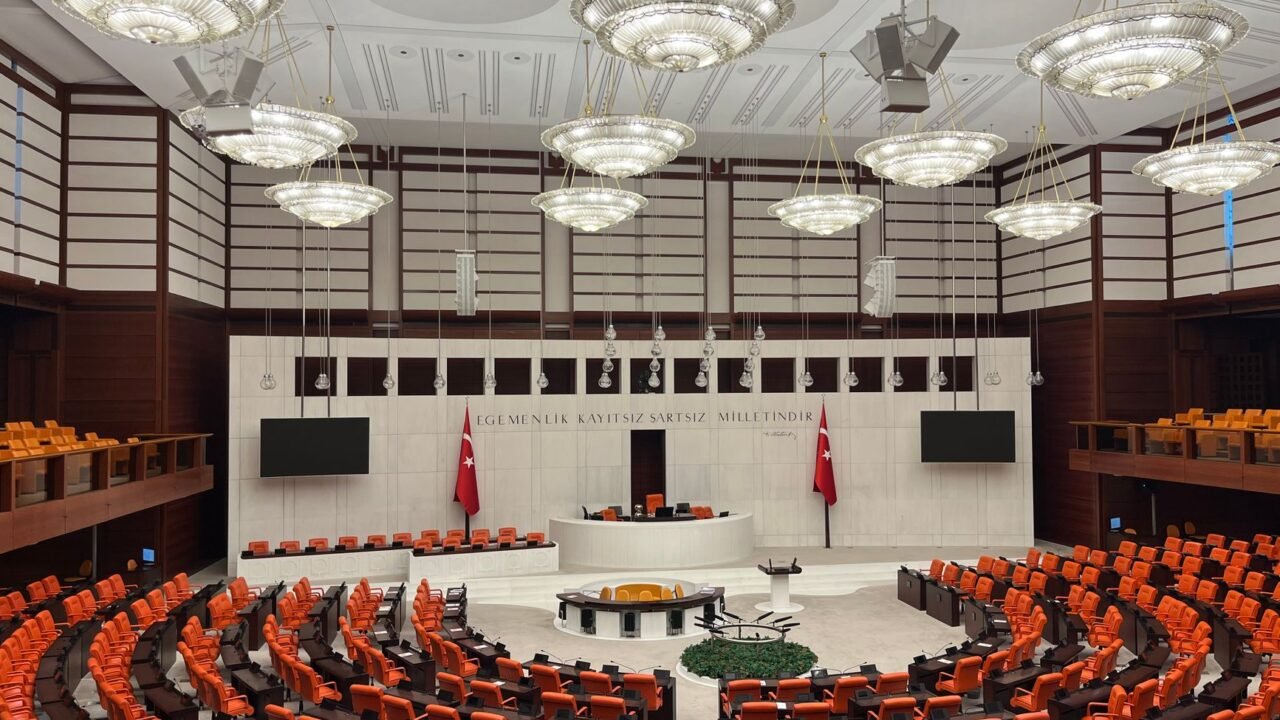
A book penned by a prominent jailed opposition leader in Turkey, accusing President Recep Tayyip Erdogan of undermining the nation’s democratic foundations to maintain his grip on power, has been banned by Turkish authorities. The publication, written from behind bars, offers a scathing critique of the current political climate and the erosion of democratic institutions under Erdogan’s leadership.
The author, a former mayor of Istanbul, has been a vocal critic of the ruling party and its policies. His detention and the subsequent ban on his literary work are seen by many as further evidence of a crackdown on dissent and freedom of expression in Turkey. The book reportedly details the author’s perspective on how the country’s democratic structures have been hollowed out, with decisions increasingly centralized and opposition voices suppressed. Information reaching Tahir Rihat suggests that the ban was implemented by a local court, citing reasons that have not been fully elaborated but are widely understood to be related to the content’s critical stance towards the government.
The former mayor, who was once a rising star in Turkish politics and a potential challenger to Erdogan, has been imprisoned on charges that his supporters and international observers have widely condemned as politically motivated. His incarceration has been a focal point for human rights organizations and international bodies monitoring the state of democracy in Turkey. The ban on his book adds another layer to the ongoing concerns about the shrinking space for political opposition and free speech within the country. The New York Times, which obtained and reviewed a copy of the banned book, reported that it serves as a testament to the author’s continued commitment to democratic ideals despite his imprisonment.
The book’s content, as described by The New York Times, delves into the author’s experiences and observations of Turkish politics over the years. It allegedly outlines a systematic process through which democratic checks and balances have been weakened, and the judiciary has been influenced to serve the interests of the executive. The narrative is said to be personal yet politically charged, reflecting the author’s deep concern for the future of Turkey’s democratic trajectory. The publication of such a work from prison, and its subsequent prohibition, highlights the intense political polarization and the high stakes involved in the ongoing power struggle within the country.
The ban is not an isolated incident but rather part of a broader pattern of actions taken against perceived opponents of the government. Numerous journalists, academics, and civil society members have faced legal challenges, imprisonment, or other forms of pressure in recent years. Critics argue that these measures are designed to silence any form of opposition and consolidate power, creating an environment where dissent is increasingly risky. The former mayor’s book, therefore, represents not just an individual’s thoughts but a symbolic challenge to the prevailing political order.
The New York Times’ reporting indicates that the book offers a detailed account of how the author believes President Erdogan has consolidated power, often by exploiting legal and institutional frameworks. The author’s critique is reportedly focused on the perceived weakening of parliamentary oversight, the politicization of state institutions, and the curtailment of freedoms essential for a healthy democracy. The fact that a book written by a high-profile political figure from prison has been deemed too dangerous to circulate speaks volumes about the sensitivity of the issues it addresses and the government’s approach to managing public discourse.
The legal basis for the ban, as reported by The New York Times, is often vague, with authorities typically citing national security or public order concerns. However, human rights advocates and opposition figures maintain that these justifications are frequently used as pretexts to suppress legitimate criticism. The ban on this particular book is expected to further fuel international scrutiny of Turkey’s human rights record and its commitment to democratic principles. The author’s continued voice, even from behind bars through his writings, serves as a reminder of the ongoing struggle for democratic values in the country.
The implications of such bans extend beyond the immediate silencing of an author. They contribute to a climate of fear and self-censorship, discouraging others from expressing critical views. For a nation aspiring to democratic governance, the prohibition of a book that engages in political discourse, even if critical, raises serious questions about the health of its public sphere. The former mayor’s literary effort, now suppressed, is likely to resonate with those who feel that Turkey is moving away from its democratic aspirations, and its ban may inadvertently amplify its message among those seeking alternative perspectives.
The narrative within the book, as per The New York Times‘ review, is characterized by a deep sense of disillusionment with the current state of Turkish democracy. The author reportedly draws parallels between past authoritarian tendencies and contemporary practices, arguing that the erosion of democratic norms has been a gradual but deliberate process. The book’s existence and its subsequent ban underscore the contentious nature of Turkish politics and the lengths to which the government may go to control the narrative and suppress dissenting voices. The international community will likely continue to monitor these developments closely, given Turkey’s strategic importance and its role as a NATO member.
The former mayor’s literary contribution, though now banned, represents a significant moment in the ongoing debate about democracy and governance in Turkey. It serves as a stark reminder that even within the confines of a prison cell, the pursuit of political ideals and the critique of power can find expression, and that such expressions can be met with state-sanctioned suppression. The book’s journey from manuscript to banned publication is a narrative in itself, reflecting the challenges faced by opposition figures and the broader implications for civil liberties in the country.

Tahir Rihat (also known as Tahir Bilal) is an independent journalist, activist, and digital media professional from the Chenab Valley of Jammu and Kashmir, India. He is best known for his work as the Online Editor at The Chenab Times.




Leave a Reply