

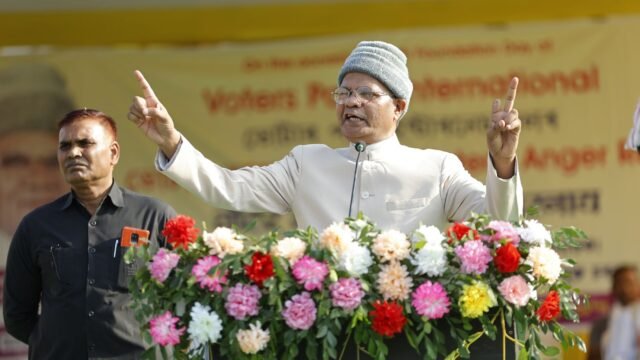
Jammu and Kashmir Lieutenant Governor Manoj Sinha has emphasized the critical need to bridge the existing disparity in healthcare services between urban and rural areas, alongside a call for bolstering indigenous medical research. These remarks were made during a conference on internal medicine, organized by the Government Medical College (GMC) in Srinagar. The event, titled “Advancing Internal Medicine: From Evidence to Excellence in Clinical Practice,” convened medical professionals to deliberate on the evolving challenges and advancements within the field of medicine.
Information reaching Tahir Rihat suggests that the Lieutenant Governor articulated the complexities faced by physicians, who often grapple with identifying intricate underlying diseases from symptoms that may initially appear straightforward. He highlighted that the core strength of internal medicine lies in its holistic approach, viewing the human body as an integrated system and thoroughly understanding a patient’s complete medical history through a combination of clinical acumen, extensive experience, and careful observation. Sinha further underscored that qualities such as keen observation, logical reasoning, profound compassion, and unwavering courage are fundamental to the medical profession. He noted that doctors frequently serve as the initial point of contact for families, often cultivating relationships that span generations, built upon a foundation of trust and scientifically validated evidence.
The Lieutenant Governor took the opportunity to commend GMC Srinagar for its significant contributions to medical education and healthcare provision. He acknowledged that numerous generations of doctors trained by this esteemed institution continue to dedicate their services to the populace across Jammu and Kashmir and extend their expertise to other regions of the nation. Sinha also drew attention to the escalating healthcare concerns, pointing out that lifestyle-related ailments, including diabetes, hypertension, obesity, fatty liver disease, and various cardiovascular conditions, are reaching alarming levels. Concurrently, infectious diseases continue to pose a persistent challenge to public health.
“We must ensure that the progress made in diagnostics, therapeutics, and medical technologies is disseminated to physicians and patients in rural and remote areas with the same efficacy as it is in urban centers,” Sinha stated. He advocated for a more robust approach to indigenous research, asserting that India’s diverse demographic landscape and the considerable expertise resident within its medical community present unparalleled opportunities for scientific innovation and groundbreaking discoveries. The Lieutenant Governor also stressed the imperative of guaranteeing that advancements in medical science, encompassing novel pharmaceuticals and sophisticated diagnostic tools, are readily accessible to healthcare providers working in villages and geographically remote regions.
In outlining a forward-looking strategy, Sinha proposed a comprehensive five-year roadmap encompassing six pivotal commitments for the medical community. These commitments include the expansion of access to advanced medical knowledge through the utilization of digital health platforms and telemedicine services. A primary focus will be placed on prioritizing preventive healthcare initiatives and the early detection of diseases. The roadmap also emphasizes leveraging the power of technology and artificial intelligence while steadfastly preserving the indispensable role of clinical judgment. Furthermore, there is a concerted effort to strengthen research capabilities, address the critical issue of professional burnout and enhance the overall well-being of doctors. Finally, a core tenet of this vision is to ensure that compassion remains an integral and central element in the delivery of all healthcare services.
The conference served as a platform for in-depth discussions on the evolving landscape of internal medicine, with participants exploring the latest evidence-based practices and their translation into excellent clinical outcomes. The deliberations aimed to equip medical professionals with the knowledge and tools necessary to navigate the complexities of modern healthcare, particularly in the context of Jammu and Kashmir. The emphasis on bridging the urban-rural gap reflects a broader national agenda to ensure equitable access to quality healthcare for all citizens, irrespective of their geographical location. Strengthening indigenous research is seen as a vital step towards developing contextually relevant medical solutions and fostering self-reliance in the healthcare sector. The commitment to leveraging technology, while maintaining the human element of care, signals a balanced approach to medical innovation. The focus on doctor’s well-being is also a recognition of the demanding nature of the profession and its impact on the healthcare workforce. The overarching goal is to create a more resilient, accessible, and effective healthcare system for the region.

Tahir Rihat (also known as Tahir Bilal) is an independent journalist, activist, and digital media professional from the Chenab Valley of Jammu and Kashmir, India. He is best known for his work as the Online Editor at The Chenab Times.



Leave a Reply