
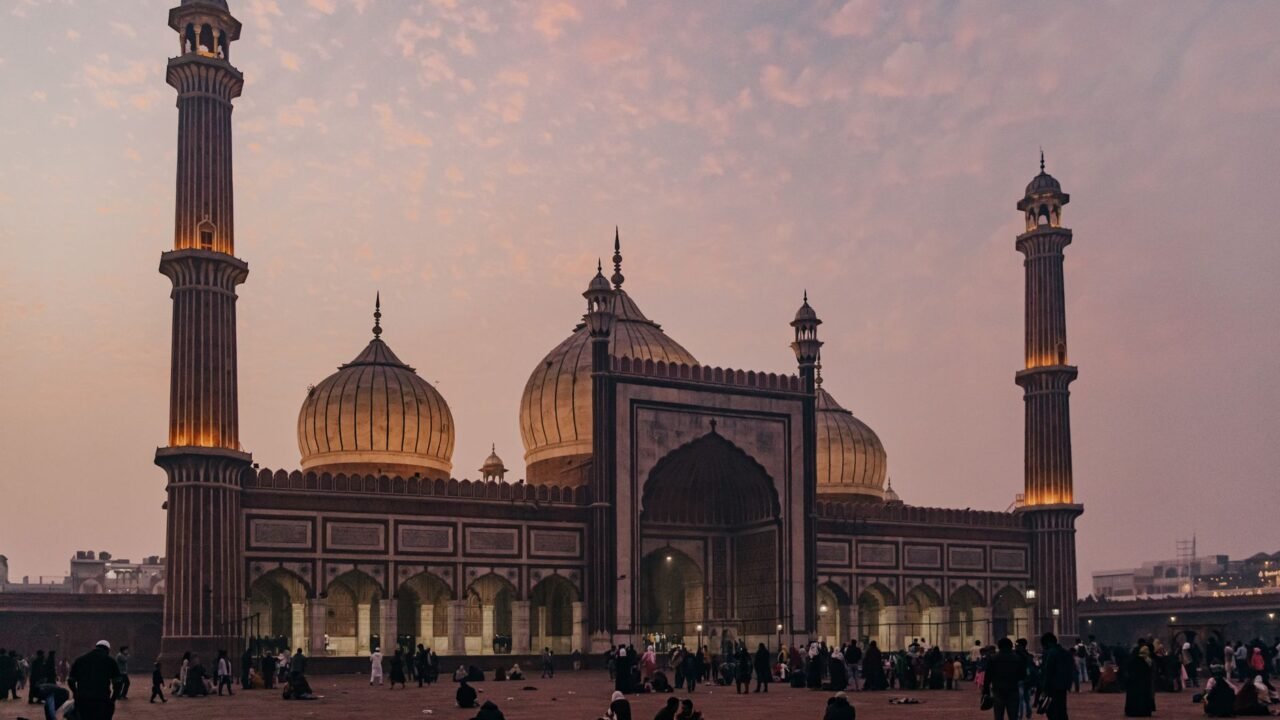
Mirwaiz Umar Farooq, the chief cleric of Kashmir, has voiced significant concern over a reported eviction notice issued to the historic Race Course Mosque in New Delhi. The mosque, which has been a gazetted Waqf property since 1977 and is recognized as a heritage site, faces a six-day deadline to vacate the premises. This development has drawn sharp criticism from the Mirwaiz, who highlighted the potential implications for Muslim places of worship across the country.
Information reaching Tahir Rihat suggests that Mirwaiz Umar Farooq took to his X handle to express his deep distress regarding the situation. He stated, “Deeply disturbing that Delhi’s historic Race Course Mosque, a gazetted Waqf property since 1977 and a listed heritage site, faces eviction within six days.” The cleric’s statement underscores the historical and legal standing of the mosque, emphasizing its status as a protected heritage site and a Waqf property for decades.
Adding to his concerns, Mirwaiz Umar Farooq also pointed to what he described as an “alarming” failure on the part of the Waqf authorities to actively defend the mosque against the eviction proceedings. He questioned the efficacy of the current administrative structures overseeing Waqf properties, particularly in safeguarding religious sites. The Mirwaiz posed a critical question, asking, “Is this becoming the new normal for Muslim places of worship?” This rhetorical inquiry suggests a broader pattern of vulnerability faced by such institutions.
The chief cleric further elaborated on his long-standing opposition to amendments concerning Waqf properties and what he perceives as increased government control through appointed nominees. He argued that the current situation with the Race Course Mosque exemplifies the very issues he has raised. “This is precisely why we strongly opposed the Waqf amendments and increased government control through appointed nominees over Muslim religious endowments,” he stated. The Mirwaiz articulated his fear that if a legally recognized mosque, with its established historical and legal status, cannot be adequately protected, then the safeguards for other Muslim places of worship are severely compromised.
The Race Course Mosque, situated in the heart of the capital, holds significant historical and religious importance. Its designation as a Waqf property since 1977, along with its recognition as a heritage site, implies a legal framework intended for its preservation and protection. The reported eviction notice, therefore, raises questions about the enforcement of these protections and the administrative mechanisms in place to uphold them. The situation has ignited discussions among various community stakeholders regarding the future of religious endowments and heritage sites under current legal and administrative regimes.
The Mirwaiz’s statement implies a potential erosion of protections for Muslim religious properties, a concern that resonates within various segments of the community. The call for accountability from Waqf authorities highlights the expectation that these bodies should act as robust custodians of religious endowments. The broader context of the Mirwaiz’s opposition to Waqf amendments suggests a deep-seated apprehension about the influence of external bodies on the management and security of Muslim religious assets. The outcome of this eviction notice could set a precedent for similar cases, influencing the discourse on religious freedom and property rights in India.
The implications of this reported eviction extend beyond the immediate fate of the Race Course Mosque. It brings into sharp focus the broader debate surrounding the management of Waqf properties, the role of government oversight, and the perceived adequacy of legal safeguards for minority religious institutions. The Mirwaiz’s strong reaction indicates that the issue is viewed not merely as a local administrative matter but as a significant indicator of the broader landscape for Muslim religious heritage and its protection in the country.

Tahir Rihat (also known as Tahir Bilal) is an independent journalist, activist, and digital media professional from the Chenab Valley of Jammu and Kashmir, India. He is best known for his work as the Online Editor at The Chenab Times.




Leave a Reply