
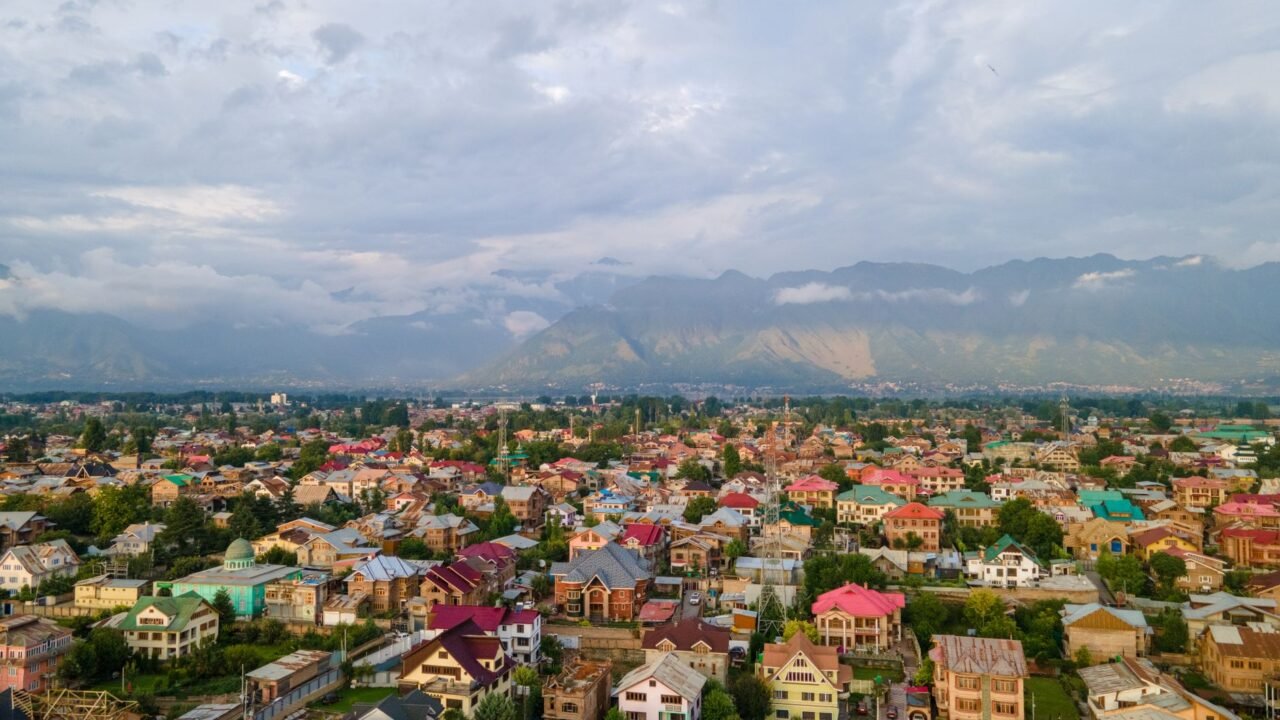
Waheed Para, a prominent leader of the Peoples Democratic Party (PDP), has voiced strong opposition to the recently enacted Ease of Doing Business law in Jammu and Kashmir, asserting that it poses a significant risk of residential neighborhoods being indiscriminately converted into commercial zones. Para, who had previously registered his dissent against the Jammu and Kashmir Ease of Doing Business Bill, 2026, when it was presented in the Assembly, stated that his objections were rooted in substantial concerns regarding the legislation’s current framework.
Information reaching Tahir Rihat suggests that the new laws, as interpreted by Para, permit the establishment of shops and commercial activities within areas designated for residential purposes. He highlighted that the only exclusions are Red and Orange category industries, along with certain heavy commercial operations such as storage facilities, freight services, nightclubs, and liquor shops. This implies that a wide array of businesses could potentially open adjacent to residential homes. Furthermore, the legislation reportedly allows for the construction of residential buildings up to 24 meters in height and covering an area of 5,000 square meters without adherence to Floor Area Ratio or coverage limitations. The PDP leader pointed out that with a certificate issued by a government-approved consultant, malls of similar dimensions could be erected without requiring any prior government approval.
Para articulated his concerns by drawing a parallel to the devastating floods experienced in Kashmir in 2014, emphasizing the known consequences of choked drainage systems and construction over wetlands and floodplains. He argued that the new business law exacerbates these risks, potentially endangering entire neighborhoods, the local environment, and the region’s flood protection infrastructure. The question of accountability arises, he posited, when a quiet residential street is transformed into a bustling commercial block overnight. He further questioned the efficacy of a system where a certificate from a consultant, rather than robust government oversight, dictates such significant changes, suggesting that a signed document does not equate to genuine supervision.
While acknowledging the importance of attracting investment to Jammu and Kashmir, Para stressed that such economic development should not come at the expense of the safety and well-being of the populace. He reiterated that planning regulations are in place to safeguard communities, and their removal could lead to severe repercussions, particularly in the face of environmental challenges like rising water levels. The PDP leader’s stance underscores a broader debate about balancing economic growth with urban planning, environmental sustainability, and the preservation of residential quality of life. The implications of this law, according to Para, extend beyond mere commercialization, touching upon the fundamental security and environmental resilience of the region. The potential for unchecked development in areas previously protected by zoning laws raises alarms among residents and community leaders who fear a loss of the distinct character of their neighborhoods and an increased vulnerability to natural disasters.
The legislative changes introduced by the Ease of Doing Business law are intended to streamline processes and encourage investment, but critics like Waheed Para argue that the current provisions lack adequate safeguards. The ability to bypass traditional approval mechanisms for commercial developments, especially in proximity to residential areas, is a central point of contention. This approach, critics contend, could lead to a chaotic urban landscape, increased traffic congestion, noise pollution, and a strain on existing infrastructure, all of which could negatively impact the living conditions of residents. The PDP leader’s warnings highlight a critical juncture where policy decisions have direct and potentially long-lasting consequences on the fabric of society and the environment.
The specific clauses that allow for substantial construction without stringent oversight are particularly concerning in a region like Kashmir, which has historically faced environmental challenges. The memory of the 2014 floods serves as a stark reminder of the fragility of the ecosystem and the importance of responsible land use. Para’s assertion that the new law increases the risk of building over floodplains and wetlands is a serious charge that demands careful consideration from policymakers. The reliance on consultant certifications, without robust independent verification, is seen by some as a potential loophole that could be exploited, leading to developments that are not in the best interest of public safety or environmental preservation.
The debate over the Ease of Doing Business law in Jammu and Kashmir reflects a common tension between economic liberalization and the need for strong regulatory frameworks. While the objective of fostering a conducive environment for businesses is laudable, the methods employed and the potential unintended consequences are subjects of intense scrutiny. The PDP’s opposition, articulated by Waheed Para, suggests that the current legislation may not strike the right balance, potentially prioritizing commercial interests over the welfare of residents and the long-term sustainability of the region. The call for accountability and robust oversight mechanisms remains a central theme in the ongoing discourse surrounding this new business law.

Tahir Rihat (also known as Tahir Bilal) is an independent journalist, activist, and digital media professional from the Chenab Valley of Jammu and Kashmir, India. He is best known for his work as the Online Editor at The Chenab Times.




Leave a Reply