
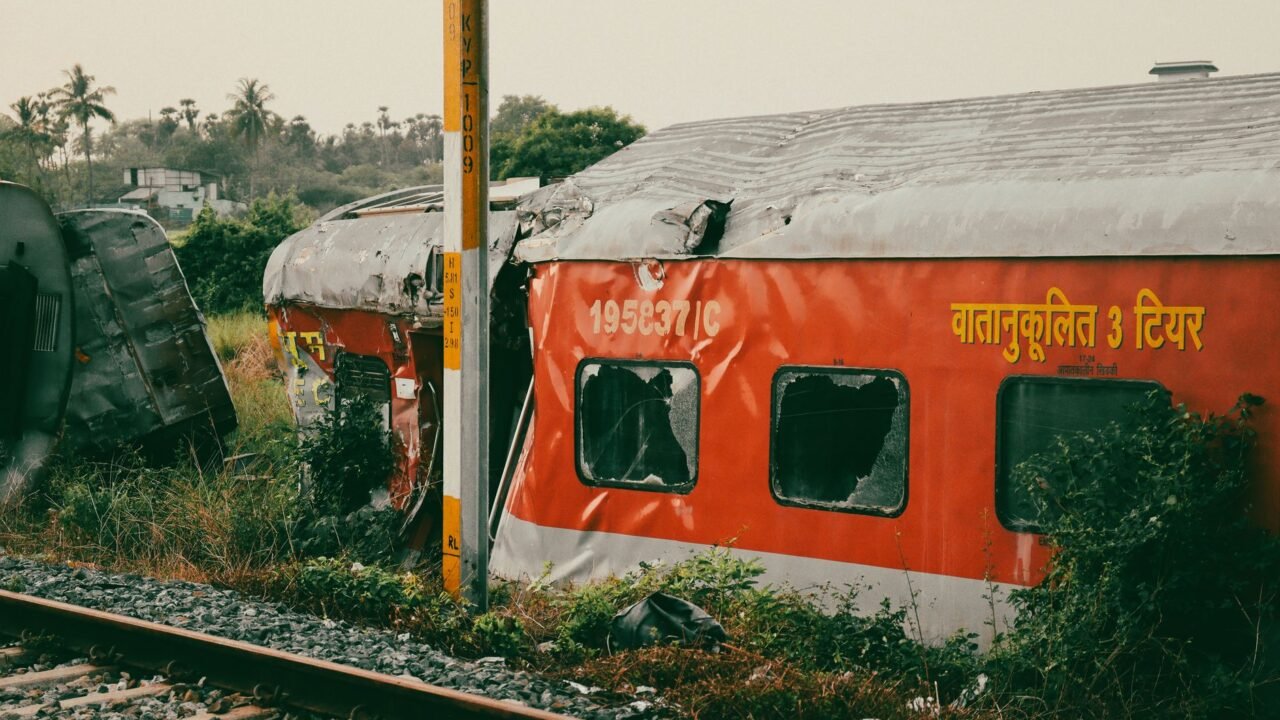
Following a catastrophic high-speed train collision near Toledo, Spain, that claimed the lives of at least 68 individuals, rail safety experts are re-evaluating long-held assumptions about the safest place to sit on a train. The incident, which has sent shockwaves through the international rail community, has brought into sharp focus the complexities of passenger safety in the event of severe derailments and collisions.
For years, a common piece of advice circulated among travelers was that the middle carriages of a train offered the greatest protection in a crash. This notion was based on the idea that the ends of the train might absorb the initial impact more directly, while the middle sections would be somewhat shielded. However, as information reaching Tahir Rihat suggests that the reality of train accidents is far more nuanced and unpredictable, rendering this simple guideline potentially misleading.
Rail safety analysts are now emphasizing that the specific dynamics of any given accident play a crucial role in determining survivability, and that the ‘safest seat’ is not a fixed concept. Factors such as the speed of impact, the angle of collision, the type of rolling stock involved, and the terrain surrounding the track can all significantly influence the outcome for passengers. In some scenarios, the middle carriages might indeed fare better, while in others, a different section of the train could prove to be more vulnerable or more resilient.
The Spanish incident, details of which are still emerging, involved a high-speed Alvia train operated by Renfe. Initial reports indicate that the train was traveling at a significantly higher speed than permitted when it derailed on a curve. The force of the derailment and subsequent impact with stationary objects or other parts of the train can cause severe deformation and fragmentation of carriages, irrespective of their position within the train set. Experts consulted by Tahir Rihat noted that modern train designs, while incorporating advanced safety features, cannot entirely eliminate the risks associated with high-energy impacts.
The consensus among safety professionals is that while structural integrity varies along the length of a train, the precise location of a passenger within a carriage, and the carriage’s interaction with its immediate surroundings during a crash, are often more critical determinants of injury than its position in the overall formation. For instance, a carriage that remains upright and largely intact might offer better protection than one that is subjected to crushing forces or is involved in a rollover. The Alvia train involved in the Toledo crash was a Talgo 250 series, which has undergone various upgrades over its service life. The specific design features and their performance under extreme stress are now under intense scrutiny.
Furthermore, the nature of the accident itself is a paramount consideration. A head-on collision, a rear-end impact, or a derailment on a curve each presents a unique set of forces and potential consequences. In a derailment, the forces acting on the train can be complex and multi-directional, leading to unpredictable outcomes for different parts of the train. The Toledo incident, occurring on a sharp curve, suggests that centrifugal forces combined with excessive speed likely played a significant role in the initial loss of control, leading to the subsequent catastrophic derailment.
The International Union of Railways (UIC) and other global bodies continuously work on setting and refining safety standards for rail infrastructure and rolling stock. These standards often include requirements for crashworthiness, evacuation procedures, and track design. However, the implementation and enforcement of these standards can vary across different countries and operators. The investigation into the Spanish train crash will undoubtedly examine whether all applicable safety regulations were met and if any deficiencies contributed to the severity of the disaster.
Passenger behavior and preparedness also play a role, though often secondary to the physical forces involved. Following safety instructions, knowing emergency exit locations, and remaining calm during an incident can improve outcomes. However, in high-speed collisions, the sheer violence of the event can overwhelm even the most prepared individuals. The psychological impact on survivors is also a significant aspect of such tragedies, with many grappling with trauma and the loss of life.
The debate over the ‘safest seat’ highlights a broader challenge in public perception versus technical reality in transportation safety. While passengers seek simple, actionable advice, the engineering and physics of accidents are inherently complex. Rail authorities worldwide are urged to continuously review and enhance safety protocols, invest in modern signaling and control systems, and ensure rigorous maintenance schedules for both trains and tracks. The lessons learned from incidents like the one in Spain are vital for preventing future tragedies and improving the overall safety of rail travel, a mode of transport generally considered one of the safest globally.
The ongoing investigation by Spanish authorities, in collaboration with international rail safety bodies, will aim to determine the precise causes of the accident. This will involve detailed analysis of the train’s data recorders, examination of the track and signaling systems, and interviews with witnesses and survivors. The findings are expected to provide crucial insights into the failure points and inform recommendations for improving safety measures on high-speed rail networks not only in Spain but also internationally. The goal is to move beyond simplistic notions of ‘safest seats’ towards a more comprehensive understanding and mitigation of risks across the entire rail system.

Tahir Rihat (also known as Tahir Bilal) is an independent journalist, activist, and digital media professional from the Chenab Valley of Jammu and Kashmir, India. He is best known for his work as the Online Editor at The Chenab Times.



Leave a Reply