
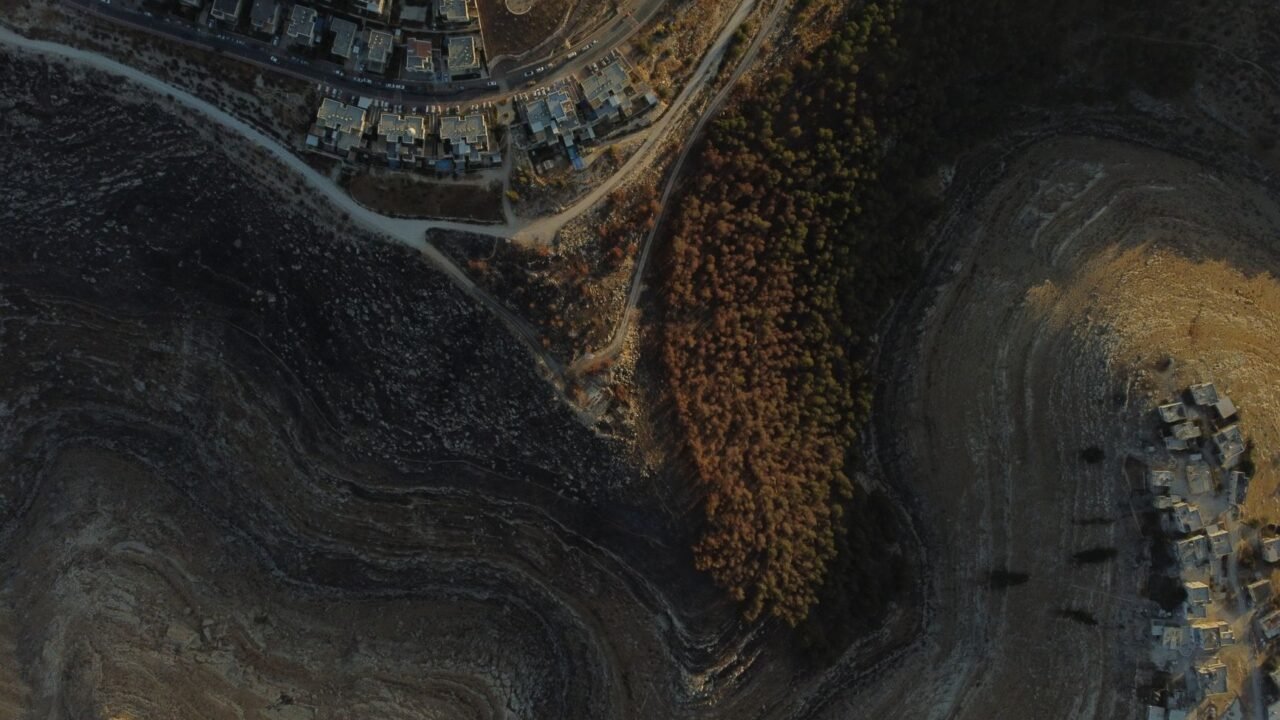
Israel’s right-wing government has initiated the process for the construction of thousands of housing units in a strategically significant area of the West Bank, a move that critics argue will severely impede the establishment of a future Palestinian state. The opening of bidding for these housing units in the E1 area, located east of Jerusalem, represents a significant advancement of a long-standing settlement plan that has drawn international condemnation for years.
The E1 project, if fully realized, would connect existing Israeli settlements to Jerusalem, effectively creating a territorial contiguity that would bisect the West Bank. This geographical division is seen by many as a critical obstacle to any viable two-state solution, a framework that has historically underpinned international efforts to resolve the Israeli-Palestinian conflict. Information reaching Tahir Rihat suggests that the current government, led by Prime Minister Benjamin Netanyahu, has prioritized the expansion of settlements, viewing them as integral to Israel‘s security and national interests.
The E1 tract of land has been a focal point of settlement expansion plans for decades, but its development has been repeatedly stalled due to international pressure and concerns over its impact on the viability of a Palestinian state. The Israeli government’s decision to move forward with the bidding process signals a potential shift in policy and a willingness to confront international opposition. As per information available with Tahir Rihat, the plan involves the construction of approximately 3,500 housing units, along with commercial and public facilities, which would significantly alter the landscape and demographic balance of the region.
Palestinian officials have vehemently denounced the move, labeling it as an act of aggression that undermines peace prospects. They argue that the E1 settlement would fragment Palestinian territory, severing the connection between the northern and southern West Bank and isolating East Jerusalem, which Palestinians envision as the capital of their future state. The Palestinian Authority has consistently called on the international community to take decisive action to halt the expansion of Israeli settlements, which they consider illegal under international law.
The E1 project is particularly sensitive because of its location. It lies in an area that Israel considers vital for its security and territorial integrity, while Palestinians view it as essential for the contiguity of their future state. The expansion in E1 would also have implications for Palestinian communities in the adjacent areas, potentially restricting their movement and access to resources. According to reports, the plan has been met with strong disapproval from the United States and European nations, who have repeatedly urged Israel to refrain from actions that could prejudice final status negotiations.
The Israeli government, however, has defended its settlement policy, asserting that settlement construction in the West Bank is not an impediment to peace and that Israel has the right to build in areas it considers part of its historical homeland. Ministers within the current coalition government have publicly expressed their support for expanding settlements, viewing them as a means of strengthening Israel’s control over the territory. The decision to open bidding for housing units in E1 is seen by many as a direct challenge to the international consensus on the illegality of settlements and a move that could further entrench the occupation.
The implications of the E1 project extend beyond the immediate construction of housing. It is viewed as a strategic move to solidify Israeli control over a critical corridor that could shape the future political map of the region. The development would also likely lead to increased tensions and potential confrontations between Israeli forces and Palestinian residents and activists who oppose the expansion. International bodies, including the United Nations, have consistently called for an end to settlement activities, citing their detrimental effect on the prospects for a lasting peace agreement based on a two-state solution.
The advancement of the E1 project comes at a time of heightened geopolitical tensions and a stalled peace process. The international community’s response to this latest development will be closely watched, as it could signal a further hardening of positions and a deepening of the conflict. The long-term consequences of such a significant settlement expansion in E1 could include increased fragmentation of Palestinian territories, further displacement of Palestinian communities, and a diminished possibility of achieving a sovereign and contiguous Palestinian state.

Tahir Rihat (also known as Tahir Bilal) is an independent journalist, activist, and digital media professional from the Chenab Valley of Jammu and Kashmir, India. He is best known for his work as the Online Editor at The Chenab Times.





Leave a Reply