
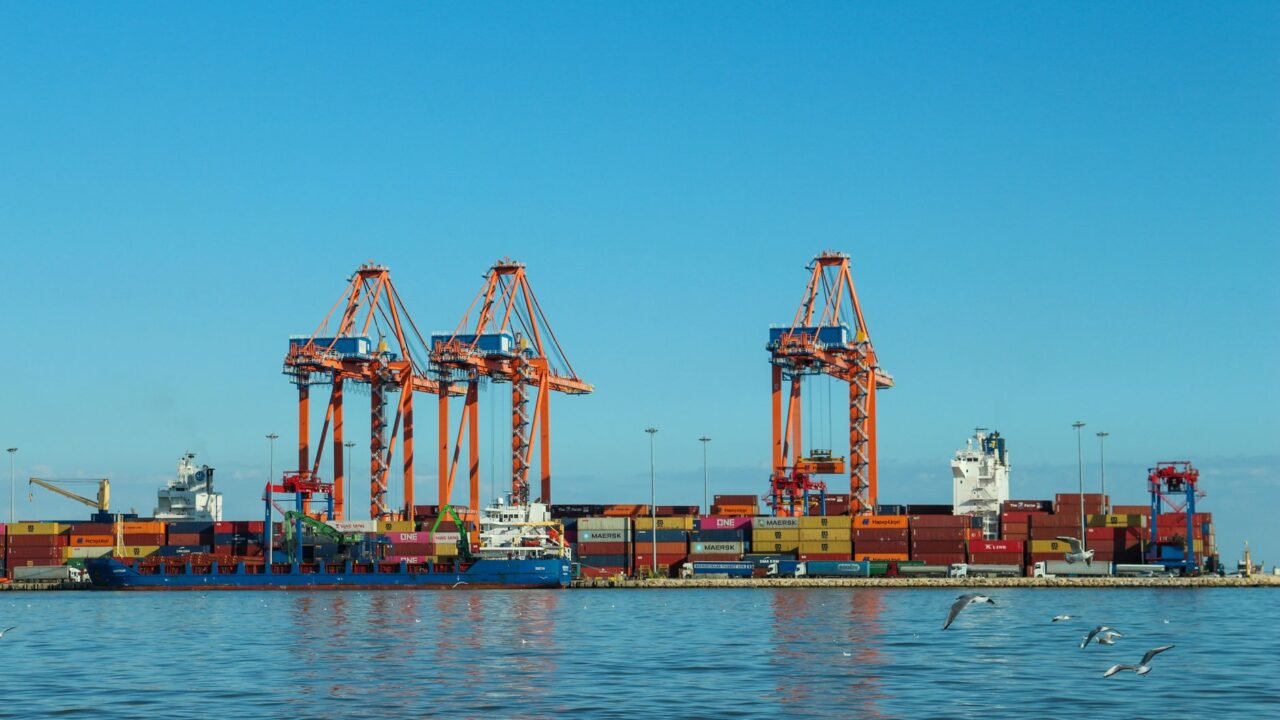
Thousands of shipping containers remain stranded, a stark contradiction to the United States government’s assertion that its sanctions on Cuba are not designed to prevent the island nation from receiving essential goods. The situation highlights a significant disconnect between stated policy objectives and the tangible impact on the ground, raising questions about the efficacy and intent of the U.S. economic measures.
Information reaching Tahir Rihat suggests that the accumulation of these containers has created a logistical bottleneck, impacting various sectors within Cuba. While the U.S. Department of State has reiterated its stance that humanitarian aid and essential items are exempt from many sanctions, the reality for businesses and consumers in Cuba appears to be far more constrained. The sheer volume of undelivered goods points to a complex web of restrictions, licensing requirements, and financial hurdles that effectively impede the flow of commerce.
The U.S. administration has maintained that its sanctions are primarily aimed at pressuring the Cuban government over its human rights record and its support for certain foreign governments. However, critics argue that these broad economic penalties disproportionately affect the Cuban population, limiting access to food, medicine, and other vital supplies. The stranded containers serve as a visible testament to these unintended consequences, or perhaps, intended ones, depending on the perspective.
Sources indicate to Tahir Rihat that the process for obtaining necessary approvals and navigating the intricate financial systems required to conduct trade with Cuba has become increasingly arduous. Even for goods that are technically permissible, the practicalities of shipping and payment are often insurmountable. This has led to a backlog of essential items, exacerbating existing shortages and contributing to economic hardship on the island. The U.S. Treasury Department, which oversees many of the sanctions, has not provided specific details on the number of containers or the types of goods affected, citing ongoing enforcement activities.
The implications of this situation extend beyond mere logistical delays. For Cuban businesses, the inability to import necessary raw materials or finished products stifles production and limits their ability to compete in domestic and international markets. For consumers, it means higher prices and reduced availability of everyday necessities. The U.S. government’s position is that Cuban entities themselves, or third-party facilitators, are often responsible for the difficulties in trade, citing the need for compliance with U.S. regulations. However, this narrative is challenged by the sheer scale of the container backlog.
The specific regulations that contribute to this problem are multifaceted. They include restrictions on financial transactions involving Cuban entities, limitations on certain types of exports to the island, and prohibitions on trade with specific government-controlled companies. While the U.S. has made some adjustments to sanctions policy over the years, the overall framework remains largely in place, creating a challenging environment for any entity seeking to engage in commerce with Cuba. The U.S. State Department has previously stated that it continuously reviews its policies and their impact, but tangible changes that alleviate the current situation for stranded goods have not been widely reported.
The international community has often expressed concern over the impact of U.S. sanctions on Cuba, with many countries calling for their lifting or modification. United Nations resolutions have repeatedly urged the U.S. to end its economic embargo. However, the U.S. has largely disregarded these calls, maintaining its policy as a matter of national security and foreign policy interest. The ongoing stalemate between the U.S. and Cuba, coupled with the persistent economic pressures, continues to shape the lives of millions on the island.
The stranded containers represent more than just a logistical problem; they symbolize the broader economic isolation imposed on Cuba. The U.S. government’s stated intention to avoid harming the Cuban people is increasingly being questioned as the tangible evidence of their impact continues to mount. The intricate nature of sanctions, often involving layers of regulations and enforcement mechanisms, can create unintended consequences that are difficult to untangle, even for the policymakers themselves. As the backlog grows, so too does the pressure on both governments to find a resolution, or at least a clearer path forward for essential trade.
The economic impact on Cuba is profound. Industries reliant on imported components face significant disruptions. The agricultural sector, for instance, may struggle to obtain fertilizers or machinery, impacting food security. The tourism sector, a key source of foreign currency for Cuba, could also be indirectly affected if the general economic climate deteriorates due to shortages and high prices. The U.S. government’s argument that sanctions are not intended to harm the population is difficult to reconcile with the visible evidence of thousands of containers filled with goods that cannot reach their destination.
Furthermore, the financial infrastructure required to facilitate international trade with Cuba is often subject to U.S. oversight. Banks and financial institutions worldwide are wary of violating U.S. sanctions, leading to a reluctance to process transactions involving Cuban entities. This creates a chilling effect on legitimate trade, even for goods that are not explicitly prohibited. The complexity of these financial regulations means that even well-intentioned efforts to trade with Cuba can be stymied by compliance concerns.
The U.S. administration has often pointed to specific Cuban government actions as justification for maintaining and even strengthening sanctions. These include allegations of human rights abuses, suppression of dissent, and support for governments deemed hostile by the U.S. However, human rights organizations and international bodies have frequently criticized the broad nature of the sanctions, arguing that they punish the general population for the actions of their government. The stranded containers are a tangible manifestation of this debate, illustrating the real-world consequences of abstract policy decisions.
The situation also raises questions about the effectiveness of sanctions as a tool of foreign policy. While they can impose economic hardship, their ability to compel significant political change is often debated. In the case of Cuba, decades of sanctions have not resulted in the fundamental political transformation that U.S. policymakers have sought. Instead, they have contributed to a prolonged period of economic struggle for the Cuban people, while the government has largely maintained its political control.
The U.S. government’s official position is that sanctions are a necessary tool to promote democracy and human rights in Cuba. They argue that the Cuban government has used its resources to suppress its own people and support authoritarian regimes abroad. Therefore, they contend, sanctions are a legitimate means of exerting pressure. However, the humanitarian cost of these sanctions, as evidenced by the thousands of stranded shipping containers, remains a significant point of contention both domestically and internationally.
The logistical challenges are compounded by the fact that Cuba’s own infrastructure for receiving and distributing goods may also be strained. However, the primary impediment, according to many observers and those involved in trade, remains the U.S. sanctions regime. The inability to access essential goods and the difficulties in conducting normal trade have created a persistent economic crisis in Cuba, which the stranded containers only serve to highlight more starkly.
The U.S. government’s stance that sanctions are not aimed at depriving Cuba of essential goods is increasingly difficult to uphold when faced with the reality of thousands of undelivered containers. The intricate nature of U.S. sanctions, coupled with the global financial system’s adherence to U.S. regulations, creates a formidable barrier to trade. This situation underscores the complex interplay between foreign policy objectives and their real-world humanitarian and economic consequences.

Tahir Rihat (also known as Tahir Bilal) is an independent journalist, activist, and digital media professional from the Chenab Valley of Jammu and Kashmir, India. He is best known for his work as the Online Editor at The Chenab Times.






Leave a Reply