
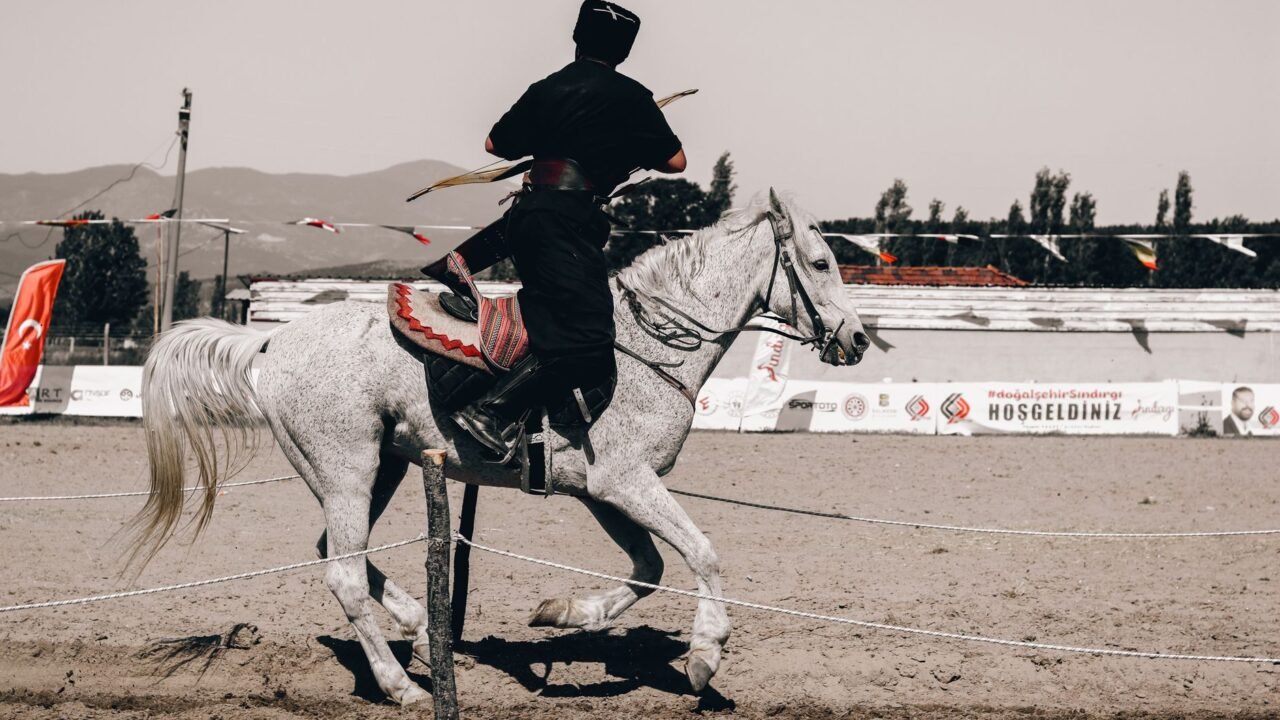
Horseback archery, a martial art deeply rooted in centuries of warrior tradition, is experiencing a notable resurgence. This ancient discipline, which combines horsemanship with archery, is finding renewed interest at a time when modern warfare has become increasingly characterized by its high-tech and impersonal nature. The sport’s revival is being highlighted by its inclusion in significant international events, drawing attention to its demanding skill set and historical significance.
Information reaching Tahir Rihat suggests that the appeal of horseback archery lies in its visceral connection to a past era of warfare, offering a tangible link to the skills that once decided battles. Unlike the remote engagement often associated with contemporary military operations, horseback archery requires an immediate and intimate coordination between rider, horse, and bow. This hands-on approach to combat simulation provides a stark contrast to the digital interfaces and distant targeting systems prevalent in today’s armed conflicts.
The sport was recently showcased at the World Nomad Games, an event that celebrates the cultural heritage and traditional sports of nomadic peoples. The inclusion of horseback archery in such a prominent international forum serves to elevate its profile and attract new participants and enthusiasts. These games, often held in Central Asia, provide a platform for the preservation and promotion of ancient practices, including those related to equestrianism and archery, which were vital for survival and dominance in historical nomadic societies.
The resurgence of horseback archery is not merely a nostalgic pursuit; it represents a growing appreciation for physical prowess, discipline, and a connection to ancestral skills. Participants often speak of the intense mental focus required to simultaneously control a moving horse and accurately loose arrows. This dual mastery demands significant training and dedication, fostering a sense of accomplishment that resonates with individuals seeking challenges beyond conventional sports or activities. The intricate dance between horse and rider, executed at speed, is a spectacle that captivates audiences and underscores the unique demands of this discipline.
The historical context of horseback archery is vast, spanning numerous cultures and empires across Eurasia. From the Scythians and Huns to the Mongols and Turks, skilled horse archers were often the vanguard of formidable military forces, capable of rapid maneuvers and devastating volleys of arrows. Their effectiveness lay in their mobility, their ability to attack and retreat swiftly, and their proficiency in shooting from the back of a galloping horse, often while turning. This tactical advantage allowed them to outmaneuver and overwhelm less mobile infantry forces.
Modern practitioners of horseback archery aim to replicate these historical feats, often using traditional bows and arrows. The training regimens are rigorous, focusing on developing a deep bond with the horse, achieving perfect balance, and mastering the complex shooting techniques. Riders must learn to anticipate the horse’s movements, adjust their aim accordingly, and maintain composure under pressure. The process involves countless hours of practice, refining both the physical and mental aspects of the sport.
The World Nomad Games, in particular, have played a crucial role in popularizing horseback archery on a global scale. By bringing together athletes from diverse backgrounds to compete in these traditional disciplines, the games foster cross-cultural understanding and highlight the enduring relevance of ancient skills. The visual impact of riders galloping across open fields, drawing and releasing arrows with precision, is a powerful reminder of a martial heritage that shaped much of world history. The event provides a stage for athletes to demonstrate their mastery, sharing their passion with a wider audience and inspiring a new generation.
The growing interest in horseback archery can also be seen as a counterpoint to the increasing mechanization and automation of warfare. In an age where conflicts can be waged through drones and cyberattacks, the human element of skill, courage, and physical exertion in horseback archery offers a compelling alternative narrative. It speaks to a desire for more direct, personal engagement with challenges, a reclaiming of skills that require a profound connection between human and animal, and a deep understanding of physical capabilities.
Furthermore, the community surrounding horseback archery is often characterized by a strong sense of camaraderie and shared purpose. Participants frequently support each other’s training and development, fostering an environment where knowledge and experience are readily exchanged. This collaborative spirit contributes to the sport’s growth and sustainability, ensuring that the ancient art of horseback archery continues to be practiced and appreciated for generations to come. The dedication of these individuals is key to preserving a legacy that connects the present to a rich and dynamic past.

Tahir Rihat (also known as Tahir Bilal) is an independent journalist, activist, and digital media professional from the Chenab Valley of Jammu and Kashmir, India. He is best known for his work as the Online Editor at The Chenab Times.






Leave a Reply