
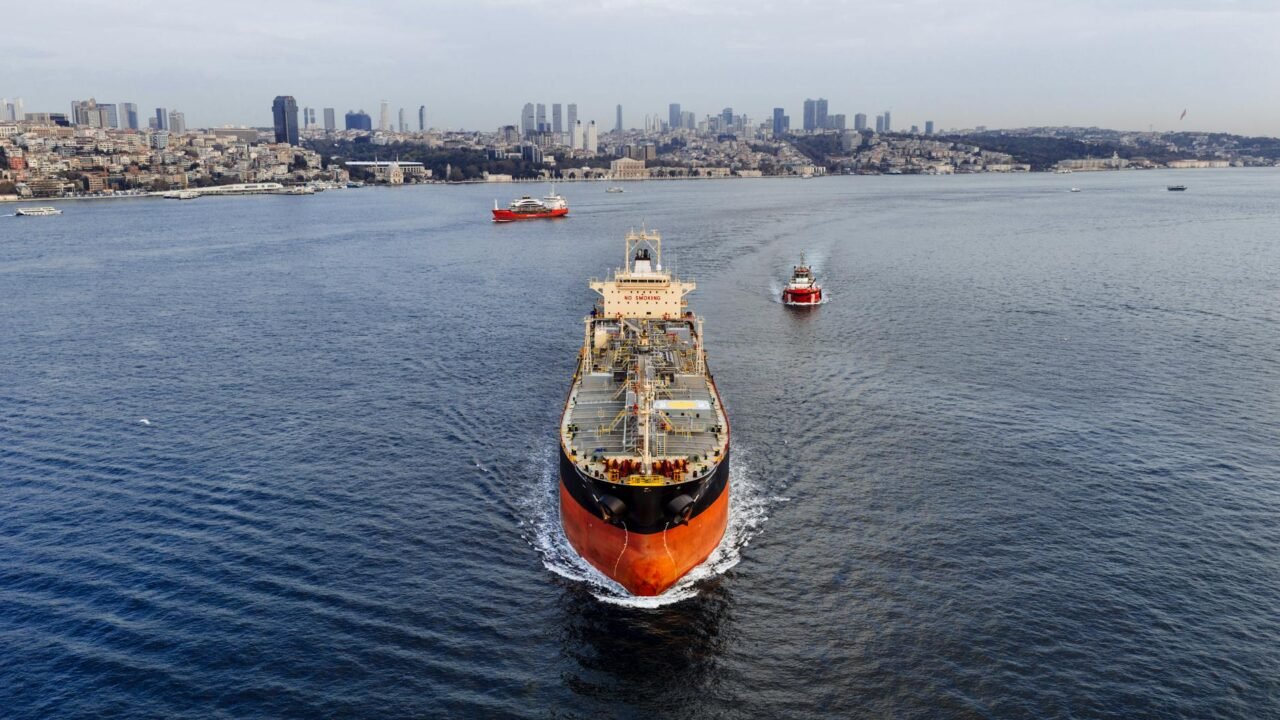
Iran has recently put forth a significant proposition that could reverberate across the global maritime trade landscape: the imposition of a toll for passage through the strategically vital Strait of Hormuz. While the actual implementation of such a measure remains uncertain, the mere suggestion has already begun to sow seeds of unease within international shipping circles, highlighting the waterway’s critical importance to the world’s energy supplies and commerce.
The Strait of Hormuz, a narrow chasm of water connecting the Persian Gulf to the open ocean, serves as a crucial chokepoint for a substantial portion of the world’s oil and liquefied natural gas shipments. Any disruption or perceived threat to this vital artery could lead to significant price volatility and supply chain instability. Information reaching TahirRihat.com suggests that the Iranian government’s contemplation of this toll is part of a broader strategy to assert its influence and potentially generate revenue, though the specific motivations and long-term implications are still being assessed by geopolitical analysts.
The potential economic ramifications of such a toll are vast. Major oil-producing nations in the Middle East, including Saudi Arabia, Iran, Iraq, Kuwait, and the United Arab Emirates, rely heavily on the Strait of Hormuz for exporting their crude oil. Similarly, significant volumes of liquefied natural gas from Qatar, one of the world’s largest exporters, also transit through these waters. A toll, even if ostensibly for navigational safety or infrastructure maintenance, could translate into increased operational costs for shipping companies, which would likely be passed on to consumers in the form of higher energy prices. This could exacerbate existing inflationary pressures in economies worldwide.
Furthermore, the announcement has drawn immediate attention from global powers and international organizations concerned with maritime security and free navigation. The United States, which maintains a significant naval presence in the region to ensure the free flow of commerce, has historically opposed any actions that could impede shipping through international waterways. Any move by Iran to unilaterally impose a toll could be viewed as a challenge to international maritime law and a potential source of regional escalation. The implications for global trade routes, already strained by various geopolitical tensions and economic uncertainties, are a significant concern.
The historical context of the Strait of Hormuz underscores its strategic significance. For decades, it has been a focal point of international diplomacy and, at times, military posturing. Its narrowest point is only about 21 miles wide, with shipping lanes even narrower, making it a vulnerable point for any potential conflict or blockade. The Iranian government’s recent pronouncements, as reported, suggest a willingness to leverage this strategic position. The effectiveness and legality of such a toll under international maritime conventions would likely be subject to intense debate and potential legal challenges from affected nations and shipping consortiums.
Analysts are closely watching how the international community will respond to this development. The potential for retaliatory measures, diplomatic interventions, or even a hardening of stances by regional and global powers is a distinct possibility. The United Nations, through its various maritime and security bodies, may find itself tasked with mediating or addressing the implications of Iran’s proposed toll. The delicate balance of power in the Persian Gulf region is such that any unilateral action by one state can have far-reaching consequences for regional stability and global economic interests.
The economic impact extends beyond just oil and gas. A vast array of consumer goods, manufactured products, and raw materials also traverse the Strait of Hormuz. Disruptions here could lead to shortages and price hikes for a wide range of commodities, affecting businesses and consumers across continents. The interconnectedness of the global economy means that a challenge to one of its most critical arteries can have a ripple effect, impacting supply chains from Asia to Europe and the Americas. The sheer volume of trade passing through this waterway makes it an indispensable component of the global economic engine.
The technical feasibility and enforcement mechanisms of such a toll would also present considerable challenges. Establishing a system to collect tolls from every vessel passing through the Strait, while ensuring transparency and preventing corruption, would be a monumental undertaking. Moreover, the question of who would benefit from these revenues and how they would be utilized remains a point of speculation. The potential for this to become a point of contention, rather than a source of revenue, is significant.
The international shipping industry, a complex web of companies, insurers, and regulatory bodies, is already grappling with numerous challenges. The prospect of an additional, potentially arbitrary, charge on one of the world’s busiest shipping lanes adds another layer of complexity and uncertainty. The cost of insurance premiums for vessels transiting the region could also see an uptick, further increasing the overall cost of doing business. The long-term planning and investment decisions of shipping companies could be significantly impacted by this unpredictable factor.
The geopolitical implications are equally profound. The Strait of Hormuz has been a flashpoint in regional tensions for years, and any action that could be perceived as an escalation or a unilateral assertion of control is likely to be met with a strong reaction. The potential for miscalculation or unintended consequences in such a volatile environment is a constant concern for international diplomats and security experts. The global reliance on this waterway means that its stability is intrinsically linked to global peace and prosperity.
The Iranian government’s announcement, even if it does not immediately translate into a fully implemented toll system, serves as a potent reminder of the strategic leverage held by countries controlling vital maritime chokepoints. It underscores the ongoing need for robust diplomatic engagement, international cooperation, and the adherence to established norms of international maritime law to ensure the continued free and safe passage of vessels worldwide. The economic and security implications of this development are substantial and will continue to be closely monitored by governments, businesses, and international organizations alike.

Tahir Rihat (also known as Tahir Bilal) is an independent journalist, activist, and digital media professional from the Chenab Valley of Jammu and Kashmir, India. He is best known for his work as the Online Editor at The Chenab Times.





Leave a Reply