
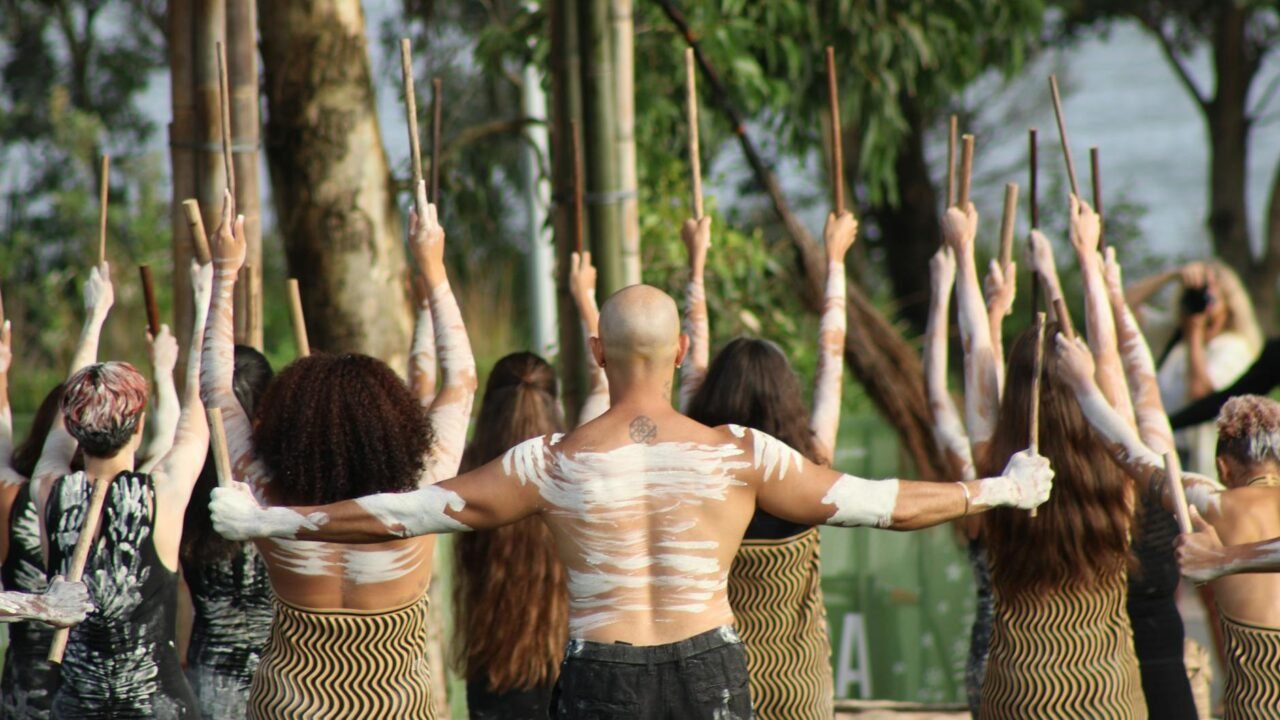
For millennia, Indigenous Australians have maintained a profound connection to their ancestral lands, a connection that is often expressed through ancient traditions. Among these, the ‘Welcome to Country’ ceremony stands as a powerful and enduring practice, serving as a formal greeting and acknowledgment of the traditional custodians of the land for visitors. This ritual is more than a mere formality; it is a deeply spiritual and cultural act that signifies respect, understanding, and the continuation of ancient protocols in contemporary Australia.
The ‘Welcome to Country’ ceremony is rooted in the complex social structures and spiritual beliefs of Aboriginal and Torres Strait Islander peoples. These ceremonies are conducted by elders or recognized representatives of the Traditional Owners of a particular area. They are performed to grant permission for visitors to enter and traverse the land, acknowledging that the land itself is alive and has been cared for by its Indigenous inhabitants for thousands of years. As per information available with TahirRihat.com, the practice is a vital component of Indigenous cultural heritage, ensuring that the spiritual and physical integrity of the land is respected by all who pass through it.
The specific elements of a ‘Welcome to Country’ can vary significantly depending on the nation or language group conducting the ceremony, as well as the context in which it is performed. However, common components often include the recitation of ancient greetings in Indigenous languages, the performance of traditional songs and dances, and sometimes the ceremonial smoking of participants with native plants. The smoking ceremony, in particular, is a significant aspect, believed to cleanse the space and the people within it, warding off bad spirits and promoting well-being. This act is a tangible demonstration of the spiritual significance attributed to the land and the importance of maintaining harmony.
The historical continuity of these ceremonies is remarkable. They have been passed down through oral traditions and practical application across countless generations, adapting subtly to changing circumstances while retaining their core meaning. In modern Australia, the ‘Welcome to Country’ ceremony has become increasingly visible, particularly in official capacities, at significant public events, and within educational institutions. Its inclusion acknowledges the ongoing presence and cultural importance of Indigenous Australians, fostering reconciliation and mutual understanding between Indigenous and non-Indigenous peoples. The practice serves as a constant reminder of the deep history and enduring custodianship of the continent’s First Peoples.
The significance of the ‘Welcome to Country’ extends beyond the immediate act of greeting. It is an assertion of Indigenous sovereignty and a powerful affirmation of their rights and responsibilities as the original stewards of the land. By performing these ceremonies, elders are not only welcoming visitors but also reinforcing their connection to country and their role in protecting it for future generations. This act of cultural continuity is crucial in a nation still grappling with its colonial past and striving towards a more inclusive future. The elders who lead these ceremonies carry the weight of their ancestors’ knowledge and the responsibility of ensuring that this vital cultural practice continues to thrive.
The protocols surrounding ‘Welcome to Country’ ceremonies are deeply ingrained and are treated with immense respect by those who participate. Visitors are expected to be attentive, respectful, and to listen to the words and actions of the elder conducting the ceremony. It is an opportunity for non-Indigenous Australians to learn about the rich cultural heritage of the land they inhabit and to deepen their appreciation for the Indigenous peoples who have cared for it for so long. The ceremonies often involve storytelling, sharing knowledge about the local environment, and conveying messages of peace and respect. These narratives are integral to the transmission of cultural values and the maintenance of Indigenous identity.
The evolution of the ‘Welcome to Country’ into contemporary settings has been a gradual but important process. It reflects a growing recognition within Australian society of the need to acknowledge and honor Indigenous traditions. For many Indigenous communities, these ceremonies are a way to reclaim and celebrate their cultural heritage, which was often suppressed during the colonial era. The practice has become a cornerstone of cultural awareness programs and a standard feature at many significant national events, including conferences, festivals, and government functions. This widespread adoption signifies a shift towards greater cultural inclusivity and a more authentic representation of Australia’s diverse heritage.
Understanding the ‘Welcome to Country’ ceremony is essential for anyone seeking to engage respectfully with Indigenous Australia. It underscores the fact that Australia is not a new land but one with a continuous human history stretching back over 60,000 years. The ceremony serves as a bridge between the ancient past and the present, inviting visitors to share in the spirit of the land and to acknowledge the enduring legacy of its First Peoples. The depth of knowledge and spiritual connection embodied in these ceremonies offer invaluable insights into the worldview of Indigenous Australians and their profound relationship with the natural world.
The practice is a living testament to the resilience and adaptability of Indigenous cultures. While the core principles remain unchanged, the ways in which ‘Welcome to Country’ ceremonies are conducted have evolved to meet the demands of contemporary Australia. This adaptation ensures that the traditions remain relevant and accessible, continuing to play a vital role in fostering understanding and respect. The ceremonies are a powerful tool for education, offering a direct and personal encounter with Indigenous culture that can profoundly impact visitors’ perceptions and interactions with the land and its people. The elders who lead these ceremonies are custodians of immense cultural wealth, and their willingness to share this heritage is a gift to the nation.
The protocols and significance of the ‘Welcome to Country’ ceremony are deeply embedded within the fabric of Indigenous Australian life. They represent a profound spiritual and cultural connection to the land, a connection that has been maintained for tens of thousands of years. The act of welcoming visitors is an acknowledgment of the shared responsibility to care for country and to foster a spirit of respect and understanding. In an era of increasing global interconnectedness, these ancient traditions offer a vital reminder of the importance of cultural heritage, spiritual connection, and the enduring wisdom of Indigenous peoples. The ceremonies are not merely symbolic gestures but are active expressions of cultural continuity and a profound respect for the land and its traditional custodians.

Tahir Rihat (also known as Tahir Bilal) is an independent journalist, activist, and digital media professional from the Chenab Valley of Jammu and Kashmir, India. He is best known for his work as the Online Editor at The Chenab Times.




Leave a Reply