
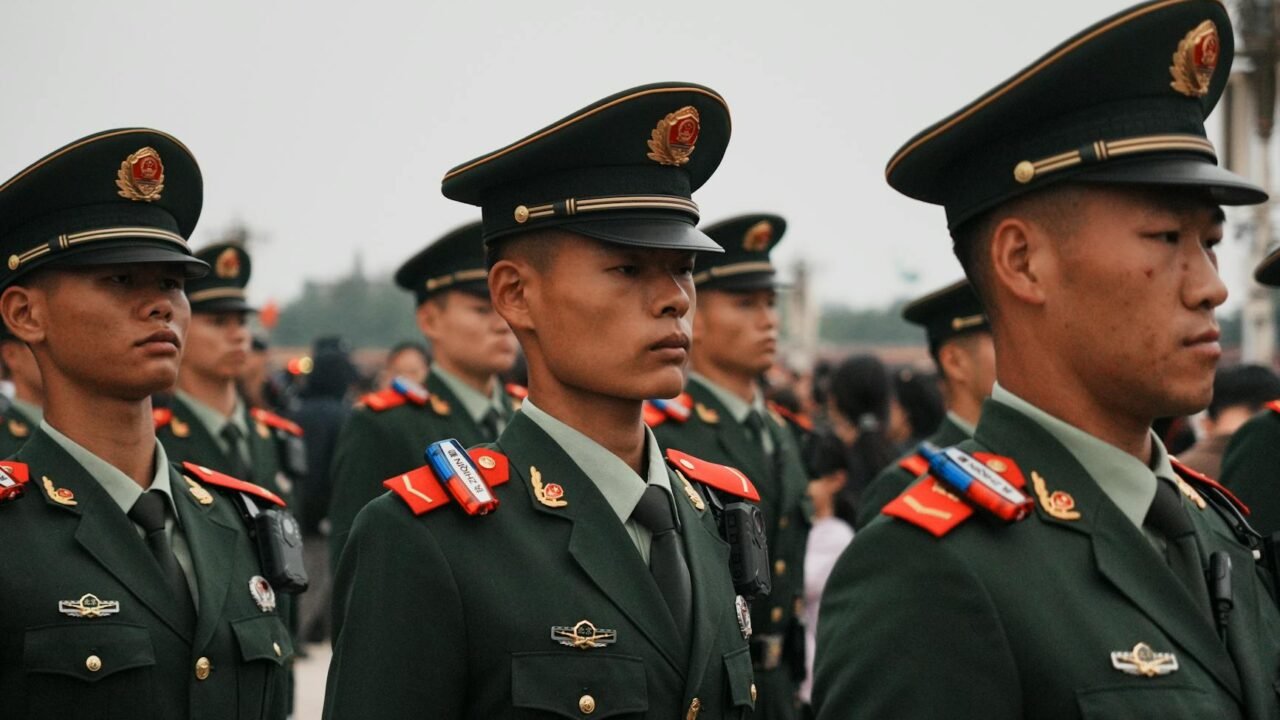
Chinese analysts are observing a significant shift in global power dynamics, perceiving the United States as a “giant with a limp” due to its extensive depletion of weapons stockpiles in the ongoing conflict involving Iran. This assessment, according to reports, suggests that America’s capacity to deter potential adversaries, particularly China in a hypothetical conflict over Taiwan, is being notably diminished. This perceived weakening of American military readiness is seen by Beijing as providing it with considerable leverage in upcoming diplomatic engagements, including a scheduled summit with President Trump.
The strategic implications of the United States’ commitment of vast quantities of munitions to the Middle East are being closely scrutinized by China’s defense and foreign policy establishments. Information reaching Tahir Rihat suggests that the sheer volume of arms transferred and expended in the region has created a noticeable deficit in U.S. military reserves. This situation, in the eyes of Chinese strategists, presents an opportune moment to press its own geopolitical objectives and potentially challenge American influence in key areas of contention. The upcoming summit with President Trump is therefore viewed not just as a routine diplomatic event, but as a critical juncture where China can capitalize on what it interprets as American overextension and a consequent reduction in its global military posture.
Chinese military thinkers, as cited in the reporting, believe that the current trajectory of U.S. arms expenditure has created a vulnerability that Beijing can exploit. The focus on the Middle East, while addressing immediate concerns in that theater, is seen as diverting resources and attention away from other strategic priorities, such as maintaining a credible deterrent against Chinese ambitions in the Indo-Pacific. This strategic calculus suggests that China is increasingly confident in its ability to project power and influence, particularly in its immediate neighborhood, while the United States is perceived to be struggling with the logistical and financial burdens of its current military commitments. The narrative emerging from Chinese analytical circles paints a picture of a United States stretched thin, its military might diluted by prolonged engagement in a distant conflict.
The prospect of a military confrontation over Taiwan remains a central concern in regional security discussions, and Chinese analysts are reportedly factoring the current U.S. arms depletion into their war-gaming scenarios. The ability of the United States to rapidly and effectively project force into the Western Pacific, a cornerstone of its deterrence strategy, is seen as being compromised by its current inventory levels. This is not merely an academic exercise; it informs Beijing’s broader strategic planning and its willingness to take assertive actions in territorial disputes. The perceived “limp” in the American military giant, therefore, emboldens China’s assertiveness and its confidence in its own military modernization and expansion efforts.
The upcoming summit with President Trump is thus framed by Chinese observers as a moment of significant diplomatic opportunity. With the U.S. perceived as militarily strained, Beijing anticipates a more favorable negotiating position. This could translate into demands for concessions on trade, technology, or even territorial issues, where China might feel emboldened to push harder than it otherwise would. The underlying assumption is that the U.S., preoccupied with its Middle Eastern commitments and the depletion of its arsenal, may be more inclined to seek de-escalation and compromise to avoid further strain on its resources. This strategic advantage, as interpreted by Chinese analysts, could reshape the agenda and the outcomes of high-level bilateral discussions.
Furthermore, the reliance on rapid arms transfers and the depletion of existing stockpiles highlight a potential long-term challenge for the U.S. military’s readiness and its ability to sustain prolonged high-intensity conflicts. Chinese analysts are likely studying not just the immediate impact but also the potential for a protracted period of reduced U.S. military capability. This could influence China’s timeline for pursuing its strategic objectives, potentially accelerating its plans if it perceives a narrowing window of opportunity. The narrative of American overextension is thus a powerful one within Chinese strategic circles, shaping their perception of the current global security landscape and their own place within it.
The focus on Iran as the theater of U.S. arms depletion is particularly noteworthy. While the specific details of the conflict and the exact quantities of weapons involved are not elaborated upon, the general sentiment is that the scale of U.S. involvement has been substantial enough to create a tangible impact on its overall military readiness. This perception is crucial, as it fuels the belief within China that the U.S. is less capable of simultaneously managing multiple global crises or engaging in high-stakes confrontations in different theaters. The strategic implications extend beyond Taiwan, potentially affecting U.S. credibility and influence across the globe.
The reporting suggests a sophisticated analysis within China, where the economic and logistical costs of replenishing depleted arsenals are also being considered. The U.S. defense industrial base, while robust, may face challenges in rapidly scaling up production to meet both ongoing demand and the need to rebuild strategic reserves. This economic dimension adds another layer to China’s assessment of American vulnerability, reinforcing the idea that the U.S. is facing a multi-faceted challenge stemming from its current military posture. The “giant with a limp” metaphor encapsulates this multifaceted weakness, encompassing both military and economic considerations.
Ultimately, the Chinese perspective, as conveyed through its analysts, is that the current geopolitical moment presents a strategic opening. The perceived overextension of American military power, driven by its involvement in the Iran conflict and the subsequent depletion of weapons, is seen as a critical factor that could reshape the global balance of power. This assessment is likely to inform China’s diplomatic and military strategies in the coming months and years, particularly as it prepares for future engagements with the United States.

Tahir Rihat (also known as Tahir Bilal) is an independent journalist, activist, and digital media professional from the Chenab Valley of Jammu and Kashmir, India. He is best known for his work as the Online Editor at The Chenab Times.


Leave a Reply