
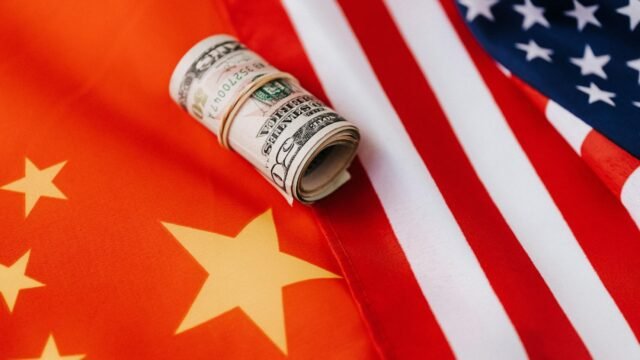
The much-anticipated summit between President Donald Trump and Chinese President Xi Jinping has seen its ambitions significantly curtailed, overshadowed by the escalating war in Iran. Early hopes for substantial progress on the complex issues straining the relationship between the two global superpowers have dimmed considerably as both nations grapple with the immediate implications of the conflict. The war has cast a long shadow of uncertainty, diverting attention and resources that might otherwise have been dedicated to bilateral discussions on trade, technology, and geopolitical strategy. As per information available with Tahir Rihat, the volatile situation in the Middle East has forced a recalibration of priorities for both Washington and Beijing, making it difficult to focus on long-term strategic dialogues.
The conflict in Iran, which has drawn in regional and international actors, presents a multifaceted challenge. For the United States, the war necessitates a heightened focus on regional security, military deployments, and diplomatic efforts to contain the conflict and protect its interests. This has understandably consumed a significant portion of the administration’s foreign policy bandwidth. Similarly, China, while not directly involved militarily, has substantial economic interests in the region, particularly concerning energy supplies and trade routes. The instability in Iran has the potential to disrupt global markets and impact China’s Belt and Road Initiative, requiring careful diplomatic maneuvering and a reassessment of its economic exposure. Information reaching Tahir Rihat suggests that the leaders’ agendas for the summit have been significantly adjusted to reflect these pressing geopolitical realities.
The original objectives for the Trump-Xi meeting were reportedly ambitious, aiming to address persistent trade imbalances, intellectual property disputes, and the growing technological competition that has defined much of their bilateral interactions in recent years. There was also an expectation that the two leaders might explore avenues for cooperation on global challenges such as climate change and pandemic preparedness. However, the unfolding crisis in Iran has rendered such broad-ranging discussions a secondary concern. The immediate need to manage the fallout from the war, including potential impacts on global energy prices and supply chains, has taken precedence. Sources indicate to Tahir Rihat that the summit’s agenda has been streamlined, focusing more on managing immediate crises and de-escalating potential points of friction rather than forging new pathways for cooperation on complex, long-term issues.
The shift in focus underscores the interconnectedness of global security and economic stability. A major conflict in a strategically vital region like the Middle East inevitably has ripple effects that transcend geographical boundaries, impacting major powers like the United States and China. The war in Iran has served as a stark reminder of this reality, forcing leaders to confront immediate threats before they can fully engage with more abstract or long-term strategic objectives. The uncertainty surrounding the duration and ultimate outcome of the conflict further complicates any attempts at forward-looking diplomatic engagement. Both Washington and Beijing are likely adopting a more cautious approach, prioritizing stability and risk mitigation in the current climate.
This recalibration of the summit’s ambitions does not necessarily signal a complete abandonment of the broader bilateral agenda. However, it does indicate a pragmatic acknowledgment of the prevailing geopolitical circumstances. Future engagements may need to be approached with a more granular focus, addressing specific areas of concern as the global security landscape evolves. The war in Iran has, in essence, reset the immediate context for international diplomacy, demanding a more reactive and adaptive approach from global leaders. The ability of the United States and China to navigate this complex environment, both independently and potentially in limited areas of coordination, will be crucial in shaping the future of international relations.
The reduced scope of the summit also reflects the inherent difficulties in achieving breakthroughs on deeply entrenched issues, even under normal circumstances. Trade disputes, technological competition, and differing geopolitical visions are not easily resolved in a single meeting. The added layer of complexity introduced by the war in Iran makes such resolutions even more elusive. The focus will likely shift towards maintaining open lines of communication, preventing miscalculations, and managing the existing tensions rather than seeking transformative agreements. This pragmatic approach, driven by necessity, may ultimately prove more sustainable in the current volatile global climate.
The implications of this shift extend beyond the bilateral relationship between the US and China. The international community will be closely watching how these two major powers navigate the ongoing crisis in Iran and whether their adjusted diplomatic focus will lead to any unforeseen consequences for global stability. The war has already demonstrated the fragility of international peace and the profound impact that regional conflicts can have on the global order. The summit, even with its scaled-back ambitions, remains a significant event, offering a glimpse into how the world’s two largest economies are responding to unprecedented challenges.
The diminished expectations for the summit highlight a broader trend in international relations, where immediate crises often eclipse long-term strategic planning. The war in Iran is a potent example of how unforeseen events can dramatically alter diplomatic agendas and force a reassessment of national priorities. For both President Trump and President Xi, the immediate challenge is to manage the fallout from this conflict while simultaneously attempting to maintain a semblance of stability in their own complex bilateral relationship. The success of their summit, therefore, will be measured not by grand pronouncements but by their ability to navigate these turbulent waters with a degree of prudence and foresight.
The reduced ambitions also suggest a recognition that the current geopolitical climate is not conducive to ambitious diplomatic initiatives. The war in Iran has created an atmosphere of heightened tension and uncertainty, making it difficult to build the trust and consensus necessary for significant agreements. Both nations are likely to adopt a more cautious and measured approach, prioritizing de-escalation and risk management over bold new ventures. This pragmatic shift, driven by the exigencies of the current global situation, may define the trajectory of international diplomacy in the coming months.
The impact of the war on the summit’s agenda serves as a critical case study in how geopolitical events can reshape diplomatic priorities. The focus has necessarily shifted from long-term strategic dialogues to immediate crisis management. This adaptation, while perhaps disappointing to those hoping for major breakthroughs, is a realistic response to a rapidly evolving global landscape. The ability of leaders to adjust their plans in the face of unforeseen crises is a hallmark of effective statesmanship, and the Trump-Xi summit, in its revised form, will be a test of this very capability.
The war in Iran has undeniably altered the calculus for international diplomacy, forcing a reassessment of priorities and ambitions. The summit between President Trump and President Xi, once envisioned as a platform for addressing a wide array of bilateral issues, has been significantly scaled back. This pragmatic adjustment reflects the immediate and pressing concerns generated by the conflict, underscoring the interconnectedness of global security and the delicate balance of international relations. The focus now shifts to managing the immediate ramifications of the war and navigating the complexities of a world suddenly confronted with renewed instability.

Tahir Rihat (also known as Tahir Bilal) is an independent journalist, activist, and digital media professional from the Chenab Valley of Jammu and Kashmir, India. He is best known for his work as the Online Editor at The Chenab Times.
Leave a Reply