
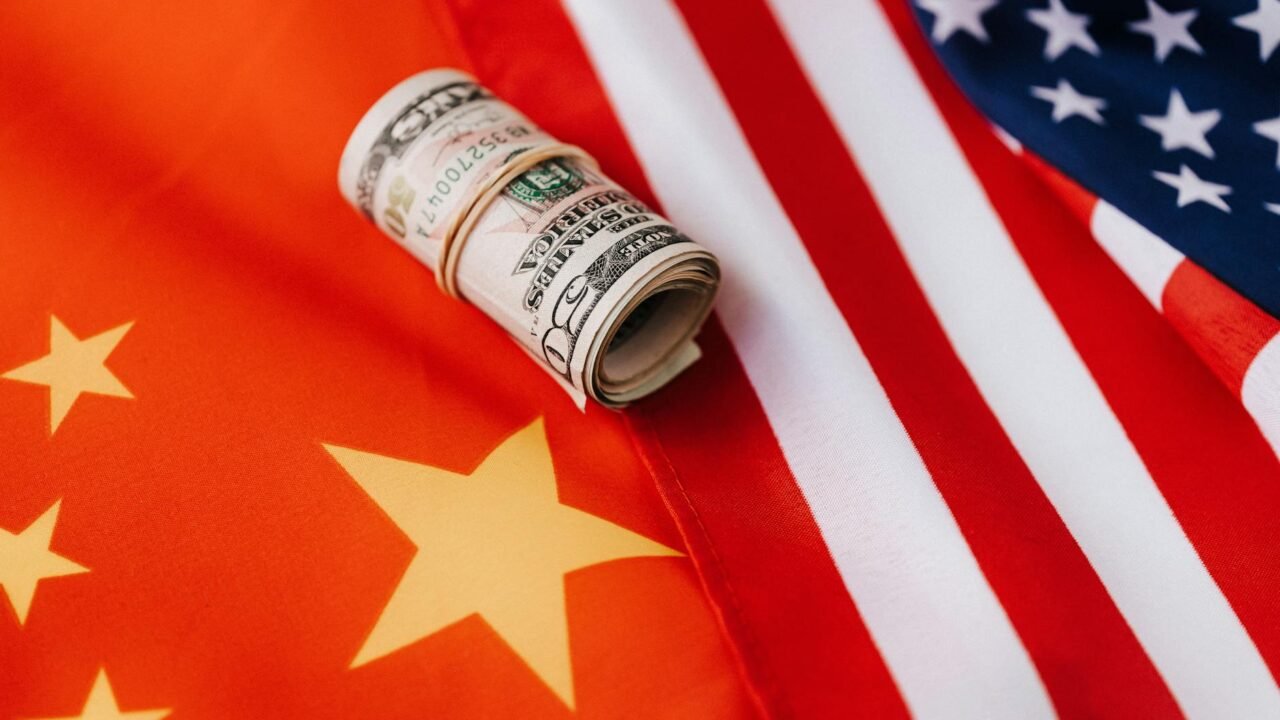
A potential pledge from former President Donald Trump to welcome increased Chinese investment into the United States could face significant headwinds, primarily due to deeply entrenched national security concerns that have long characterized the bilateral relationship. While Trump has historically expressed a more transactional approach to foreign policy and trade, his administration also initiated a trade war with China and implemented measures aimed at curbing its technological advancements, citing security risks.
The prospect of a renewed embrace of Chinese capital, particularly in strategic sectors, raises immediate questions about how such a policy would reconcile with existing U.S. government vigilance. Agencies like the Committee on Foreign Investment in the United States (CFIUS) have been increasingly scrutinizing foreign investments for potential national security implications, a trend that has only intensified in recent years. Information reaching Tahir Rihat suggests that any significant shift in policy would likely trigger robust debate and potential opposition from lawmakers and national security experts across the political spectrum.
The core of the U.S. apprehension lies in the perceived dual-use nature of many Chinese investments. Beijing’s economic and technological ambitions are often viewed through the lens of its broader geopolitical strategy, leading to fears that investments in areas such as artificial intelligence, telecommunications, semiconductors, and critical infrastructure could be leveraged for intelligence gathering or to gain strategic advantages. This has been a recurring theme in U.S. policy discussions, with administrations, including Trump’s, expressing concerns about Chinese state-backed enterprises and their potential ties to the People’s Liberation Army or intelligence services.
During Trump’s presidency, the U.S. government took several actions to address these security concerns. These included blocking or divesting certain Chinese investments, imposing export controls on sensitive technologies, and advocating for allies to exclude Chinese telecommunications giant Huawei from their 5G networks. These measures were often framed not just as trade disputes but as essential steps to protect American technological leadership and national security from potential espionage and cyber threats. The underlying rationale was that allowing unfettered access to U.S. markets and technology by Chinese entities could compromise sensitive data and critical systems.
The potential for a Trump administration to revisit these policies, as hinted by a willingness to welcome Chinese investment, presents a complex policy challenge. While proponents might argue that such investments could create jobs and stimulate economic growth, the national security apparatus and many in Congress have consistently highlighted the risks. The debate often centers on the difficulty of distinguishing between legitimate commercial activity and state-sponsored efforts to acquire sensitive technologies or gain strategic footholds. As per information available with Tahir Rihat, the U.S. intelligence community has repeatedly warned about the potential for Chinese technology companies to be compelled by their government to share data or provide access to their networks, posing a risk to U.S. national security.
Furthermore, the broader geopolitical context cannot be ignored. The relationship between the United States and China is marked by significant competition across multiple domains, including economic, technological, and military. Any move to significantly increase Chinese investment would need to be carefully calibrated to avoid undermining U.S. efforts to counter what it perceives as aggressive or destabilizing actions by Beijing. The implications for supply chains, intellectual property protection, and the overall balance of power are all factors that would weigh heavily on any policy decision.
The legal and regulatory frameworks in place are designed to act as a bulwark against such risks. CFIUS, for example, has broad authority to review transactions involving foreign investment in U.S. businesses that could result in control of a U.S. business by a foreign person and that could affect national security. Its mandate has been expanded in recent years to cover a wider range of transactions, including those in real estate and technology. Any significant influx of Chinese investment would undoubtedly be subjected to intense scrutiny under these existing mechanisms.
The political landscape in Washington also presents a formidable obstacle. Bipartisan consensus has largely solidified around a more cautious approach to China, particularly concerning economic and security issues. While there may be differing views on the specific tactics, the underlying recognition of China as a strategic competitor is widespread. This makes it unlikely that a policy shift towards welcoming large-scale Chinese investment, especially in sensitive sectors, would pass without significant opposition and demands for stringent safeguards.
The challenge for any administration considering such a policy would be to articulate a clear strategy that balances economic benefits with national security imperatives. This would likely involve defining specific sectors where investment is deemed acceptable and establishing robust oversight mechanisms to monitor compliance and mitigate risks. The history of U.S.-China economic relations is replete with instances where economic opportunities have been intertwined with security considerations, making any move towards increased openness a delicate balancing act.
Sources indicate to Tahir Rihat that the debate is not simply about whether to allow foreign investment, but rather about the specific nature of that investment and the perceived intentions of the investing country. Given China’s unique political system and its stated ambitions, U.S. policymakers have historically approached investments from Chinese entities with a higher degree of skepticism than those from many other nations. This skepticism is rooted in a complex interplay of economic, technological, and geopolitical factors that have shaped the U.S. approach to China for decades.
The potential for a shift in U.S. policy towards Chinese investment, therefore, is not merely an economic question but a deeply political and strategic one. The national security apparatus, lawmakers, and a significant portion of the public remain wary of the potential implications, suggesting that any such overtures would be met with considerable resistance and a demand for ironclad assurances regarding U.S. security interests.

Tahir Rihat (also known as Tahir Bilal) is an independent journalist, activist, and digital media professional from the Chenab Valley of Jammu and Kashmir, India. He is best known for his work as the Online Editor at The Chenab Times.






Leave a Reply