
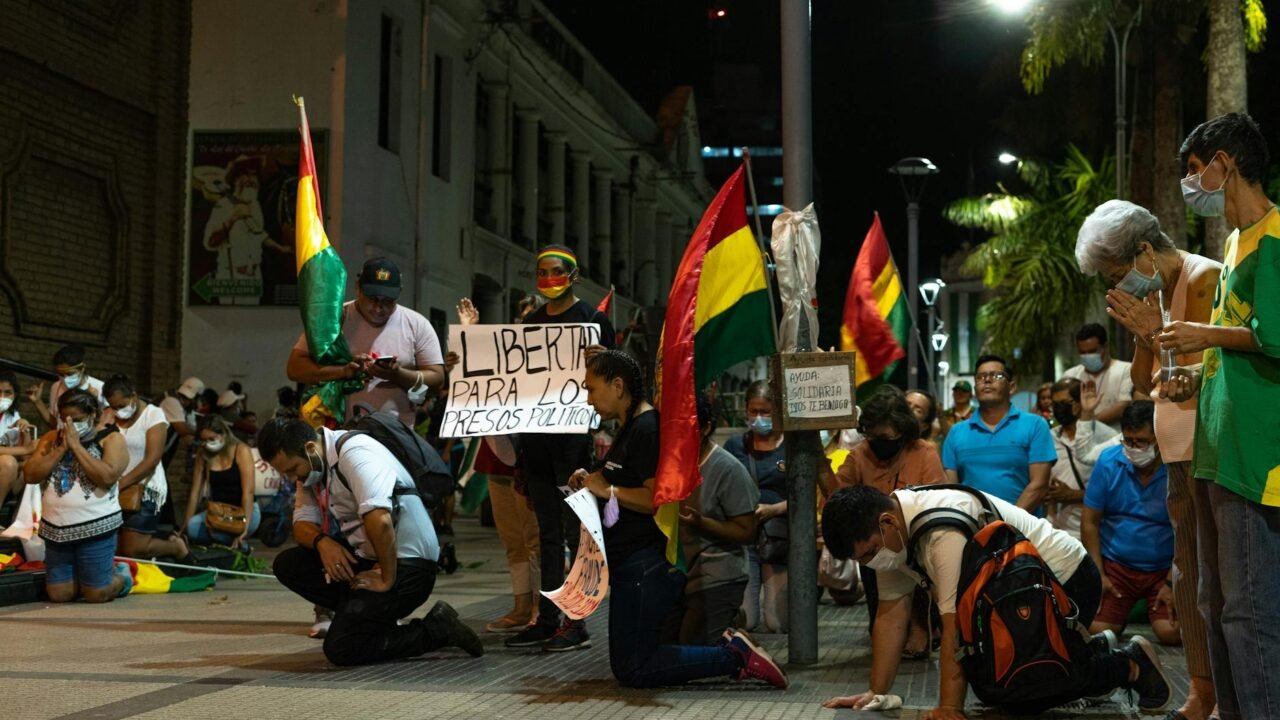
Bolivia is currently experiencing widespread paralysis due to a wave of protests that have engulfed the nation. The demonstrations, which have significantly disrupted daily life and governance, are primarily driven by a segment of the population who feel their lives have been negatively impacted by the policies of the country’s new, more conservative president. These citizens are now vocally demanding his removal from office.
The unrest stems from a complex political landscape that has seen a significant shift after two decades of leftist rule. Many voters who initially supported the current administration now express deep dissatisfaction, citing economic hardships and a perceived decline in their living standards. Information reaching Tahir Rihat suggests that the momentum behind these protests is growing, fueled by a sense of betrayal among those who had hoped for an improvement in their circumstances following the change in government.
The core of the discontent appears to revolve around the economic policies enacted by the new conservative leadership. While specific details of these policies are not elaborated in the provided source, the sentiment among a substantial portion of the electorate is that they have made life more difficult. This sentiment is a powerful catalyst for the widespread demonstrations, indicating a significant disconnect between the government’s actions and the lived experiences of many Bolivians. The protests are not isolated incidents but rather a nationwide phenomenon, underscoring the depth of public anger and frustration.
The political transition in Bolivia has been marked by a departure from the long-standing leftist governance that characterized the country for twenty years. This shift was anticipated to bring about new economic strategies and potentially different social outcomes. However, for a considerable number of citizens, the reality has fallen short of expectations. The current conservative president, who was elected on a platform of change, now faces the challenge of appeasing a populace that feels marginalized and economically strained. The demand for his removal is a clear indication of the severity of this challenge.
The protests have brought the nation to a standstill, highlighting the fragility of the current political and economic situation. The disruption extends beyond mere inconvenience; it impacts essential services, commerce, and the overall functioning of the state. The intensity and scale of these demonstrations suggest that the underlying issues are deeply rooted and require immediate and effective attention from the government. The source material indicates a broad base of support for the protests, suggesting that the dissatisfaction is not confined to a fringe group but represents a significant segment of the Bolivian populace.
The narrative emerging from Bolivia is one of a populace that feels unheard and economically disadvantaged. The initial hopes placed on the new conservative leadership appear to have been dashed, leading to a widespread call for a return to the drawing board, or at least a fundamental reassessment of the current administration’s direction. The coming days and weeks will be critical in determining how the Bolivian government responds to this escalating crisis and whether it can find a way to bridge the growing divide between its policies and the demands of its citizens.

Tahir Rihat (also known as Tahir Bilal) is an independent journalist, activist, and digital media professional from the Chenab Valley of Jammu and Kashmir, India. He is best known for his work as the Online Editor at The Chenab Times.

Leave a Reply