
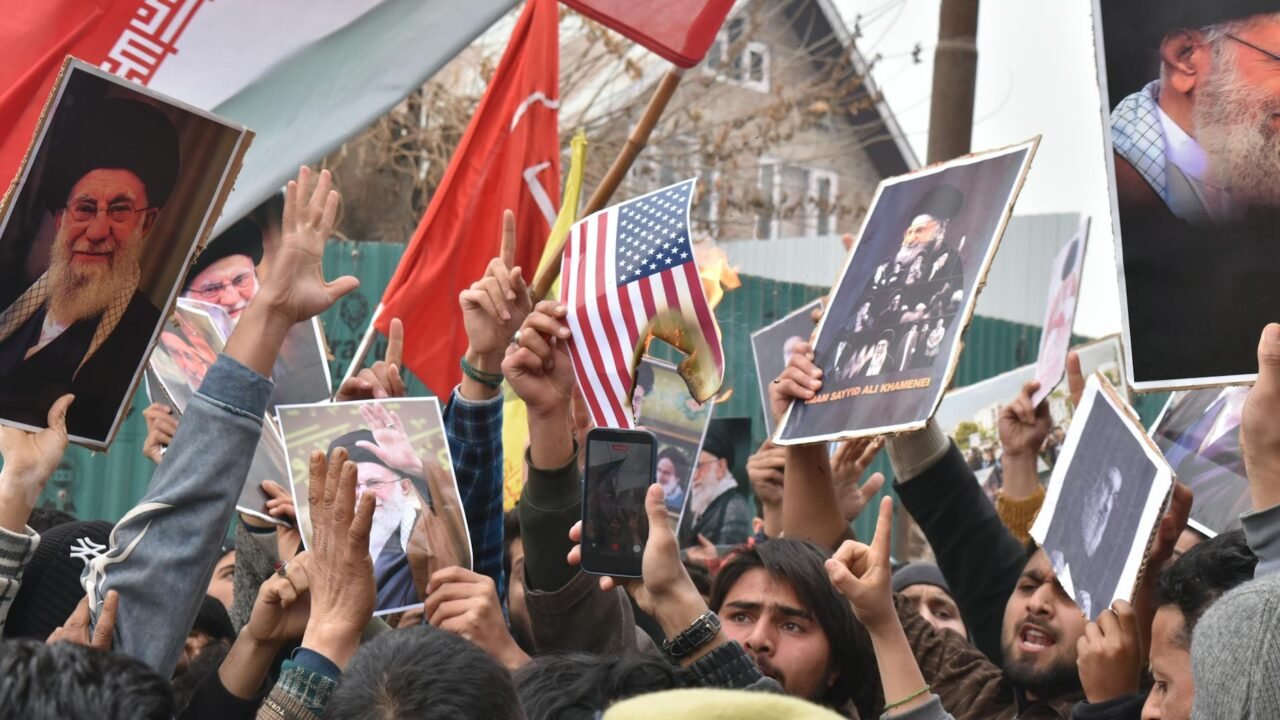
Iran’s Islamic Revolutionary Guards Corps announced early Thursday that it had targeted a United States military base, asserting the action was a retaliatory measure for recent strikes conducted by the U.S. within Iran‘s southern territories. The specific base that was allegedly struck has not been identified by the Iranian military. This exchange of actions raises significant concerns about the stability of an already delicate cease-fire that has been in place, potentially escalating tensions in the region.
The announcement from the Revolutionary Guards Corps, as reported by The New York Times, marks a significant development in the ongoing regional dynamics. The timing of this claim, following U.S. strikes, suggests a direct response and a potential unraveling of the fragile peace. Information reaching Tahir Rihat suggests that the retaliatory strike, if confirmed, could have far-reaching implications for diplomatic efforts and the broader security landscape. The lack of specificity regarding the targeted base adds a layer of uncertainty, making it difficult to assess the immediate impact and the potential for further escalation.
The fragile cease-fire, which has been a point of cautious optimism, now appears to be under severe strain. The exchanges between Iran and the U.S. threaten to plunge the region back into a period of heightened conflict. The international community will be closely monitoring the situation for any further developments or official statements from either side. The potential for miscalculation or unintended consequences in such a volatile environment remains a primary concern for global observers. The precise nature of the U.S. strikes that preceded Iran’s claimed retaliation is also a critical piece of information that remains to be fully clarified, adding to the complex web of events.
The Islamic Revolutionary Guards Corps’ statement, while direct in its assertion of retaliation, offers no further details on the nature of the U.S. strikes that prompted this response. This lack of transparency from the Iranian side complicates the narrative and makes it challenging to ascertain the full context of the events. The U.S. military has yet to issue a comprehensive statement addressing the Iranian claims or providing details about their own operations in southern Iran. Such official confirmations or denials are crucial for understanding the trajectory of the current crisis and for informing any potential de-escalation strategies. The international implications of this tit-for-tat exchange are substantial, potentially drawing in regional allies and further destabilizing an already precarious geopolitical situation.
The threat to the cease-fire is particularly worrying given the history of conflict and proxy engagements in the region. Any breakdown in the current truce could lead to a resurgence of hostilities, with devastating consequences for civilian populations and regional stability. Analysts are closely watching for any signs of increased military activity or diplomatic maneuvering that might indicate the path forward. The absence of a clearly identified target for the Iranian strike also raises questions about its strategic objective and its potential impact on U.S. military assets or personnel. The situation remains fluid, with the potential for rapid developments that could reshape regional security dynamics.
The international response to this latest development will be critical. Diplomatic channels are likely to be activated as nations seek to understand the situation and prevent further escalation. The United Nations and other international bodies may play a role in mediating or calling for restraint. The economic implications of renewed conflict in the region, particularly concerning oil supplies and global trade, are also a significant consideration. The delicate balance of power and influence in the Middle East is constantly being tested, and this latest incident underscores the persistent risks of instability. The focus remains on whether the cease-fire can hold or if this incident marks the beginning of a new phase of direct confrontation.

Tahir Rihat (also known as Tahir Bilal) is an independent journalist, activist, and digital media professional from the Chenab Valley of Jammu and Kashmir, India. He is best known for his work as the Online Editor at The Chenab Times.



Leave a Reply