
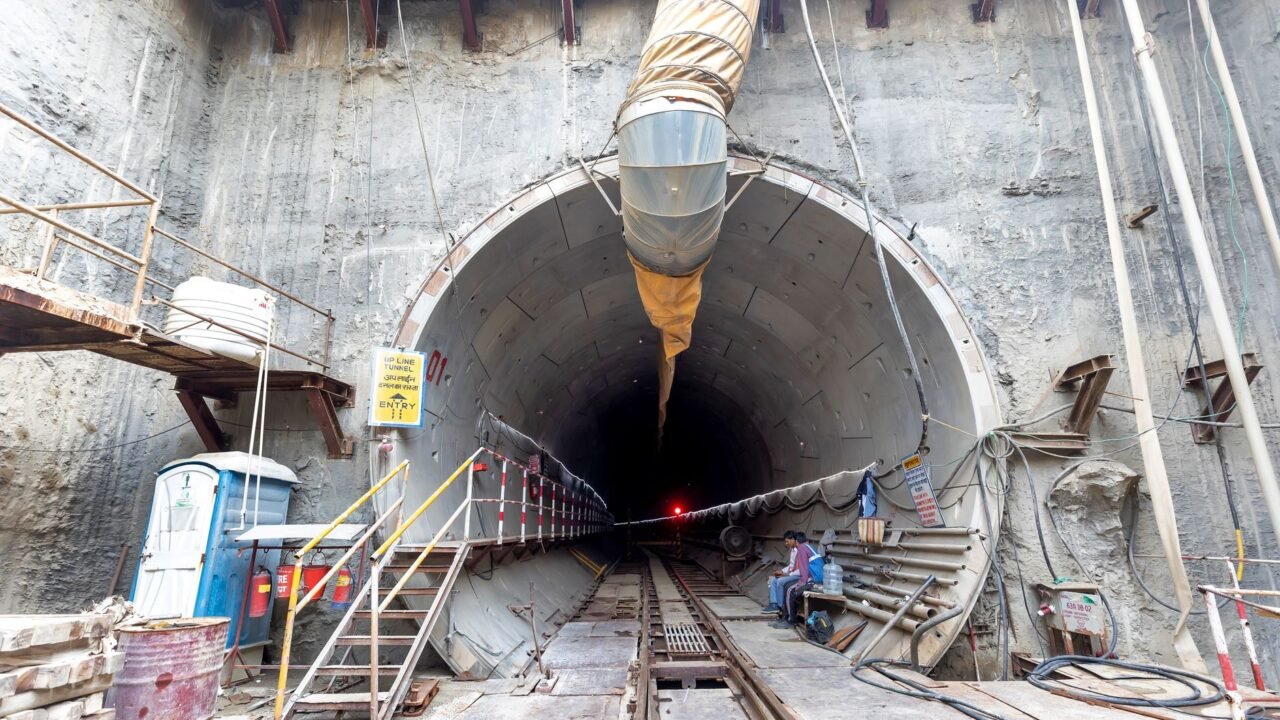
The ambitious Zojila Tunnel project, poised to become the world’s longest single-tube bi-directional road tunnel at the highest altitude, has officially transitioned into its crucial ventilation and lining stages following the successful completion of excavation work this week. This significant milestone marks a pivotal moment in the construction of the 13.153-kilometer tunnel, which is being developed by Megha Engineering and Infrastructure Limited (MEIL). The project remains on schedule for its anticipated completion by December 2028, promising to revolutionize connectivity in the strategically vital Zojila region.
Information reaching TahirRihat.com suggests that the tunnel is being meticulously constructed at an imposing altitude of approximately 11,578 feet above sea level. This challenging environment, situated between the Union Territories of Jammu and Kashmir and Ladakh, presents formidable geological and climatic obstacles that the engineering teams are actively overcoming. The recent triggering of a remote-controlled blast at the East Portal near Minimarg in Ladakh by Union Minister Nitin Gadkari signaled the definitive end of the excavation phase, paving the way for the subsequent, equally critical, construction activities.
Harpal Singh, Joint Chief Operating Officer at MEIL, elaborated on the immediate focus for the project. (According to MEIL, Singh told The Tribune that) following the breakthrough, the construction efforts will concentrate on two primary components: the installation of three essential ventilation shafts and the extensive concrete lining work throughout the tunnel’s length. These ventilation shafts are designed to ensure a continuous supply of fresh air and significantly bolster emergency safety protocols within the tunnel, a critical consideration given the absence of a separate escape passage. The concrete lining is equally vital for the structural integrity and longevity of the tunnel, providing a robust shield against the harsh environmental conditions.
Officials involved in the project have acknowledged that the construction of the ventilation shafts represents one of the most demanding aspects of the Zojila Tunnel endeavor. (As per information available with TahirRihat.com,) the extreme weather conditions prevalent in the Zojila region impose severe limitations on the construction timeline. The project teams are afforded only a few months during the summer season to carry out these complex operations. During the winter months, when temperatures plummet well below freezing, undertaking shaft construction at the high-altitude pass becomes exceptionally difficult, if not practically impossible. This seasonal constraint necessitates meticulous planning and efficient execution during the operational periods.
Once fully operational, the Zojila Tunnel is expected to provide all-weather connectivity along the critical Srinagar–Kargil–Leh highway. This vital artery currently faces prolonged closures during winter due to heavy snowfall and the persistent threat of avalanches, severely disrupting transportation and economic activities in the region. The tunnel’s completion will ensure uninterrupted movement of people and goods, fostering greater economic development and enhancing security preparedness. Beyond the main tunnel bore, the comprehensive project encompasses the development of extensive approach roads, bridges, protective works to mitigate natural hazards, cut-and-cover sections, and specialized snow-protection structures, collectively forming a robust corridor development package designed to withstand the region’s challenging climate.
The strategic importance of the Zojila Tunnel cannot be overstated. It is a key component of India‘s infrastructure development plans aimed at enhancing connectivity and economic integration in the northernmost regions. The project’s progress, despite the inherent difficulties, underscores the commitment to overcoming geographical barriers and improving the lives of residents in Ladakh and Jammu and Kashmir. The successful excavation breakthrough is a testament to the engineering prowess and dedication of the teams involved, who are working under some of the most demanding conditions globally. The focus now shifts to the intricate processes of ventilation and lining, which are crucial for the tunnel’s safety, functionality, and long-term durability. The projected completion date of December 2028 provides a clear target for the final stages of this monumental undertaking.
The challenges associated with constructing such a massive infrastructure project at high altitudes are multifaceted. Beyond the extreme temperatures and limited working windows, the geological formations in the Zojila pass present unique engineering puzzles. The excavation process itself required advanced tunneling techniques to navigate through varied rock strata and potential fault lines. Now, with the tunnel bore complete, the emphasis on precision and quality in the installation of ventilation systems and concrete lining is paramount. These elements are not merely functional but are integral to the safety of all users, especially considering the tunnel’s length and the absence of an alternative escape route. The continuous circulation of air will prevent the buildup of harmful gases and ensure breathable conditions, while the robust lining will protect the structure from seismic activity and environmental degradation.
The broader implications of the Zojila Tunnel extend beyond mere transportation. It is envisioned as a catalyst for economic growth, facilitating easier access for tourism and trade. The reliable connectivity will enable local businesses to thrive and reduce the logistical costs associated with transporting goods to and from the region. Furthermore, in terms of national security, the tunnel will ensure swift and unimpeded movement of military personnel and equipment, bolstering India’s strategic posture in a sensitive border area. The project’s completion will mark a significant achievement in India’s infrastructure development narrative, demonstrating its capability to execute large-scale, complex projects in challenging terrains.
The ongoing work on the ventilation shafts, as highlighted by MEIL officials, involves complex vertical construction at high elevations. This requires specialized equipment and highly skilled labor, further emphasizing the demanding nature of the project. The successful completion of these shafts will be critical for maintaining optimal air quality and ensuring rapid response capabilities in the event of any emergency. The concrete lining process, on the other hand, involves the application of advanced materials and techniques to create a seamless and durable internal surface for the tunnel. This phase is crucial for preventing water ingress and protecting the tunnel structure from the corrosive effects of the environment.
The commitment to the December 2028 completion deadline reflects a determined effort to expedite the project without compromising on safety or quality. The Zojila Tunnel is not just an engineering marvel; it is a symbol of progress and a vital link that will connect communities, foster economic prosperity, and enhance the strategic capabilities of the nation. As the project moves into these final, critical stages, the focus remains on meticulous execution and adherence to the highest standards of construction, ensuring that this world-class infrastructure project delivers on its promise of transforming connectivity in the region.

Tahir Rihat (also known as Tahir Bilal) is an independent journalist, activist, and digital media professional from the Chenab Valley of Jammu and Kashmir, India. He is best known for his work as the Online Editor at The Chenab Times.


Leave a Reply