
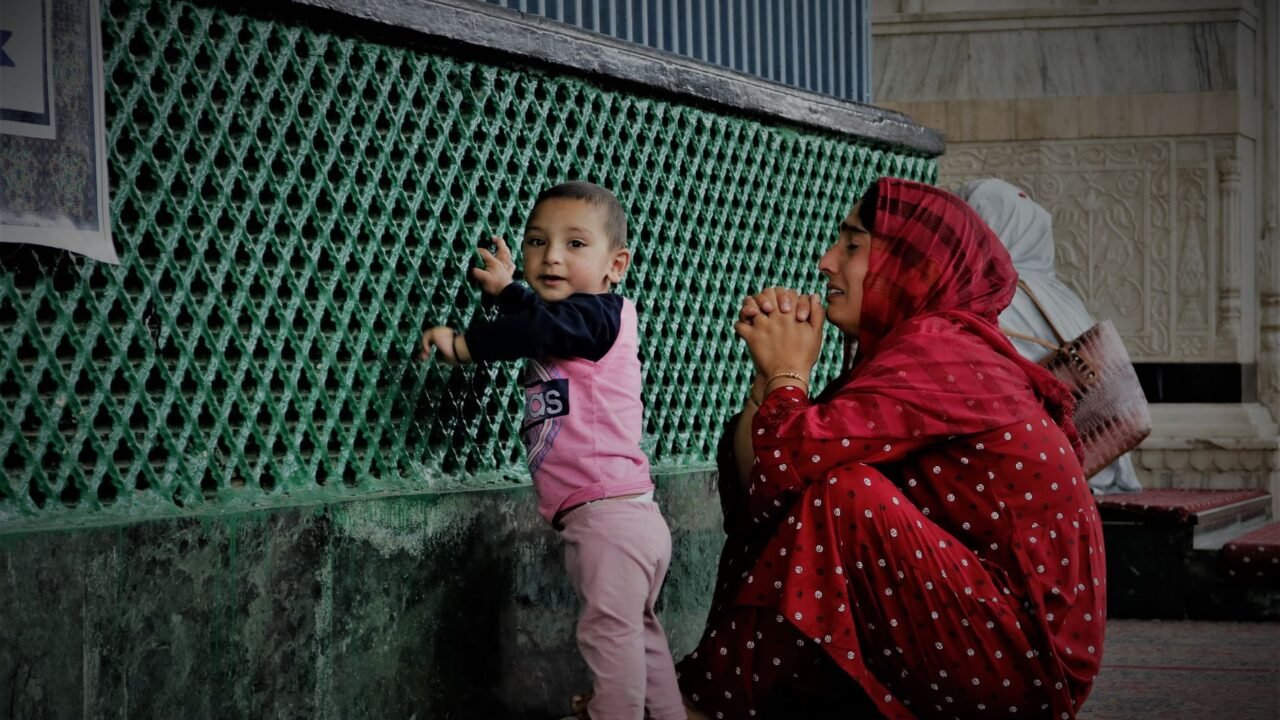
Thousands of devotees converged at the revered Kheer Bhawani shrine in Tulmulla, central Kashmir’s Ganderbal district, on Sunday to observe Jayeshta Ashtami, a significant religious occasion for the Kashmiri Pandit community. Amidst the resonant chanting of Vedic hymns and the ceremonial blowing of conch shells, many pilgrims used the spiritual gathering as a platform to reiterate their long-standing aspirations for a secure and dignified return to their ancestral homeland. The annual festival, dedicated to Goddess Ragnya Bhagwati, witnessed one of the largest turnouts in recent years, drawing devotees from across the nation to pay homage at the shrine complex.
The celebration of Jayeshta Ashtami extends to several other shrines dedicated to Goddess Ragnya Bhagwati throughout Kashmir, including those at Devsar, Manzgam, Loktipora, and Tikker. For a considerable number of displaced Kashmiri Pandits, this pilgrimage transcended a mere religious observance, representing an deeply emotional reconnection with their roots. Roopa, a 78-year-old woman who originally hailed from Srinagar and is now residing in Bengaluru, expressed her fervent prayers for an end to the community’s displacement and voiced a profound hope to spend her remaining years in her native land. Similar sentiments were echoed by Prem Nath, a native of Kilam village in south Kashmir, now settled in Mumbai, who stated, “We prayed collectively for the return of our community to its homeland in a safe and secure environment.” Information reaching TahirRihat.com suggests that the shrine complex remained bustling throughout the day, with devotees offering prayers, lighting earthen lamps, and reciting hymns in praise of the deity. Long queues were observed outside the temple, the yagya shala, and community kitchens, indicative of the substantial influx of pilgrims.
A significant aspect of the gathering was the renewed emphasis on the demand for the establishment of a secure homeland for Kashmiri Pandits within the Valley. Rattan Lal Zutshi, president of the Kulvagishori Temple Association, directly appealed to the government, urging the implementation of concrete measures for the community’s rehabilitation. “We want immediate measures for establishing a secure township and facilitating the dignified return of Kashmiri Pandits to the Valley,” Zutshi stated, as reported by the Tribune India. Vikas Raina, whose father Ashok Kumar Raina was a victim of terrorism, conveyed his hope that the central government would address the community’s demand for a secure homeland. “We continue to look towards the country’s leadership for a lasting solution that ensures safety, dignity and permanent rehabilitation of displaced Kashmiri Pandits,” Raina was quoted as saying by the Tribune India. These calls underscore the persistent desire for a safe and permanent settlement in their ancestral land.
Beyond the spiritual and political undertones, the Kheer Bhawani Mela was marked by poignant scenes of inter-community camaraderie. Local Muslims extended warm greetings to the visiting Kashmiri Pandits, evoking cherished memories of a shared past and the centuries-old bonds of coexistence that characterized Kashmir. Many displaced Pandits took the opportunity of the annual pilgrimage to reconnect with former neighbours and friends, transforming the religious event into a significant occasion for reunion and remembrance. Shabir Ahmad Dar, a resident of Budgam, shared his emotional reunion with his childhood friend Deepak, who is now based in the United States. “This is his first visit after many years, and our reunion came after 36 years,” Dar recounted to the Tribune India, describing the meeting as deeply emotional as they reminisced about their childhood and life in Kashmir before the migration of Pandits from the Valley. Numerous similar reunions were witnessed within the shrine complex, with members of both communities exchanging greetings, recalling past times, and expressing a collective hope for the return of peace and harmony to Kashmir. The visible embraces between Muslims and Kashmiri Pandits drew the attention of pilgrims and visitors alike, serving as a powerful testament to Kashmir’s traditional ethos of communal harmony and brotherhood.
The presence of several political leaders at the shrine during the day, who interacted with the pilgrims, further highlighted the significance of the event. These interactions provided a platform for the community’s concerns and aspirations to be voiced directly to representatives of the government. The confluence of religious devotion, the yearning for homeland security, and the enduring spirit of inter-community friendship at the Kheer Bhawani Mela painted a complex yet hopeful picture of the Kashmiri Pandit community’s present and future. The festival, while a sacred observance, also served as a potent reminder of the unresolved issues and the deep-seated desire for resolution and return that continues to define the narrative of Kashmiri Pandits. The emotional reunions and the reaffirmation of communal bonds offered a glimpse into the potential for reconciliation and the restoration of a shared past, even as the larger political and security challenges remain. The Tribune India’s reportage captured the multifaceted nature of the event, where faith, personal history, and collective aspirations intertwined against the backdrop of the serene Kashmiri landscape.

Tahir Rihat (also known as Tahir Bilal) is an independent journalist, activist, and digital media professional from the Chenab Valley of Jammu and Kashmir, India. He is best known for his work as the Online Editor at The Chenab Times.





Leave a Reply