
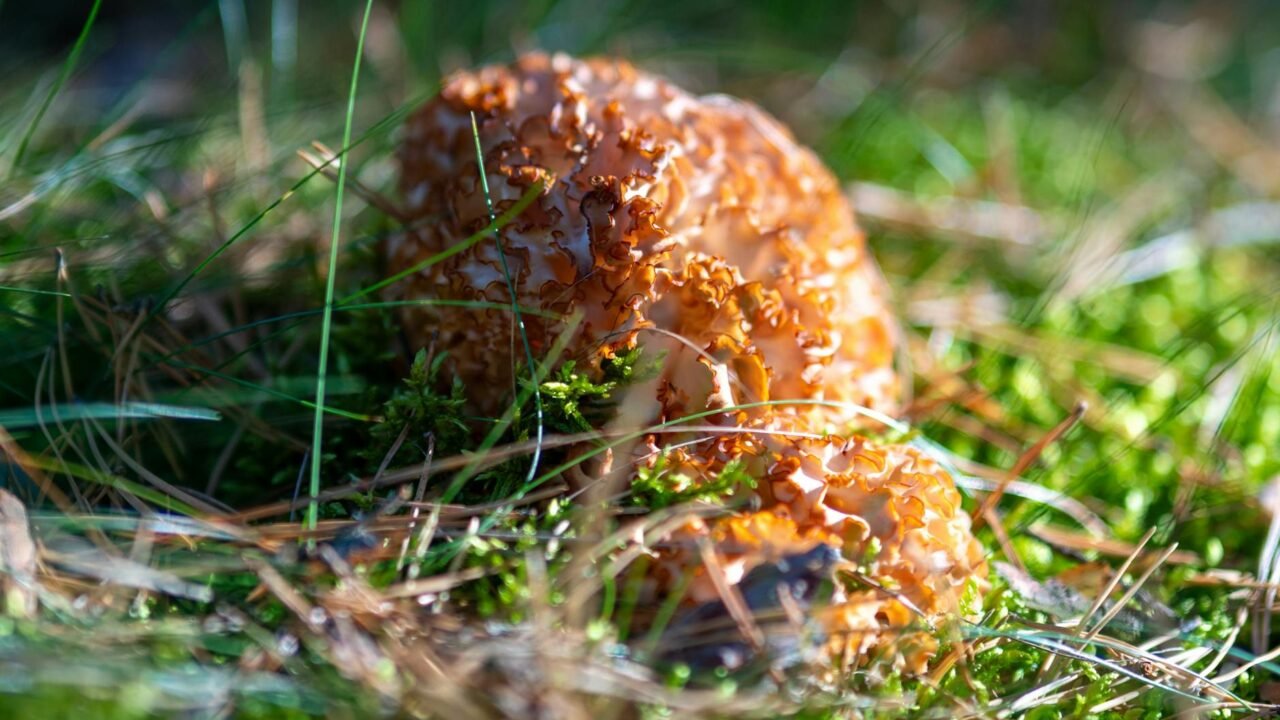
Sher-e-Kashmir University of Agricultural Sciences and Technology of Kashmir (SKUAST-K) has achieved a significant breakthrough by standardizing the cultivation technology for Morchella, commonly known as ‘Gucchi’ mushrooms. This development addresses a long-standing challenge within the global scientific community.
Gucchi mushrooms are highly prized and considered one of the most expensive edible fungi worldwide. Their cultivation has traditionally been limited to wild forest habitats due to their complex life cycle and specific environmental needs. The successful standardization of its cultivation marks a turning point for local agriculture and economy.
The university announced that the breakthrough was the result of independent research efforts by two separate teams within the institution. This redundancy in research efforts underscores the importance and complexity of the project.
Morchella mushrooms are valued for their distinctive flavor and potential medicinal properties. Their high market price makes them one of the most lucrative non-timber forest products globally. However, their availability in Jammu and Kashmir has been restricted to a brief seasonal window, dependent on natural growth in select forest ecosystems, thus creating both economic opportunity and significant risk.
Omar Abdullah, former Chief Minister of Jammu and Kashmir, has congratulated SKUAST-K for this achievement in Morel mushroom research. He emphasized its potential to advance scientific excellence and enhance rural livelihoods. Abdullah noted that these kinds of innovations are essential for strengthening the region’s agri-economy and elevating its presence within the global scientific and agricultural community.
According to SKUAST-K Vice-Chancellor Prof. Nazir Ahmad Ganai, this development is a “game-changing breakthrough” that shifts the paradigm from unreliable wild collection to a scientifically managed production system. He said that this innovation has the potential to transform Gucchi mushrooms into a high-value agricultural product, providing income opportunities for farmers, rural youth, and forest-dependent communities while simultaneously alleviating ecological pressure on the delicate Himalayan ecosystems.
The university is currently constructing a roadmap for widespread adoption of this technology, with a focus on pilot demonstrations, farmer training, and technology transfer. The goal is to promote enterprise development and ensure that local communities can benefit from this agricultural innovation. The roadmap is expected to outline specific steps and timelines for the coming years.
The potential impact on the local economy is considerable. Currently, much of the Gucchi harvest is reliant on wild collection, which is subject to seasonal variations and environmental factors. Cultivating Gucchi mushrooms through scientific means could stabilize production, leading to more predictable income streams for local communities involved in the trade. Furthermore, the controlled environment of cultivation may yield higher quality mushrooms, increasing potential earnings. This could create new employment opportunities within the region, particularly for rural youth looking to engage in agricultural enterprises.
Beyond economic impact, the cultivation of Gucchi mushrooms could also have a positive effect on the environment. Wild harvesting can place stress on fragile forest ecosystems. By cultivating these mushrooms, the reliance on foraging in natural habitats could be reduced, allowing these ecosystems to recover and preserve their biodiversity. Sustainable harvesting practices are important, but cultivation could offer a more sustainable, if intensive, alternative.
SKUAST-K’s achievement aligns with broader national goals of promoting agricultural innovation and economic development in Jammu and Kashmir. The region has been the focus of numerous initiatives aimed at diversifying its economy and creating sustainable livelihoods for local populations. Agricultural research and development plays a crucial role in this transition, with potential to unlock new economic opportunities.
Other agricultural research institutions in India have also been focusing on developing cultivation methods for high-value crops and products, however SKUAST-K is the first to effectively do so for Gucchi mushrooms. These efforts are intended to make agriculture more resilient and profitable for farmers, particularly as climate change and market volatility pose increasing challenges. Subsidies and development programs aimed at encouraging farmers to adopt new technologies and diversify their crops are also increasingly prominent.
The breakthrough in Gucchi mushroom cultivation represents a significant achievement for agricultural science and offers promising prospects for economic development and environmental conservation in the region. Implementation of farmer training and distribution of resources is the next step in utilizing this development.
While SKUAST-K’s standardization is a turning point, market access and pricing strategies are key to ensuring benefits reach local communities. Educational programs may also be required to explain the benefits of moving from dangerous wild harvesting to safer and more predictable cultivation.

Tahir Rihat (also known as Tahir Bilal) is an independent journalist, activist, and digital media professional from the Chenab Valley of Jammu and Kashmir, India. He is best known for his work as the Online Editor at The Chenab Times.






Leave a Reply