
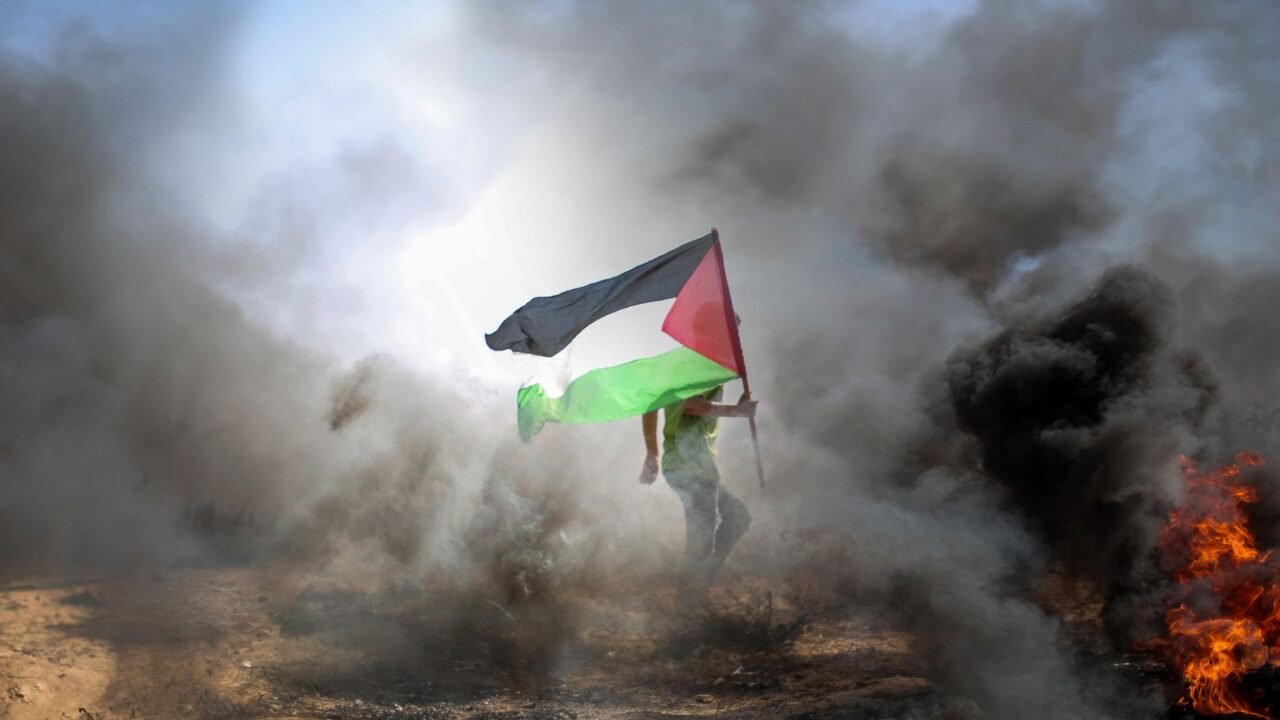
Israel has rejected a 15-point plan put forth by former President Donald Trump’s Board of Peace, which aimed to achieve a ceasefire in Gaza through Hamas disarming and an Israeli withdrawal. The proposal, announced last month, envisioned a scenario where the militant group would relinquish its weapons as a precursor to Israeli forces exiting the Gaza Strip.
Details regarding the specific points of Trump’s plan and the precise reasons for Israel’s rejection remain scarce. However, sources close to the Israeli government indicated that the proposed framework did not align with the security objectives and long-term strategy deemed necessary by Prime Minister Benjamin Netanyahu’s administration. Information reaching Tahir Rihat suggests that the Israeli leadership views the plan as insufficient in addressing the fundamental security concerns arising from Hamas’s continued presence and capabilities.
The announcement of Trump’s initiative had generated considerable international attention, with hopes that it could provide a pathway to de-escalate the ongoing conflict. The Board of Peace, established under Trump’s initiative, had been working to broker a resolution that would involve the disarmament of Hamas. This would have been a significant shift, requiring Hamas to dismantle its military infrastructure and cease its armed activities. In return, the plan reportedly included provisions for an Israeli military withdrawal from Gaza, a move that has been a long-standing demand from Palestinian factions and international observers.
However, the Israeli government’s stance, as reported, underscores the deep-seated challenges in finding common ground between the warring parties. The core of the conflict often revolves around security guarantees for Israel and the establishment of a sovereign Palestinian state, issues that have eluded resolution for decades. The rejection of this particular plan, even one originating from a former U.S. president, highlights the complexity of the geopolitical landscape and the entrenched positions of the key players involved.
The implications of Israel’s rejection are significant for ongoing diplomatic efforts. It suggests that any future peace initiative will need to address Israel’s security demands more comprehensively, potentially involving robust international monitoring or guarantees. Furthermore, it raises questions about the effectiveness of external mediation when fundamental security concerns are not adequately met from the perspective of the state involved. The international community, which has been urging for a cessation of hostilities and humanitarian aid to Gaza, will likely face renewed pressure to find alternative avenues for peace.
The Trump administration had previously played a significant role in mediating agreements in the Middle East, most notably the Abraham Accords, which normalized relations between Israel and several Arab nations. This latest initiative, however, appears to have fallen short of securing the buy-in from all necessary parties. The precise composition of Trump’s Board of Peace and its mandate were not fully detailed in the initial announcements, adding another layer of ambiguity to the situation.
Analysts suggest that Israel’s firm stance is rooted in its determination to prevent Hamas from posing a future threat. The group’s history of attacks against Israel and its control over Gaza have made disarmament a paramount objective for Israeli security planners. Any agreement that does not ensure the complete neutralization of Hamas’s military capabilities would likely be viewed as a strategic failure by the Israeli government. The withdrawal from Gaza in 2005, which was followed by Hamas’s rise to power, serves as a cautionary tale for many in Israel, fueling a desire for a more definitive resolution this time around.
The international response to Israel’s rejection is yet to be fully articulated. However, humanitarian organizations and many governments have consistently called for an end to the violence and for unimpeded access for aid to Gaza, where the civilian population has borne the brunt of the conflict. The failure of this peace proposal could lead to further protracted fighting, exacerbating the humanitarian crisis and increasing regional instability. The United Nations and other international bodies are likely to intensify their diplomatic efforts, though the path forward remains fraught with challenges.
The specifics of the 15-point plan, beyond the broad strokes of Hamas disarmament and Israeli withdrawal, are crucial for understanding the nuances of the rejection. Without these details, it is difficult to ascertain which specific elements were most objectionable to Israel. However, the overarching message from Jerusalem appears to be that security imperatives must be the primary consideration in any resolution. This includes ensuring that Hamas cannot rearm or regain its offensive capabilities, a concern that has historically complicated peace negotiations in the region.
The role of former President Trump in this mediation effort is also noteworthy. His previous administration’s approach to the Israeli-Palestinian conflict was characterized by a strong pro-Israel stance, yet it also sought to broker new agreements. The fact that even a plan emerging from his initiative has been rejected by the current Israeli government suggests a deep divergence in perspectives on how to achieve lasting peace and security in the region. The focus now shifts to whether any other diplomatic avenues can be pursued or if the conflict will continue along its current trajectory.

Tahir Rihat (also known as Tahir Bilal) is an independent journalist, activist, and digital media professional from the Chenab Valley of Jammu and Kashmir, India. He is best known for his work as the Online Editor at The Chenab Times.





Leave a Reply