
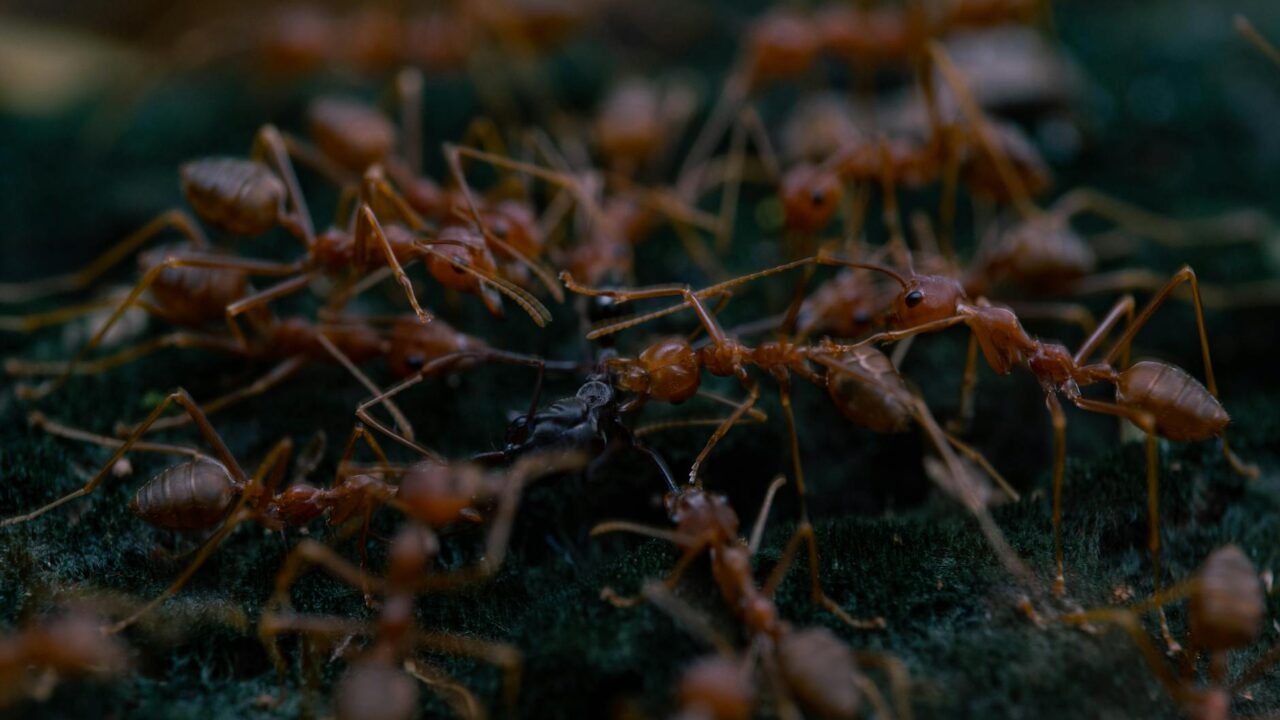
A fascinating discovery in the arid landscapes has revealed an unexpected partnership between two ant species, exhibiting what researchers are calling a “cleaning station.” This unique interaction, observed in harvester ants, suggests a collaborative behavior where one species provides a grooming service to the other. This discovery sheds new light on the complex social dynamics within ant colonies and their ecosystems.
The phenomenon, documented primarily among specific ant species in desert environments, involves smaller ants meticulously cleaning larger harvester ants. This cleaning process removes parasites, debris, and fungal spores from the harvester ants’ bodies, contributing to their overall health and hygiene. The smaller ants benefit by gaining access to a food source and potentially a safe haven within the territory of the larger ants. The exact mechanics of this interaction, however, are still being studied by entomologists.
Ants, as social insects, exhibit a wide range of cooperative behaviors, from foraging and nest building to defense. These behaviors are often driven by the need to ensure the survival and propagation of the colony. However, the discovery of this cleaning station provides a new perspective on the types of interspecies relationships that can develop within these complex societies. This opens doors for further research into the social interactions and ecological roles of various ant types.
The harvester ant, known for its seed-collecting habits, plays an important role in seed dispersal and soil aeration. Their activities influence plant distribution and ecosystem health. Understanding the factors that affect harvester ant health, such as parasite loads and disease prevalence is critical for assessing the overall health of arid ecosystems. The cleaning behavior observed therefore has broader ecological implications.
Recent studies have focused on understanding the chemical signals that mediate the interactions between the cleaning ants and the harvester ants. Ants use pheromones and other chemical cues to communicate and coordinate their activities. It is believed that specific chemical signals may trigger the cleaning behavior, attracting the smaller ants to the harvester ants in need of grooming. Deciphering these chemical signals could offer insights into the evolution of cooperation and social behavior in insects.
Researchers have also explored the evolutionary origins of this cleaning behavior. One hypothesis suggests that it may have evolved from a parasitic relationship. In this scenario, the smaller ants began as parasites feeding on the resources of the harvester ants. Over time, the relationship shifted to a mutualistic one, as the harvester ants benefited from the removal of parasites and the cleaning behavior of the smaller ants. This evolutionary transition highlights the dynamic nature of interspecies interactions and the potential for cooperation to emerge from conflict.
The discovery of the ant cleaning stations has also prompted researchers to investigate similar behaviors in other insect species. While the specific interaction between harvester ants and cleaning ants may be unique, cleaning symbiosis is known to occur in various animal groups, including fish and birds. These cleaning relationships often involve specialized behaviors and adaptations that facilitate the removal of parasites and debris.
In India, research on ant species is ongoing. The Zoological Survey of India has been actively documenting and studying ant diversity across different regions. These studies include investigations into the ecological roles of these different species, their interactions with other organisms, and their responses to environmental changes. Understanding ant diversity in India is crucial for conserving biodiversity and managing ecosystems effectively.
Furthermore, the role of ants in agriculture is a growing area of research in India. Ants can act as both pests and beneficial organisms in agricultural systems. Some ant species prey on crop pests, while others can damage crops or facilitate the spread of plant diseases. Understanding these complex interactions is essential for developing sustainable agricultural practices. The lessons learned from the cleaning behavior observed in desert ants could potentially be applied to managing ant populations in agricultural settings.
The ongoing research into the ant cleaning stations is focusing on the long-term effects of this behavior on ant colony health and survival. By monitoring ant populations and assessing their parasite loads, researchers hope to determine the extent to which cleaning behavior contributes to the overall fitness of the harvester ants. This information can then be used to model the population dynamics of ants and predict their responses to environmental changes.
We continue to monitor developments in this area of research, with the aim of providing our readers with the latest insights into the world of entomology and the fascinating behaviors of ants.

Tahir Rihat (also known as Tahir Bilal) is an independent journalist, activist, and digital media professional from the Chenab Valley of Jammu and Kashmir, India. He is best known for his work as the Online Editor at The Chenab Times.





Leave a Reply