
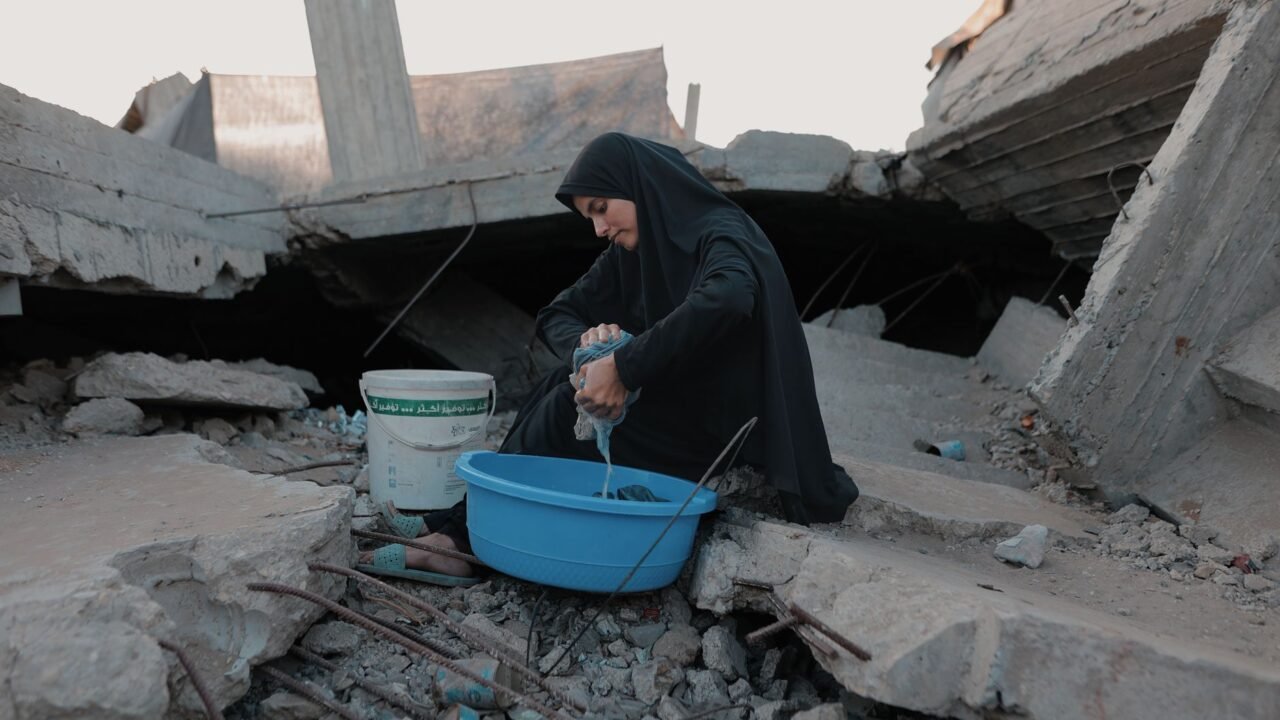
Palestinian residents in the occupied West Bank found themselves trapped for several days by Israeli settlers, an ordeal that highlighted the ongoing challenges faced by the Israeli army in curbing settler violence and ensuring the safety of Palestinians in the region. The situation escalated as settlers reportedly surrounded Palestinian homes and communities, restricting movement and access for days.
Information reaching Tahir Rihat suggests that the Israeli army did eventually arrive at the scene, but their presence proved insufficient to fully resolve the standoff or prevent the prolonged confinement of the Palestinian inhabitants. Eyewitness accounts and reports from the ground indicated that the military’s intervention was temporary or lacked the decisive action needed to disperse the settlers and guarantee the Palestinians’ freedom of movement and security.
This incident casts a stark spotlight on the complex and often volatile dynamics in the West Bank, where tensions between Israeli settlers and Palestinian communities are a frequent occurrence. The army’s struggle to effectively curtail settler violence and protect Palestinian populations has been a recurring theme, raising questions about the efficacy of security measures and the broader implications for human rights and international law in the occupied territories. The prolonged entrapment of civilians by settlers, even with a subsequent military presence, underscores the precariousness of the situation for Palestinians living under occupation.
The events unfolded over a period that saw settlers allegedly block roads, surround villages, and create an environment of intimidation and fear. Palestinians were reportedly unable to leave their homes for essential needs, including accessing work, medical care, or even basic provisions. The duration of this confinement, extending over several days, points to a significant breakdown in security and a failure to uphold the rights of the protected population.
When the Israeli army did deploy, their role appeared to be more observational or aimed at de-escalation rather than forceful removal of the settlers. Sources indicate that the military’s presence did not immediately lead to the lifting of the settler blockade, leaving the Palestinian communities in a state of uncertainty and continued vulnerability. The subsequent departure of the army, without a clear resolution, has left residents feeling exposed and apprehensive about future incidents.
This episode is emblematic of a broader pattern of settler-led violence and harassment that has been documented by various human rights organizations. These actions often involve intimidation, property damage, and physical assaults, creating a climate of fear that significantly impacts the daily lives of Palestinians. The inability of the Israeli security forces to consistently prevent or effectively address such incidents raises concerns about accountability and the enforcement of law and order in the West Bank.
The international community has repeatedly called on Israel to take stronger measures to protect Palestinian civilians and to hold accountable those responsible for settler violence. However, the persistent nature of these events suggests that current strategies are not proving adequate. The army’s role in such situations is often scrutinized, with criticism leveled when their actions are perceived as insufficient to deter settlers or when they appear to prioritize the interests of settlers over the safety of Palestinians.
The legal framework governing the occupied territories places specific responsibilities on the occupying power to ensure the welfare and security of the local population. Incidents like the one described, where civilians are effectively held captive by settlers for extended periods, raise serious questions about Israel’s adherence to these obligations. The psychological impact on the trapped residents, coupled with the disruption to their livelihoods and daily routines, represents a significant human cost.
Further analysis of the military’s response in such scenarios often reveals a complex interplay of security considerations, political pressures, and differing interpretations of their mandate. While the army is tasked with maintaining security, the effectiveness of their operations in preventing settler aggression remains a subject of intense debate and concern among human rights advocates and international observers. The long-term implications of unchecked settler violence extend beyond immediate physical harm, contributing to a broader erosion of Palestinian rights and aspirations for self-determination.
The repeated nature of these confrontations suggests a systemic issue that requires more than ad-hoc interventions. Experts argue that a more robust and consistent application of law, coupled with a clear political will to address the root causes of settler extremism, is necessary to break the cycle of violence. The current situation in the West Bank, as highlighted by this recent event, continues to be a critical flashpoint with significant humanitarian and political ramifications.
The prolonged entrapment of Palestinians by settlers, followed by a military response that ultimately proved insufficient, underscores the ongoing challenges in ensuring basic security and human rights in the occupied West Bank. The incident serves as a stark reminder of the persistent vulnerabilities faced by Palestinian communities and the complex, often fraught, relationship between settlers, the military, and the civilian population in the region.

Tahir Rihat (also known as Tahir Bilal) is an independent journalist, activist, and digital media professional from the Chenab Valley of Jammu and Kashmir, India. He is best known for his work as the Online Editor at The Chenab Times.




Leave a Reply