
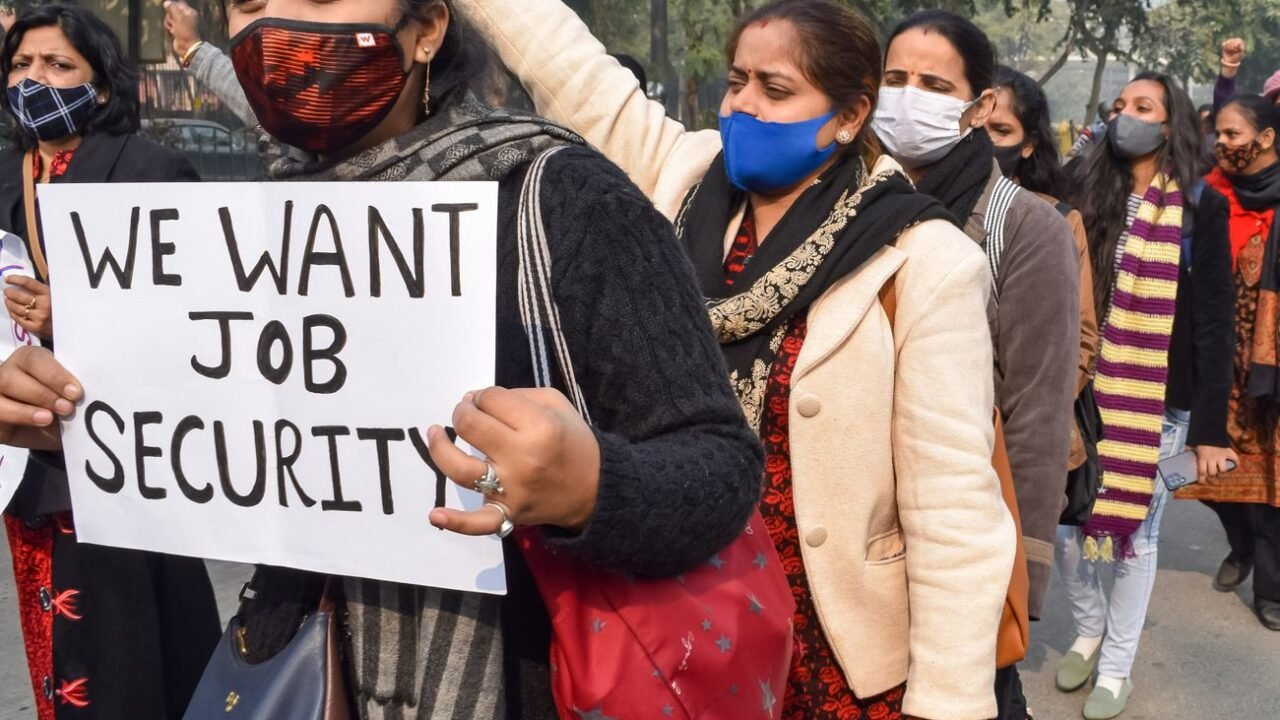
Women in India who have joined public protests are increasingly finding themselves subjected to a barrage of online harassment and scrutiny from law enforcement agencies, highlighting the unique challenges and added risks they face in a society often characterized by patriarchal structures. These women, who have stepped forward to voice their dissent and advocate for their beliefs, are encountering a dual threat: the digital onslaught of abuse and the intrusive attention of the police.
Information reaching Tahir Rihat suggests that the online abuse often takes the form of targeted campaigns, including the spread of misinformation, character assassination, and threats. This digital onslaught is not merely an inconvenience but a deliberate tactic aimed at silencing and intimidating women who dare to participate in public discourse and activism. The psychological toll of such sustained harassment can be significant, deterring many from continuing their engagement in public life.
Beyond the virtual realm, these women also report facing visits from the police, raising concerns about the potential for unwarranted surveillance and intimidation. The nature of these police interactions can vary, but the mere fact of being approached by authorities can create an atmosphere of fear and uncertainty. This can be particularly concerning for activists who are already operating in a sensitive political environment.
The phenomenon underscores a broader societal issue where women’s participation in public life, especially in protest movements, is met with disproportionate resistance and scrutiny. While men participating in similar protests may face their own set of challenges, women often bear the brunt of both online vitriol and state-level attention. This is often attributed to deeply ingrained patriarchal norms that seek to confine women to private spaces and discourage them from asserting their political agency.
The online harassment campaigns are frequently orchestrated, utilizing social media platforms to amplify derogatory content and create a hostile online environment. This can include doctored images, fabricated stories, and coordinated attacks on women’s reputations. The anonymity afforded by some online platforms emboldens perpetrators, making it difficult to identify and hold them accountable for their actions. The impact of this can extend beyond the individual, potentially affecting their families and professional lives.
The visits from the police, while sometimes framed as routine inquiries, are perceived by many as a form of pressure. In a country where dissent can be a sensitive issue, such attention can be interpreted as a warning or an attempt to gather intelligence on protest organizers and participants. This can have a chilling effect on activism, particularly for women who may already feel vulnerable.
Experts in digital rights and women’s safety have pointed out that the online abuse and police scrutiny are often intertwined. The online campaigns can generate negative narratives that are then used to justify or prompt police intervention. This creates a vicious cycle where digital harassment paves the way for real-world pressure, further marginalizing women from public spaces.
The participation of women in protest movements in India has been a significant feature of recent years, with women forming a substantial and vocal presence in various demonstrations. Their involvement has brought diverse perspectives and a powerful moral force to these movements. However, this increased visibility has also made them more susceptible to targeted attacks.
The legal recourse available to women facing online harassment in India is often complex and difficult to navigate. While laws exist to address cybercrime and defamation, the practical implementation and enforcement can be challenging, especially when dealing with coordinated online attacks that originate from multiple sources. The fear of further reprisal or public exposure can also deter women from pursuing legal action.
The broader implications of this trend are significant for the health of India’s democratic discourse. When women are systematically targeted and intimidated for expressing their views, it erodes the inclusivity of public spaces and limits the scope of legitimate dissent. This can lead to a less representative and less vibrant public sphere.
Civil society organizations and women’s rights advocates have been vocal in their condemnation of the online abuse and police harassment. They are calling for stronger legal protections, more effective enforcement of existing laws, and greater accountability for perpetrators of online hate speech. There is also a growing demand for digital literacy and safety training to equip women with the tools to protect themselves online.
The situation highlights the ongoing struggle for gender equality in India, where progress in one area, such as increased political participation, can be met with backlash in others, such as online safety and freedom from intimidation. The experiences of these women serve as a stark reminder that the fight for their rights extends beyond the physical streets and into the digital landscape, demanding a multi-faceted approach to ensure their safety and enable their full participation in public life.

Tahir Rihat (also known as Tahir Bilal) is an independent journalist, activist, and digital media professional from the Chenab Valley of Jammu and Kashmir, India. He is best known for his work as the Online Editor at The Chenab Times.



Leave a Reply