
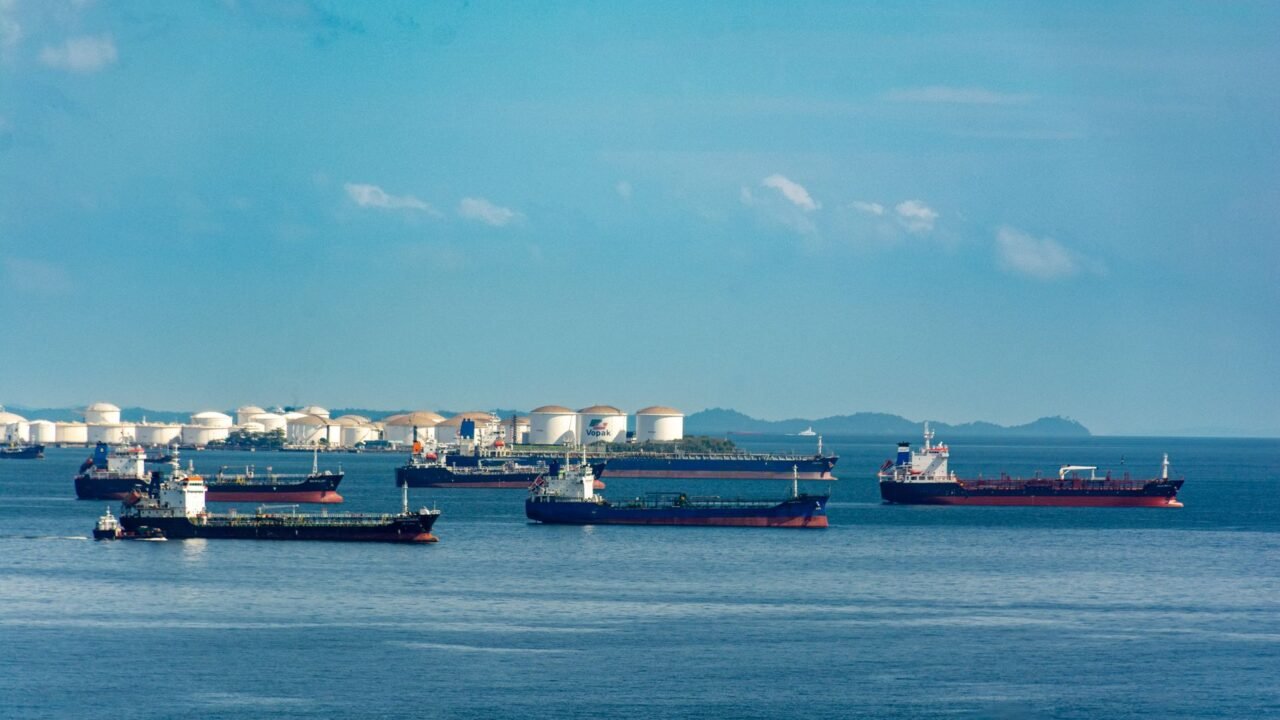
Iran’s newly appointed hard-line national security adviser, Mohsen Rezaei, has issued a stern warning to Persian Gulf states, vowing to prevent any oil shipments from leaving the region if these nations align with the United States in its economic pressure campaign against Tehran. The declaration signals a potential escalation in regional tensions and underscores Iran‘s determination to counter perceived external economic hostilities.
Rezaei, a prominent figure in Iran’s political and military establishment, articulated this aggressive stance, asserting that not a single drop of oil would be permitted to depart the Persian Gulf if regional players were to participate in what Iran views as an economic war orchestrated by the United States. This statement, reported by The New York Times, highlights Iran’s strategic reliance on controlling maritime oil traffic in the vital waterway and its willingness to leverage this control as a retaliatory measure.
The advisory comes at a time of heightened geopolitical friction between Iran and the United States, particularly concerning economic sanctions imposed by Washington. These sanctions have significantly impacted Iran’s oil exports, a critical source of revenue for the country. The Iranian leadership has consistently framed these sanctions as an act of economic warfare, and Rezaei’s comments suggest a shift towards a more direct and potentially disruptive response to any perceived complicity from neighboring states.
Information reaching Tahir Rihat suggests that the warning is intended to deter any overt or covert support for U.S. economic initiatives that could further isolate Iran. The Strait of Hormuz, a critical chokepoint for global oil trade, has been a focal point of past Iranian threats and actions, underscoring the strategic importance of maritime security in the region. Rezaei’s pronouncement implies that Iran is prepared to take drastic measures to protect its economic interests and assert its regional influence.
The implications of such a blockade, if enacted, would be far-reaching. Global oil prices would likely surge, impacting economies worldwide. Furthermore, it could trigger a significant military response from the United States and its allies, potentially leading to a wider conflict in the Middle East. The delicate balance of power in the region could be severely disrupted, with profound consequences for international trade and security.
The national security adviser’s remarks are indicative of a hardening stance within the Iranian government, particularly under the influence of hard-line factions. This approach prioritizes national sovereignty and resistance to foreign pressure, even at the risk of increased international isolation and regional instability. The emphasis on preventing oil from leaving the region suggests a strategy aimed at inflicting maximum economic pain on both the targeted Gulf states and the broader global economy, thereby pressuring the United States to reconsider its policies.
The international community will be closely monitoring the reactions of the Persian Gulf states to this warning. Their response will be crucial in determining whether this statement translates into concrete actions or remains a rhetorical threat. The United States, which has consistently sought to isolate Iran economically and diplomatically, will also be assessing the implications of Rezaei’s declaration for its regional security objectives and its ongoing efforts to curb Iran’s influence.
The economic warfare narrative employed by Iran frames the U.S. sanctions not merely as policy tools but as direct attacks on the nation’s well-being. This framing allows for a justification of more aggressive defensive or retaliatory measures. The specific mention of preventing oil from leaving the region points to a strategy designed to disrupt global energy markets, a tactic that has been alluded to by Iranian officials in the past but has not been fully implemented on a large scale. The threat, therefore, carries significant weight due to its potential to impact global economic stability.
The role of national security adviser Mohsen Rezaei in articulating this warning is noteworthy. His position suggests that the statement carries the weight of official government policy and reflects a strategic decision made at a high level. His background, often associated with the Islamic Revolutionary Guard Corps, further emphasizes the security-centric approach to Iran’s foreign policy and economic challenges. This indicates a willingness to employ unconventional and potentially destabilizing tactics to achieve strategic objectives.
The geopolitical landscape of the Persian Gulf is inherently complex, with a long history of proxy conflicts and strategic maneuvering. Iran’s threat to blockade oil shipments introduces a new, potentially volatile element into this dynamic. The economic interdependence of the region, coupled with the global reliance on oil supplies from this area, means that any disruption could have cascading effects. The warning serves as a stark reminder of the potential for escalation and the significant risks involved in the ongoing economic confrontation between Iran and the United States.
The effectiveness of such a blockade would depend on Iran’s capability to enforce it and the willingness of regional powers to resist U.S. pressure. While Iran possesses significant naval capabilities in the Persian Gulf, a sustained blockade would likely face considerable opposition. However, even the threat of such action can create uncertainty and volatility in oil markets, achieving a degree of disruptive impact without direct confrontation. The statement by Rezaei is thus a calculated move designed to exert maximum psychological and economic pressure.
The broader context of this warning also involves Iran’s efforts to rally support or at least neutrality from its regional neighbors in the face of U.S. sanctions. By threatening them with economic repercussions if they side with Washington, Iran aims to fracture any potential regional consensus against it. This strategy seeks to exploit existing divisions and dependencies within the Gulf Cooperation Council and other regional alliances. The success of this tactic hinges on the perceived economic vulnerability of these states to an oil blockade and their own strategic calculations regarding their relationship with both Iran and the United States.
The international response to such a development would be critical. Major oil-consuming nations would likely exert diplomatic pressure to ensure the free flow of oil. The United States would face pressure to respond decisively to protect its interests and those of its allies. The potential for miscalculation and unintended escalation remains a significant concern in this highly charged environment. The current geopolitical climate suggests that any direct confrontation could have severe repercussions for global stability.
The statement by Mohsen Rezaei represents a significant escalation in rhetoric and a clear articulation of Iran’s red lines regarding economic pressure. It signals a readiness to employ disruptive tactics that could have far-reaching consequences for regional and global security. The coming days and weeks will reveal how the involved parties respond to this latest development in the ongoing tensions surrounding Iran’s economy and its strategic position in the Persian Gulf.

Tahir Rihat (also known as Tahir Bilal) is an independent journalist, activist, and digital media professional from the Chenab Valley of Jammu and Kashmir, India. He is best known for his work as the Online Editor at The Chenab Times.




Leave a Reply