
Jammu and Kashmir has set an ambitious target to more than triple its installed hydropower capacity, aiming to generate 10,970 megawatts by the year 2035. This strategic roadmap is designed to enhance the Union Territory’s energy self-reliance and move it towards a power-surplus position, significantly reducing dependence on external power sources. The Chenab basin holds the largest share of the region’s identified hydropower potential, estimated at 11,283 megawatts.
Ashwani Kumar, Additional Chief Secretary of the Power Development Department, outlined the comprehensive plan, stating that Jammu and Kashmir possesses an identified hydropower potential of 14,635 megawatts. Currently, approximately 24.21 percent of this potential has been harnessed through projects managed by the Union Territory administration, central government entities, and Independent Power Producers (IPPs). The Chenab Basin accounts for a substantial 77.1 percent of this identified potential, with the Jhelum Basin contributing 21.1 percent (3,084 MW) and the Ravi Basin holding 3.4 percent (500 MW). Information reaching Tahir Rihat suggests that the department has implemented a phased strategy to systematically develop this vast hydropower resource.
The ambitious capacity addition strategy was discussed during a high-level meeting chaired by Chief Secretary Atal Dulloo. The meeting focused on strengthening energy security, minimizing reliance on power imports, and establishing a foundation for sustained economic growth within the region. The current installed hydropower capacity stands at 3,540.15 megawatts, and the objective is to raise this operational capacity to 10,969.65 megawatts by December 2035. This represents a more than threefold increase over the next decade.
During the review, officials examined the physical and financial progress of major hydropower projects currently under execution. The discussions included construction timelines, commissioning schedules, and the critical milestones required to ensure the timely addition of generation capacity. Chief Secretary Dulloo emphasized the imperative for continuous inter-departmental coordination, rigorous project oversight, and the swift resolution of any impediments to maintain the momentum of project execution and fully unlock Jammu and Kashmir’s considerable hydropower potential.
Rahul Yadav, Managing Director of Jammu & Kashmir Power Corporation Limited (JKPCL), provided details on the initial phase of capacity additions, which are targeted to commence from the 2026-27 fiscal year. A total of 1,636 megawatts is expected to be added through the commissioning of the 1,000 MW Pakal Dul Hydroelectric Project (HEP), the 624 MW Kiru HEP, and the 12 MW Karnah HEP. This initial phase is projected to elevate the cumulative installed capacity to 5,176.15 megawatts by December 2027. The commissioning of the 37.5 MW Parnai HEP is also scheduled, which will further increase the cumulative capacity to 5,213.65 megawatts.
The year 2028 is anticipated to witness another significant surge in generation capacity, with an additional 1,390 megawatts expected from the commissioning of the 540 MW Kwar HEP and the 850 MW Ratle HEP. This would raise the cumulative installed capacity to 6,630.65 megawatts. By December 2029, a further 500 megawatts are slated to be added from central-sector projects, including the 260 MW Dulhasti Stage-II and the 240 MW Uri-I Stage-II projects, bringing the total generation capacity to 7,103.65 megawatts, according to Yadav.
The subsequent phase, spanning from 2031 to 2035, will involve the progressive commissioning of several major projects that are currently in the pipeline. These include the 820 MW Kirthai-II HEP, the 390 MW Kirthai-I HEP, and the 1,856 MW Sawalkote HEP. The successful completion and commissioning of these projects are expected to propel Jammu and Kashmir’s installed hydropower capacity to the target of 10,969.65 megawatts by December 2035.
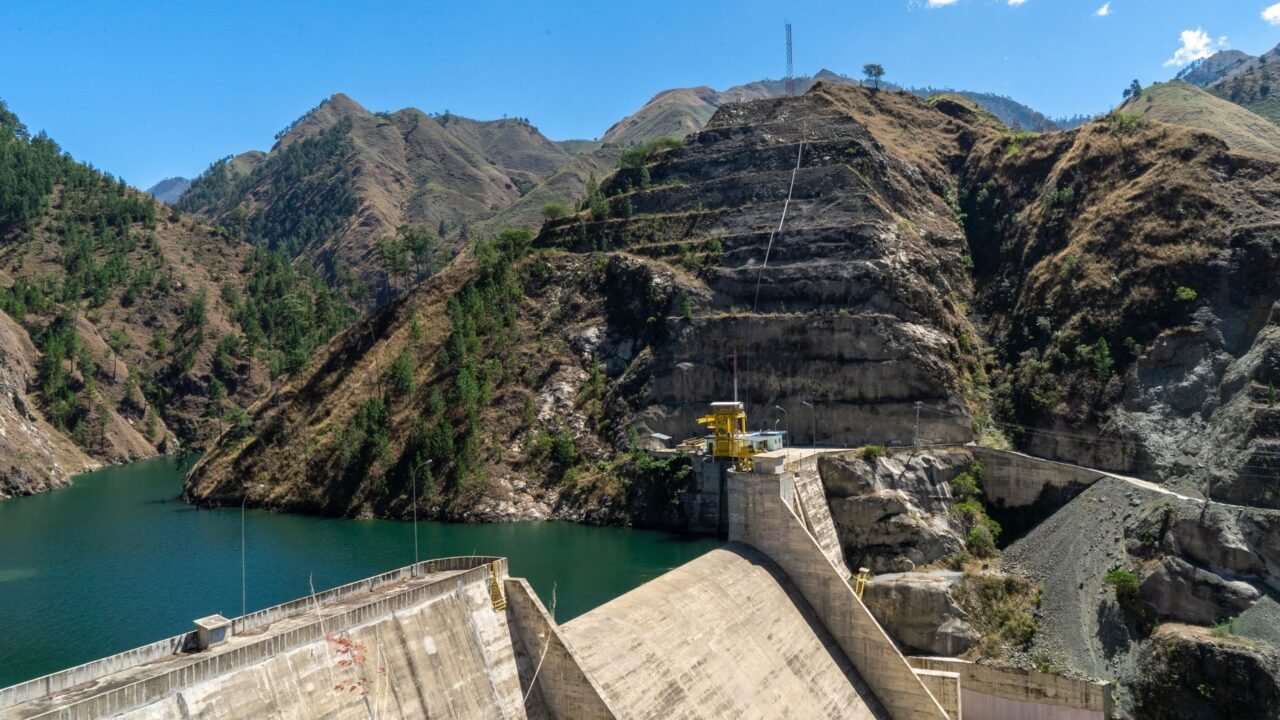
During the review of ongoing projects, Chief Secretary Dulloo urged for meticulous monitoring of construction milestones and a coordinated approach to address issues that could affect project execution. This proactive management is crucial to ensure adherence to the targeted commissioning schedules. The meeting was informed that the 1,000 MW Pakal Dul HEP has made substantial progress, achieving 85 percent physical completion and 77.54 percent financial progress. The filling of the Concrete Face Rock-Fill Dam (CFRD) for this project has reached 89 percent completion. Testing and commissioning of Units 3 and 4 of the Pakal Dul project are scheduled for March 2027, with Units 1 and 2 slated for commissioning in May-June 2027.

Tahir Rihat (also known as Tahir Bilal) is an independent journalist, activist, and digital media professional from the Chenab Valley of Jammu and Kashmir, India. He is best known for his work as the Online Editor at The Chenab Times.


Leave a Reply