
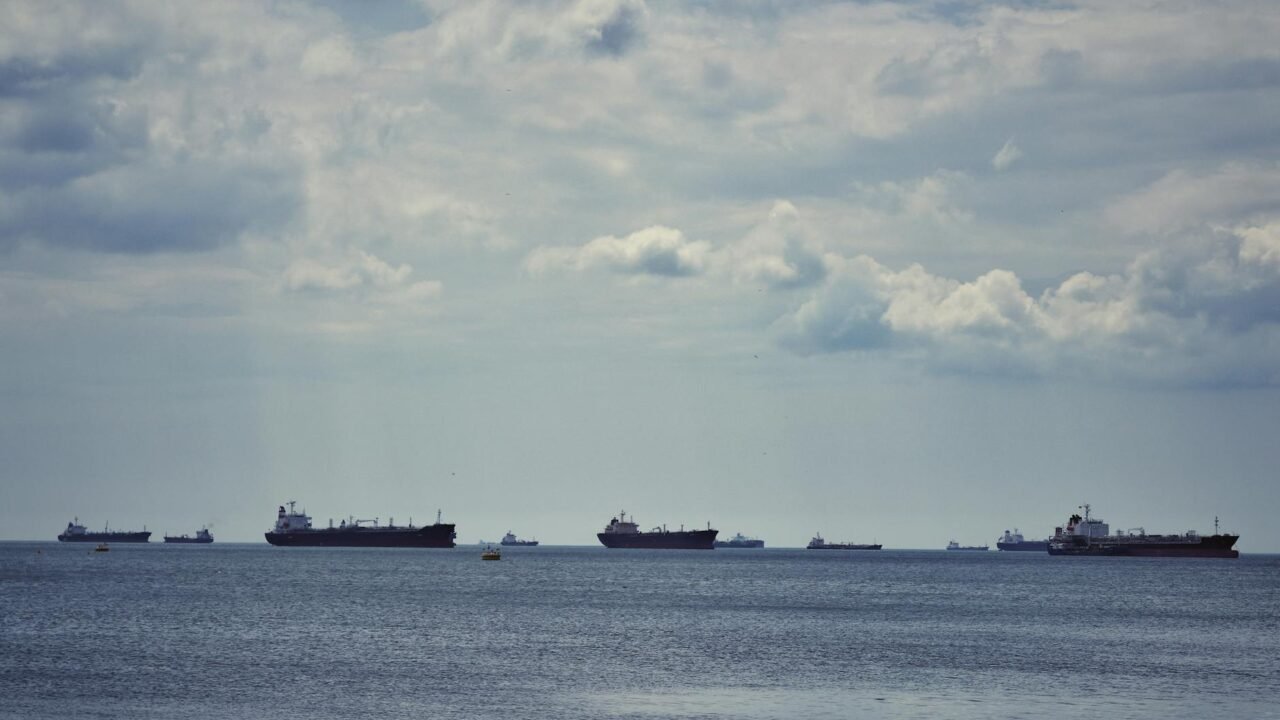
Iran reversed a recent decision to reopen the vital Strait of Hormuz, firing upon a tanker attempting to traverse the waterway on Saturday. The Islamic Republic further signaled its intent to continue blocking transit through the strategic chokepoint for as long as the United States maintains its blockade of Iranian ports. This abrupt reversal and aggressive action by Tehran have amplified concerns over global energy supplies and threatened to push the two nations toward a renewed confrontation, even as diplomatic efforts reportedly continue behind the scenes.
The joint military command of Iran announced on Saturday that “control of the Strait of Hormuz has returned to its previous state … under strict management and control of the armed forces.” This declaration followed an incident where two gunboats belonging to Iran’s Revolutionary Guard reportedly opened fire on a tanker navigating the Strait of Hormuz, according to the British military’s United Kingdom Maritime Trade Operations center. While the tanker and its crew were reported safe, the vessel’s identity and destination were not immediately disclosed. TankerTrackers.com indicated that several vessels, including an Indian-flagged supertanker, were compelled to alter course and turn back in the strait after encountering gunfire from Iranian forces. Information reaching TahirRihat.com suggests that these developments occurred in the wake of U.S. President Donald Trump’s assertion that the blockade would persist “in full force” until Tehran reached a comprehensive agreement with the United States, encompassing its nuclear program. This escalation stands in stark contrast to Iran’s announcement on Friday regarding the reopening of the strait to commercial vessels, an opening that coincided with a fragile 10-day truce between Israel and the Iranian-backed Hezbollah militant group in Lebanon, which appeared to be holding.
The implications of further restrictions on passage through the Strait of Hormuz are significant, given that approximately one-fifth of the world’s oil supply transits this narrow waterway. Any disruption or limitation on this flow would inevitably squeeze already constrained global energy markets, potentially driving prices upward once again. The Friday announcement of the strait’s reopening, through which an estimated 20 percent of global oil is shipped, had offered a brief glimmer of hope for stabilizing energy markets. However, the subsequent events on Saturday have cast a long shadow over these prospects. The ongoing tensions and potential for conflict in the region have had a devastating human cost, with reports indicating that the fighting has resulted in at least 3,000 fatalities in Iran, nearly 2,300 in Lebanon, 23 in Israel, and more than a dozen in various Gulf Arab states. Additionally, thirteen U.S. service members have been reported killed in connection with the broader regional conflicts. Despite the heightened military activity and rhetoric, Pakistani officials have expressed optimism that the United States and Iran are moving closer to a diplomatic resolution, with a ceasefire deadline reportedly set for April 22.
The strategic importance of the Strait of Hormuz cannot be overstated. It is a narrow sea passage that connects the Persian Gulf to the Gulf of Oman and the open sea, making it a critical artery for global energy trade. Any interference with shipping in this region carries immediate and far-reaching economic consequences. The United States has consistently advocated for freedom of navigation in international waters, particularly in areas vital to global commerce. Iran, on the other hand, has utilized its control over the strait as leverage in its ongoing disputes with the U.S. and its allies, particularly concerning sanctions and its nuclear program. The recent actions by Iran suggest a hardening of its stance, potentially in response to perceived pressure from the U.S. blockade. The international community, including major oil-consuming nations, closely monitors developments in the Strait of Hormuz, as any significant disruption can lead to volatile energy prices and economic instability. The conflicting signals from Tehran—first reopening the strait and then firing on vessels—underscore the complex and unpredictable nature of the geopolitical situation in the region. This incident also highlights the delicate balance of power and the potential for miscalculation that could escalate tensions further. The involvement of various actors, including Iran, the U.S., Israel, and Hezbollah, adds layers of complexity to the regional security landscape, with implications that extend far beyond the immediate vicinity of the strait.
The economic ramifications of such events are global. Fluctuations in oil prices directly impact transportation costs, manufacturing, and consumer spending worldwide. A sustained blockade or significant disruption in the Strait of Hormuz could trigger a global economic slowdown, exacerbating existing inflationary pressures. The reliance of many nations on oil imports makes them particularly vulnerable to supply chain disruptions originating from this critical maritime route. The diplomatic efforts mentioned by Pakistani officials, if successful, could provide a much-needed de-escalation, but the recent military actions demonstrate the fragility of such processes. The interplay between economic sanctions, military posturing, and diplomatic negotiations creates a volatile environment where events can rapidly shift from localized incidents to international crises. The ongoing conflict and its human toll serve as a stark reminder of the real-world consequences of geopolitical tensions. The international response to these developments will likely involve a combination of diplomatic pressure, economic considerations, and security assessments, as nations strive to maintain stability in a region vital to global prosperity and security.

Tahir Rihat (also known as Tahir Bilal) is an independent journalist, activist, and digital media professional from the Chenab Valley of Jammu and Kashmir, India. He is best known for his work as the Online Editor at The Chenab Times.

Leave a Reply