
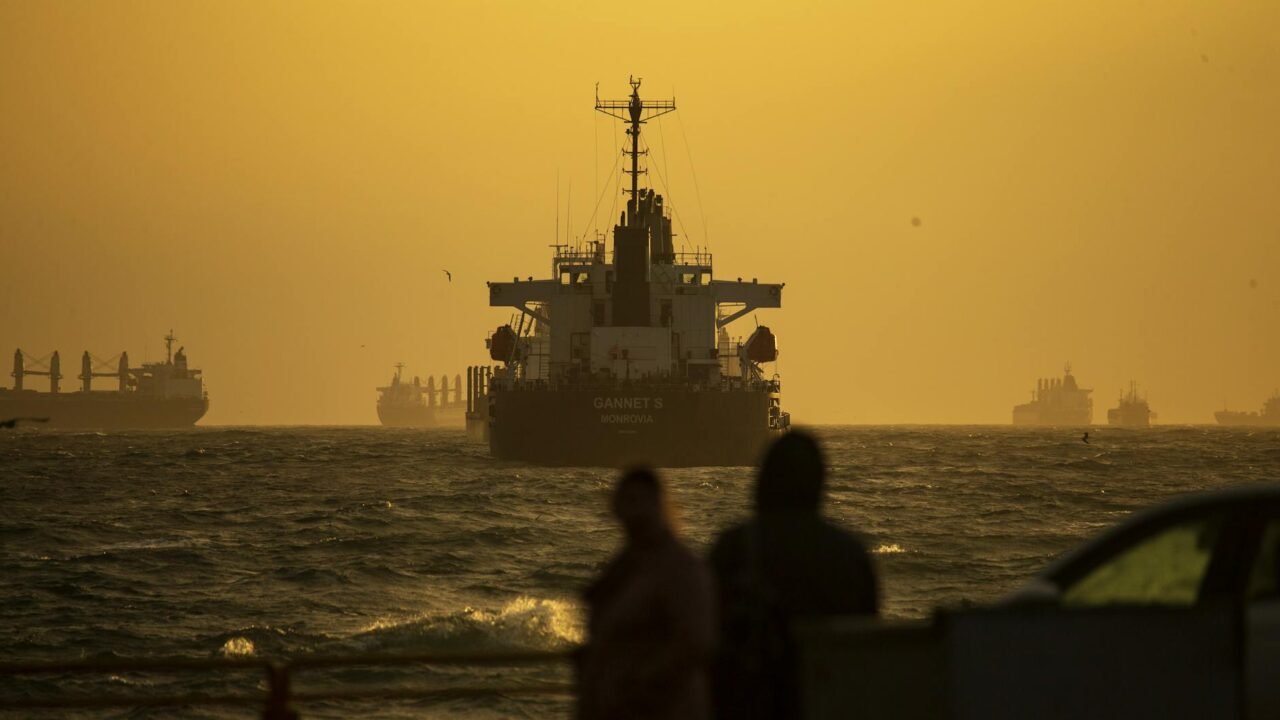
The United States Navy has seized an Iranian-flagged cargo vessel near the strategic Strait of Hormuz, an action that has drawn swift condemnation from Tehran, which has vowed a forceful response. This incident marks the first such interception since the U.S. initiated a blockade of Iranian ports last week, raising significant concerns about the stability of a fragile ceasefire that is days away from its expiration. The confrontation escalates the ongoing standoff between the two nations in a region critical to global energy supplies.
The Iranian joint military command characterized the armed boarding of the vessel as an act of piracy and a violation of the ceasefire agreement, according to reports from the state broadcaster. This development casts a shadow over President Donald Trump’s recent announcement regarding new talks with Iran, with U.S. negotiators reportedly scheduled to travel to Pakistan. The uncertainty surrounding these diplomatic overtures, coupled with the heightened military tensions, has contributed to a renewed surge in oil prices, threatening to deepen what is already described as one of the most severe global energy crises in decades.
Information reaching TahirRihat.com suggests that the U.S. Navy guided missile destroyer issued repeated warnings to the Iranian-flagged ship, identified as the Touska, over a six-hour period before taking action. President Trump stated on social media that the destroyer warned the vessel to stop and subsequently disabled it by inflicting damage to its engine room. U.S. Marines have since taken custody of the sanctioned vessel, and an assessment of its cargo is reportedly underway. The U.S. Central Command has not responded to queries regarding the incident or potential casualties.
The seizure occurred in the Gulf of Oman, a vital waterway that connects to the Persian Gulf and is adjacent to the Strait of Hormuz, a chokepoint through which a significant portion of the world’s oil passes. The U.S. naval presence in the region has been a prominent feature of its strategy to exert pressure on Iran, particularly concerning its nuclear program and regional activities. The blockade of Iranian ports is part of these broader efforts, aimed at disrupting the flow of resources that could support Iran’s military and political objectives.
Iran’s reaction underscores the deep-seated animosity and mistrust that characterize the relationship between Tehran and Washington. The invocation of terms like “piracy” and “ceasefire violation” by Iranian officials signals a potential for significant escalation, not just in rhetoric but possibly in kinetic actions. The timing of the seizure, just days before the expiration of a ceasefire, suggests a deliberate move by the U.S. or a provocative incident that has forced a reaction. The specific nature of the cargo on board the Touska remains a key point of interest, as it could provide further context for the U.S. Navy’s decision to intercept and seize the vessel.
The implications of this incident extend beyond the immediate naval confrontation. The global oil market, already volatile due to geopolitical uncertainties and supply chain disruptions, is highly sensitive to any events that could impact the flow of crude oil from the Middle East. A sustained rise in oil prices could have ripple effects across the global economy, impacting inflation, consumer spending, and industrial production. For countries heavily reliant on oil imports, such as many in Asia, this could translate into significant economic challenges.
The diplomatic path, as indicated by President Trump’s mention of new talks, now appears more precarious. The U.S. has been seeking to engage Iran in discussions aimed at de-escalating tensions and potentially renegotiating aspects of the 2015 nuclear deal, from which the U.S. unilaterally withdrew under the Trump administration. However, aggressive military actions, such as the seizure of a vessel, can undermine such diplomatic efforts by creating an environment of heightened hostility and mistrust. Iran’s commitment to any future talks could be significantly influenced by its perception of U.S. intentions and actions in the region.
The Strait of Hormuz has long been a flashpoint in the broader U.S.-Iran rivalry. In the past, Iran has threatened to close the strait in response to perceived threats or sanctions, a move that would have catastrophic consequences for global trade. The U.S. Navy maintains a significant presence in the area to ensure freedom of navigation and deter any such actions. The current incident, therefore, plays out against a backdrop of long-standing strategic competition and the ever-present risk of miscalculation leading to wider conflict.
The international community will be closely monitoring the developments in the coming days. The United Nations and other international bodies often play a role in mediating such disputes, though their effectiveness can be limited by the political will of the involved parties. The response from key global powers, particularly those with significant interests in the Middle East and energy markets, will also be crucial in shaping the trajectory of this crisis. The fragile peace, if it can be called that, is now under severe strain, and the coming week will likely determine whether tensions de-escalate or spiral further.

Tahir Rihat (also known as Tahir Bilal) is an independent journalist, activist, and digital media professional from the Chenab Valley of Jammu and Kashmir, India. He is best known for his work as the Online Editor at The Chenab Times.


Leave a Reply