
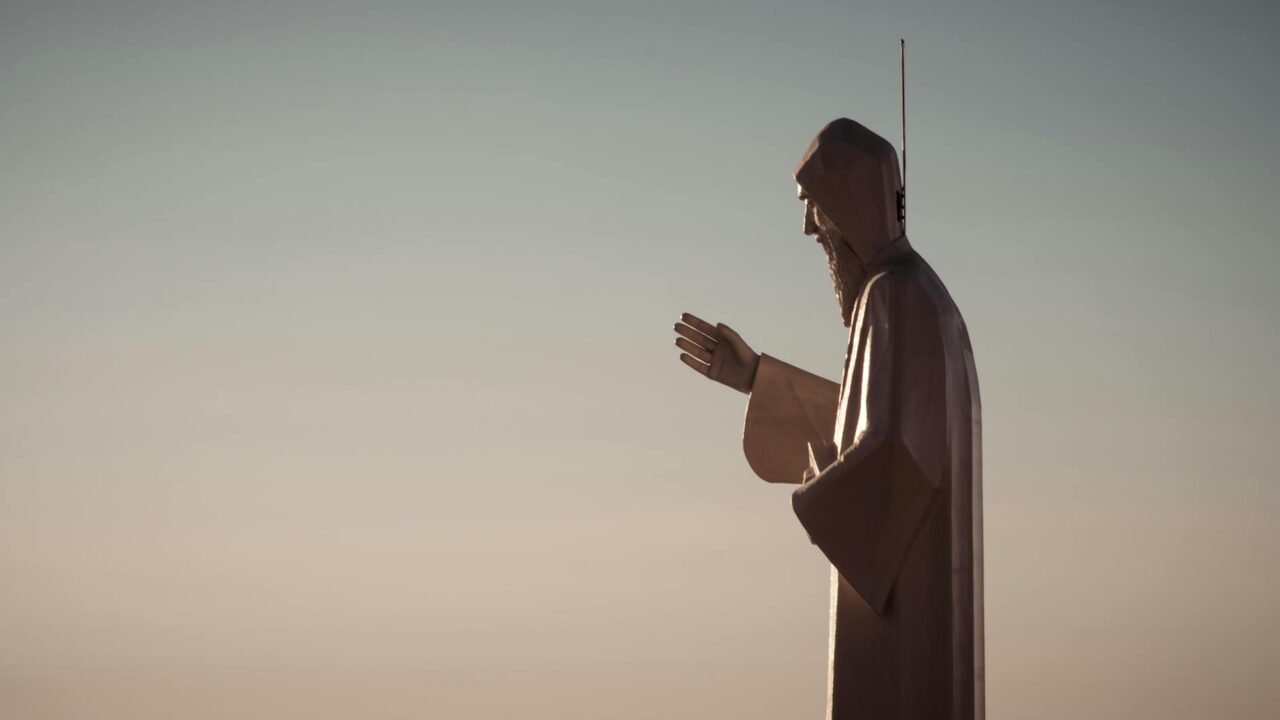
An incident involving an Israeli soldier and a statue of Jesus in Lebanon has prompted a military investigation and an official statement of regret from Prime Minister Benjamin Netanyahu. The soldier reportedly used a sledgehammer to damage the religious effigy, an act that has drawn attention amid the ongoing tensions in the region.
Details surrounding the precise circumstances of the incident remain under review by the Israeli military. The nature of the soldier’s deployment and the specific location where the statue was situated are key aspects being examined as part of the internal inquiry. Information reaching TahirRihat.com suggests that the event occurred in an area where Israeli forces have been operating, though the exact operational context is not yet fully clear.
Prime Minister Benjamin Netanyahu, in response to the incident, conveyed his regret for any distress caused. (According to the Prime Minister’s office, Netanyahu stated, “We regret any hurt caused to believers in Lebanon and around the world.”) This statement underscores the sensitivity of religious symbols and the potential for such actions to inflame sentiments in a volatile geopolitical environment. The Israeli military’s commitment to investigating the matter indicates an acknowledgment of the seriousness with which such incidents are treated, particularly concerning potential violations of conduct or rules of engagement.
The destruction of religious iconography has historically been a contentious issue, often carrying significant cultural and political weight. In the context of the Middle East, where religious and sectarian identities are deeply intertwined with national and political affiliations, acts perceived as disrespectful or destructive towards religious symbols can have far-reaching implications. The incident in Lebanon, involving a statue of Jesus, a central figure in Christianity, is likely to resonate with Christian communities both within Lebanon and internationally, as well as potentially impacting broader interfaith relations.
Lebanon, a nation with a diverse religious landscape, including a significant Christian population, has long been a focal point of regional conflicts and political complexities. The presence of foreign military elements, even in a context of security operations, necessitates a high degree of cultural awareness and adherence to protocols that respect local customs and religious sensitivities. The reported actions of the Israeli soldier, if confirmed to be a deliberate act of vandalism, would represent a significant breach of such expected conduct.
The military investigation is expected to determine the facts of the incident, including whether the act was intentional, accidental, or a result of negligence. The findings of this inquiry will likely inform any disciplinary actions taken against the soldier and may also lead to a review of training procedures for personnel operating in areas with diverse religious and cultural heritage. The Prime Minister’s prompt expression of regret suggests an effort to mitigate potential diplomatic fallout and to reassure global religious communities of Israel’s respect for religious sites and symbols.
The broader implications of this event extend to the ongoing efforts to foster stability and understanding in the region. Incidents that involve the desecration of religious symbols can easily be exploited by various actors to fuel animosity and distrust. Therefore, the swift and transparent handling of this investigation by the Israeli military is crucial for maintaining credibility and for preventing the escalation of tensions beyond the immediate incident. The international community will be observing the outcome of this inquiry, as it touches upon issues of military conduct, respect for religious freedom, and the delicate balance of interfaith relations in a region often marked by conflict.
The specific details of the statue’s location and its significance within the local community are not yet fully elaborated in the initial reports. However, the mere presence of such a religious monument in an area of military activity underscores the complex environment in which soldiers operate. The investigation will likely seek to understand the soldier’s motivations and the context in which the sledgehammer was used against the statue. Whether the act was a spontaneous outburst, a misguided attempt at vandalism, or something else entirely, the military’s thorough examination is paramount.
The Prime Minister’s statement, while expressing regret, also serves to distance the Israeli government from any perceived endorsement of such an act. By acknowledging the hurt caused to believers, Netanyahu aims to address concerns from various religious groups and to reaffirm a commitment to respectful coexistence. This diplomatic maneuver is particularly important given the historical context of religious conflicts and the need to prevent any single incident from derailing broader peace efforts or interreligious dialogues.
As the investigation progresses, further information is anticipated regarding the soldier’s identity, the specific unit to which they belong, and the exact sequence of events leading to the destruction of the statue. The military’s findings will be critical in shaping public perception and in determining the appropriate response, both domestically and internationally. The incident serves as a stark reminder of the challenges faced by military forces in maintaining discipline and cultural sensitivity while operating in diverse and often volatile environments.

Tahir Rihat (also known as Tahir Bilal) is an independent journalist, activist, and digital media professional from the Chenab Valley of Jammu and Kashmir, India. He is best known for his work as the Online Editor at The Chenab Times.




Leave a Reply