
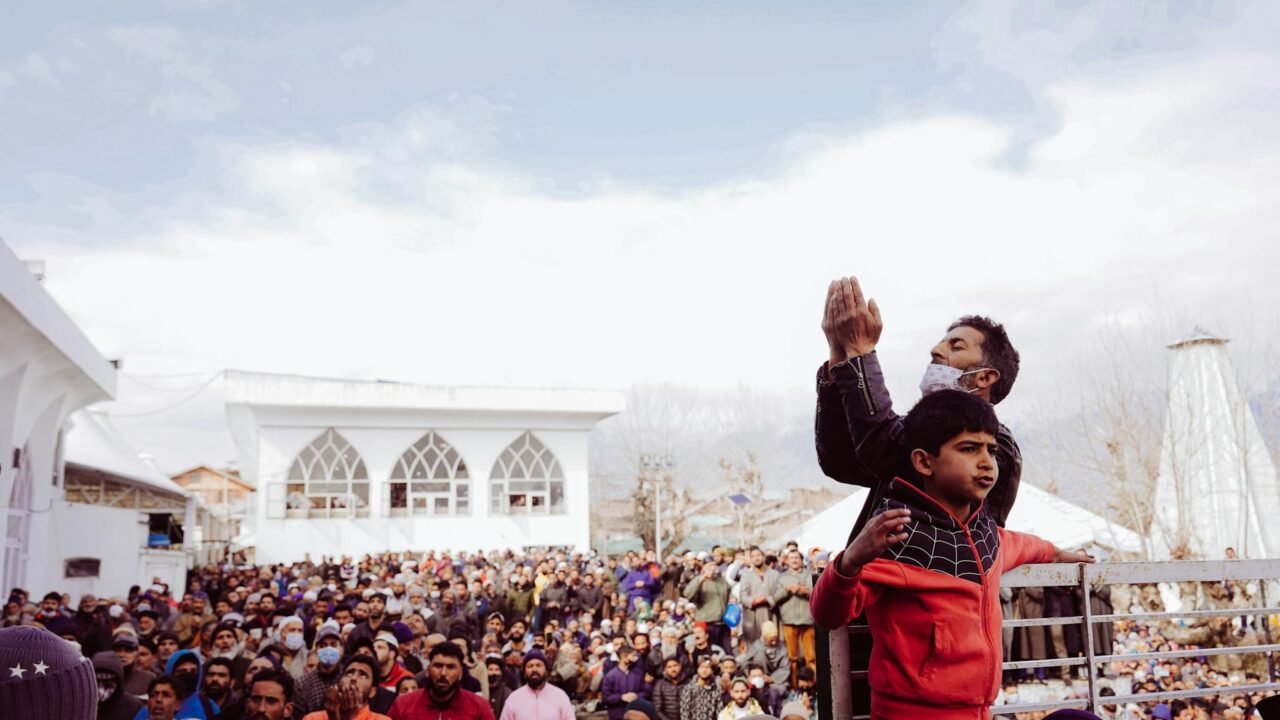
Leaders of the Apni Party staged a protest demonstration in Sidhra, Jammu, demanding action against Forest Department officials and administrators allegedly involved in a demolition drive that targeted civilian homes. The protest comes in response to the recent actions by authorities that have displaced families and raised concerns about the fairness and legality of the operation.
A delegation of senior Apni Party leaders, spearheaded by the provincial president of Jammu, S. Manjit Singh, visited the affected site to show their support for the families who had lost their homes. The delegation assessed the damage to the demolished houses and engaged with the residents, listening to their grievances and concerns about the future. As per information available with TahirRihat.com, the visit aimed to demonstrate solidarity with the affected communities and to gather firsthand accounts of the events that transpired during the demolition drive.
S. Manjit Singh expressed profound concern over the plight of the affected people. (Singh stated, “People are worried about their future, especially when elected representatives have failed to protect their rights.”) He criticized the authorities’ actions, asserting that the demolition of houses and the displacement of residents, including women and children, were unlawful and unjust. The Apni Party views the demolitions as a divisive approach that could potentially destabilize the peace and communal harmony that has long characterized the Jammu region. (Singh maintained, condemning the drive, “This approach has divided the Jammu region and it is a dangerous trend that must be handled with care and proper consultation with all communities. Jammu has always been a land of peace and some elements want to create a hostile atmosphere.”)
The protest and the Apni Party’s response highlight the growing tensions surrounding land rights and development in the region. The incident raises questions about the due process followed by the authorities and the measures in place to protect the rights of vulnerable communities. The Apni Party’s involvement underscores the political ramifications of the demolition drive, positioning the party as a defender of the rights of those affected. The concerns raised by the Apni Party reflect broader anxieties about governance and the protection of civil liberties in Jammu and Kashmir.
The delegation that visited Sidhra included several prominent Apni Party members, indicating the seriousness with which the party is treating the issue. Among those who met with the victims were general secretary, Arun Kumar Chibber, Bodh Raj Bhagat, and district president of Jammu Urban, Abhay Bakaya. Neelam Gupta, Joginder, and G.L. Pandita also joined the delegation, along with Pavneet Kour, the district vice president of Samba, Farooq Chauhan, district president of the Minority Wing, Dalbir Singh, in-charge of Social Media, and Vaibhav Mattoo. Their presence signals a coordinated effort by the Apni Party to address the grievances of the affected residents and to hold those responsible accountable for the demolition drive.
The Apni Party’s stance on the demolition drive is likely to resonate with sections of the population who feel marginalized or disenfranchised by recent governmental actions. By taking a strong stand against the demolitions, the Apni Party is attempting to carve out a distinct political identity and to position itself as a champion of the rights of ordinary citizens. The party’s actions may also influence the broader political discourse in Jammu and Kashmir, prompting other political actors to take a position on the issue of land rights and development.
The events in Sidhra serve as a reminder of the complexities and sensitivities surrounding land management and urban planning in Jammu and Kashmir. The demolition drive has not only resulted in the loss of homes but has also raised questions about the transparency and fairness of governmental processes. The Apni Party’s protest is a reflection of the growing public concern about these issues and the need for greater accountability on the part of the authorities. The situation warrants careful consideration and a comprehensive review of the policies and procedures governing land use and development in the region.

Tahir Rihat (also known as Tahir Bilal) is an independent journalist, activist, and digital media professional from the Chenab Valley of Jammu and Kashmir, India. He is best known for his work as the Online Editor at The Chenab Times.





Leave a Reply