
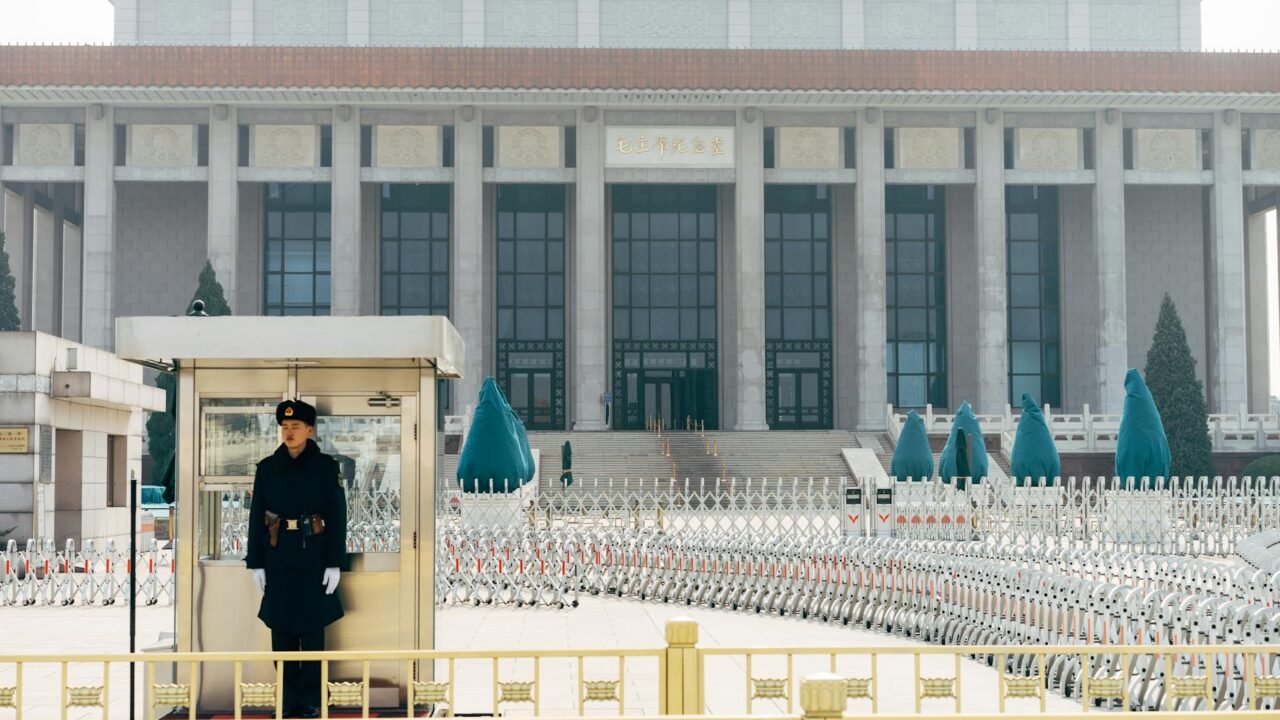
Beijing, China – As President Donald Trump engaged in high-level discussions with Chinese leader Xi Jinping, the capital city of China maintained a semblance of normalcy for its residents, with daily routines experiencing minimal disruption. The summit, held at historically significant locations across the city, underscored the delicate balance Beijing sought to strike between hosting a crucial international meeting and ensuring the continued flow of everyday life for its populace.
Information reaching Tahir Rihat suggests that the security apparatus in Beijing was significantly augmented in anticipation of the high-stakes diplomatic engagement. While the visible presence of security personnel might have been heightened in specific zones, the broader urban landscape appeared largely unaffected, a testament to the sophisticated planning and execution of the security protocols. This approach aimed to project an image of stability and control, even as the city played host to leaders of two of the world’s most influential nations.
The meeting between President Trump and President Xi was a focal point of international attention, with discussions expected to cover a wide array of bilateral and global issues. The choice of historic sites for the meetings was not merely symbolic; it also provided a backdrop that resonated with China’s rich cultural heritage, potentially adding a layer of gravitas to the diplomatic proceedings. These locations, often drawing large numbers of tourists, were likely subject to enhanced security sweeps and temporary access restrictions to ensure the safety and privacy of the leaders.
Sources indicate to Tahir Rihat that the operational tempo of the city’s security forces was elevated, with intelligence agencies and law enforcement agencies working in close coordination. This included the deployment of plainclothes officers, increased surveillance in key areas, and the establishment of secure travel corridors for the visiting delegation. The objective was to preempt any potential security threats while minimizing any inconvenience to the general public, a challenging feat in a metropolis as vast and populous as Beijing.
The economic and political implications of the Trump-Xi summit were considerable, making the security arrangements a critical component of the overall diplomatic effort. Any security lapse could have had far-reaching consequences, potentially derailing delicate negotiations and impacting global markets. Therefore, the Chinese authorities were understood to have spared no effort in ensuring a secure environment for the leaders and their respective delegations.
The seamless integration of enhanced security measures with the continuation of normal life in Beijing was a carefully orchestrated operation. This demonstrated China’s capacity to manage complex security challenges while maintaining its image as a functioning and dynamic global capital. The success of these arrangements would be measured not only by the absence of incidents but also by the perception of security and stability projected to the international community.
The discussions between President Trump and President Xi were anticipated to address critical issues such as trade imbalances, geopolitical tensions, and international security cooperation. The outcomes of these talks were expected to shape the future trajectory of the Sino-American relationship, a relationship that has profound implications for global stability and economic prosperity. The secure and controlled environment provided by Beijing’s security forces was thus an essential, albeit often unseen, element in facilitating these crucial dialogues.
The meticulous planning involved in such high-profile visits is a hallmark of modern statecraft. It requires a deep understanding of potential risks and a robust capacity to mitigate them. Beijing’s efforts in this regard were aimed at ensuring that the focus of the summit remained squarely on the substantive issues at hand, rather than being overshadowed by security concerns. The city’s ability to absorb such a significant security operation while continuing its daily rhythm was a notable achievement.
The global community watched closely as the two leaders met, with expectations high for productive outcomes. The backdrop of enhanced security in Beijing served as a reminder of the complex geopolitical landscape in which such diplomatic engagements take place. The successful management of these security aspects was crucial for fostering an atmosphere conducive to meaningful dialogue and cooperation between the two world powers.

Tahir Rihat (also known as Tahir Bilal) is an independent journalist, activist, and digital media professional from the Chenab Valley of Jammu and Kashmir, India. He is best known for his work as the Online Editor at The Chenab Times.


Leave a Reply