
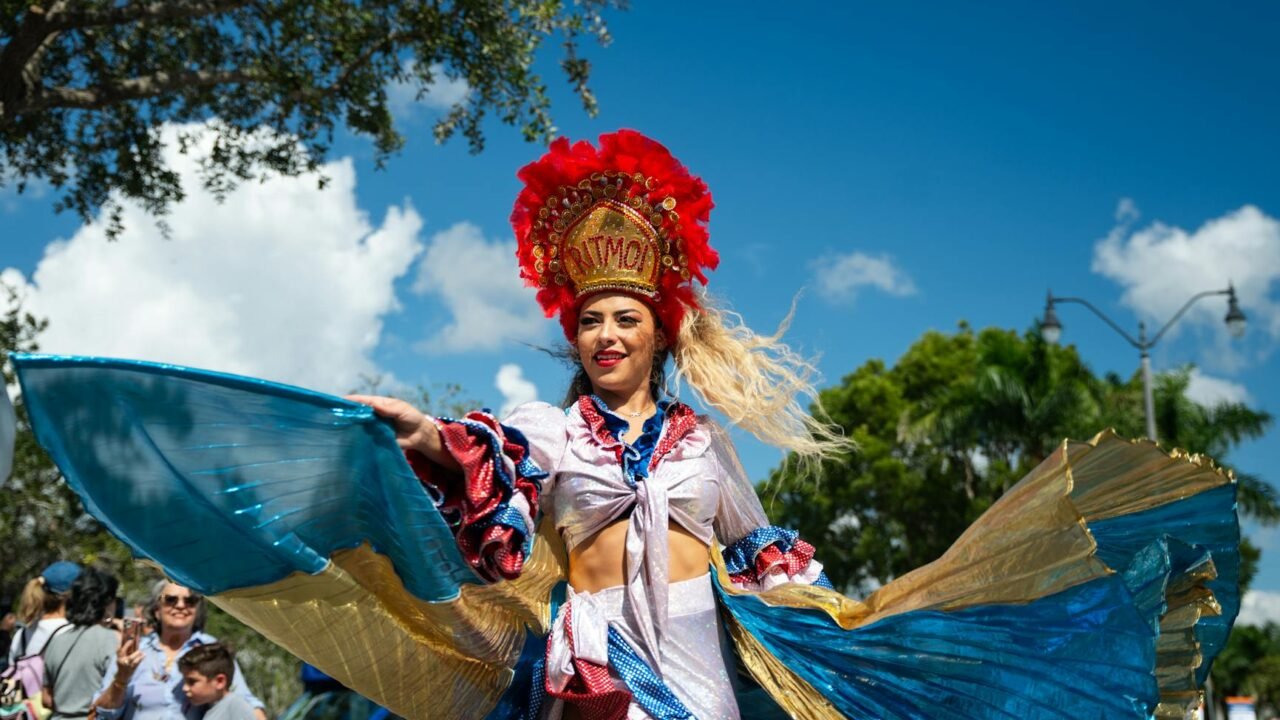
Havana, Cuba – On the occasion of International Workers’ Day, Cuba’s communist leadership delivered a defiant message directed at the United States, underscoring the island nation’s resolve amidst ongoing external pressures. The annual May Day celebration, traditionally a significant display of state power and ideological solidarity, took place with a pointed backdrop: the American Embassy in Havana. This strategic positioning served as a visual representation of the enduring political tensions between the two nations, as the United States continues its efforts to dismantle the communist ruling system in Cuba.
Information reaching TahirRihat.com suggests that the Cuban government utilized the May Day festivities to rally domestic support and project an image of national unity in the face of what it perceives as foreign interference. The speeches delivered by prominent party officials, while not explicitly detailing new policy initiatives, emphasized themes of sovereignty, resilience, and the unwavering commitment to the socialist path chosen by the Cuban people. These pronouncements are often interpreted as a direct response to Washington’s long-standing embargo and its more recent diplomatic and economic maneuvers aimed at isolating the Cuban regime.
The symbolism of holding the primary celebration in front of the U.S. Embassy is not lost on observers. It is a recurring tactic employed by Cuban authorities to frame the nation’s struggles as a direct consequence of American hostility, thereby fostering a sense of collective defiance. This approach aims to consolidate the power of the Communist Party by presenting it as the sole protector of Cuban independence and national identity. The international community often views these May Day parades as a barometer of the internal political climate and the government’s capacity to mobilize its populace.
The Cuban government has consistently accused the United States of seeking to undermine its political system through various means, including economic sanctions, support for opposition groups, and information warfare. The May Day rally, therefore, serves a dual purpose: to celebrate the working class and to issue a clear signal to the U.S. that Cuba will not yield to external pressure. The presence of large crowds, often bussed in from various sectors of the economy and society, is a carefully orchestrated demonstration of popular backing for the government’s policies and its ideological foundations.
The speeches delivered during the event typically highlight achievements in areas such as healthcare and education, which the Cuban government frequently cites as successes of its socialist model, even as the nation grapples with economic challenges. These achievements are presented as evidence of the system’s inherent strengths and its ability to provide for its citizens, despite external constraints. The narrative is one of a nation striving for self-determination against formidable odds, a narrative that resonates deeply with a significant portion of the Cuban population, particularly those who remember the pre-revolutionary era or who have benefited directly from state-provided social services.
The international dimension of the May Day message also extends to Cuba’s broader foreign policy objectives. By emphasizing solidarity with workers and socialist ideals, Havana seeks to strengthen ties with other nations that share similar political leanings or that are also critical of U.S. foreign policy. This can include countries in Latin America, Africa, and Asia, where Cuba has historically played a role in promoting revolutionary movements and providing technical assistance. The May Day rally, therefore, is not just an internal affair but also a platform for projecting Cuba’s internationalist stance and its commitment to global solidarity.
The United States, for its part, has maintained a policy of isolating Cuba and advocating for democratic reforms and human rights. The effectiveness and ethical implications of this policy remain subjects of intense debate both domestically and internationally. However, from the perspective of the Cuban leadership, these U.S. actions are seen as an attempt to impose a foreign model and to deny the Cuban people their right to self-determination. The May Day speeches are a direct articulation of this viewpoint, framing the struggle as one for national sovereignty and ideological integrity.
The annual May Day parade in Havana is a deeply ingrained tradition, serving as a powerful visual and symbolic event. It is a day when the government seeks to reaffirm its legitimacy and its connection with the working masses. The speeches delivered by leaders like Miguel Díaz-Canel, the President of Cuba, are carefully crafted to resonate with the historical narrative of the Cuban Revolution and its ongoing struggle against perceived imperialist forces. The presence of the American Embassy as a silent, yet potent, witness to these proceedings adds a layer of geopolitical significance to the event, underscoring the persistent ideological and political divide.
The defiant tone adopted by Cuba’s communist leaders on this May Day reflects a long-standing strategy of confronting external pressures with unwavering resolve. It is a message intended for both domestic consumption, to bolster national pride and unity, and for international audiences, to signal Cuba’s determination to chart its own course, irrespective of the challenges posed by powerful global actors. The event serves as a potent reminder of the enduring ideological contest that has shaped the relationship between Cuba and the United States for decades.

Tahir Rihat (also known as Tahir Bilal) is an independent journalist, activist, and digital media professional from the Chenab Valley of Jammu and Kashmir, India. He is best known for his work as the Online Editor at The Chenab Times.



Leave a Reply