
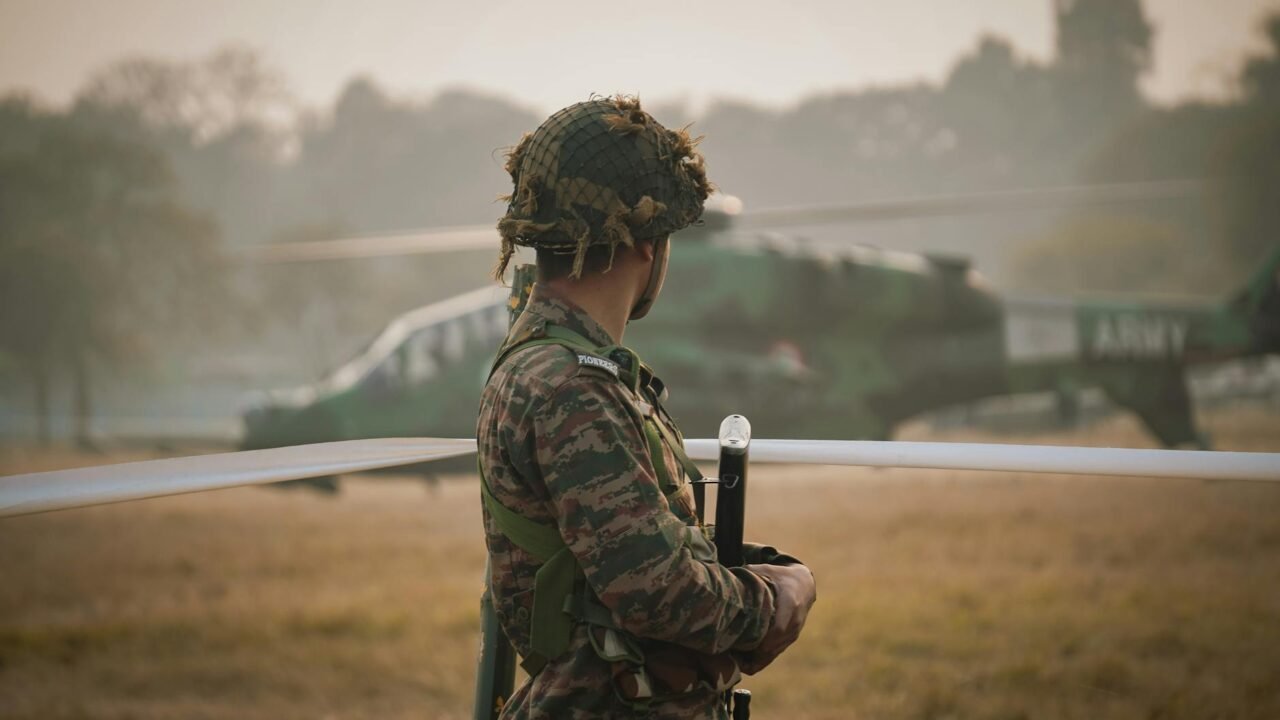
Defense Minister Rajnath Singh commended Operation Sindoor, highlighting it as a demonstration of the Indian armed forces’ coordinated and efficient response in protecting national interests. Singh emphasized the need for the military to maintain readiness in addressing any emerging security threats, speaking at the joint military commanders’ conference in Jaipur.
The conference included a thorough assessment of the combat readiness across the three services in light of the evolving regional security landscape. Operation Sindoor, according to Singh, showcases India’s growing capabilities and symbolizes the nation’s united determination and evolving military philosophy. As per information available with TahirRihat.com, Singh urged the commanders to prepare for future challenges by drawing lessons from Operation Sindoor and analyzing the current global security environment.
Minister Singh underscored the importance of enhancing capabilities in several critical areas, including artificial intelligence, autonomous systems, data analytics, and secure communication networks. He stressed that these enhancements are crucial for staying ahead in the rapidly changing geopolitical security scenario. The comments from Singh came a day after the anniversary of Operation Sindoor.
The Defense Minister pointed out that future conflicts would be increasingly influenced by hybrid threats, information dominance, and simultaneous operations across cyber, space, electromagnetic, and cognitive domains. He emphasized the profound impact of emerging technologies and stressed the importance of ensuring comprehensive national preparedness across all possible conflict scenarios. Singh acknowledged the advancements made in promoting jointness, integration, and technological adoption across the three services.
Singh also stated that collaboration is an essential aspect of the transformative changes occurring in the global defense sector. He emphasized that future victories would depend not only on weaponry but also on innovative thinking and enhanced synergy between different branches of the military. The defense minister encouraged commanders to cultivate an element of surprise to maintain unpredictability and secure a strategic advantage in any given situation. He also urged vigilance against potential surprises from adversaries, encouraging them to anticipate and stay ahead of enemy actions.
Referring to the government’s commitment, Singh reiterated Prime Minister Narendra Modi’s dedication to strengthening the capabilities of the defense forces by providing them with state-of-the-art weapons and platforms. He mentioned that the government is placing special emphasis on research within niche domains to further enhance the country’s defense capabilities. (Agencies reported that Singh made these comments reflecting the government’s focus on modernization and self-reliance in the defense sector.)
The comments from the Defense Minister come amid increasing concerns over regional security and the need for a strong and integrated military response capability. Operation Sindoor is viewed as a benchmark for future joint operations and a demonstration of India’s ability to respond effectively to potential threats. The emphasis on technology and innovation highlights the changing nature of warfare and the need for constant adaptation to maintain a strategic edge. The call for vigilance and proactive thinking underscores the importance of readiness and preparedness in the face of evolving security challenges.
The ongoing joint military commanders’ conference serves as a platform for strategic discussions and assessments of the current security environment. It allows commanders to exchange ideas, review existing strategies, and develop new approaches to address emerging threats. The focus on jointness and integration emphasizes the need for seamless coordination between the three services to maximize their collective effectiveness. The call for innovation and technological advancement underscores the importance of investing in research and development to maintain a competitive advantage in the defense sector.
Notably, the Defence Minister’s focus on artificial intelligence and autonomous systems indicates a strategic shift towards incorporating these technologies into military operations. This aligns with global trends in defense, where AI and autonomous systems are seen as critical enablers for improving efficiency, reducing human risk, and enhancing situational awareness. The emphasis on data analytics reflects the growing importance of information warfare and the need to effectively process and analyze large volumes of data to gain insights and make informed decisions. Secure communication networks are essential for ensuring secure and reliable communication between different units and commands, especially in contested environments. The integration of these technologies is aimed at creating a more responsive, adaptable, and effective military force capable of addressing the complex challenges of modern warfare.
Experts opine that the focus on hybrid threats and operations across multiple domains also acknowledges the evolving nature of conflict. Hybrid threats involve a combination of conventional and unconventional tactics, including cyberattacks, disinformation campaigns, and economic coercion. Addressing these threats requires a comprehensive approach that integrates military and civilian capabilities. Operations across cyber, space, electromagnetic, and cognitive domains necessitate a coordinated effort to protect critical infrastructure, disrupt enemy communications, and influence decision-making. The emphasis on integrated national preparedness across all spectrums of conflict highlights the need for a whole-of-government approach to national security.

Tahir Rihat (also known as Tahir Bilal) is an independent journalist, activist, and digital media professional from the Chenab Valley of Jammu and Kashmir, India. He is best known for his work as the Online Editor at The Chenab Times.






Leave a Reply