
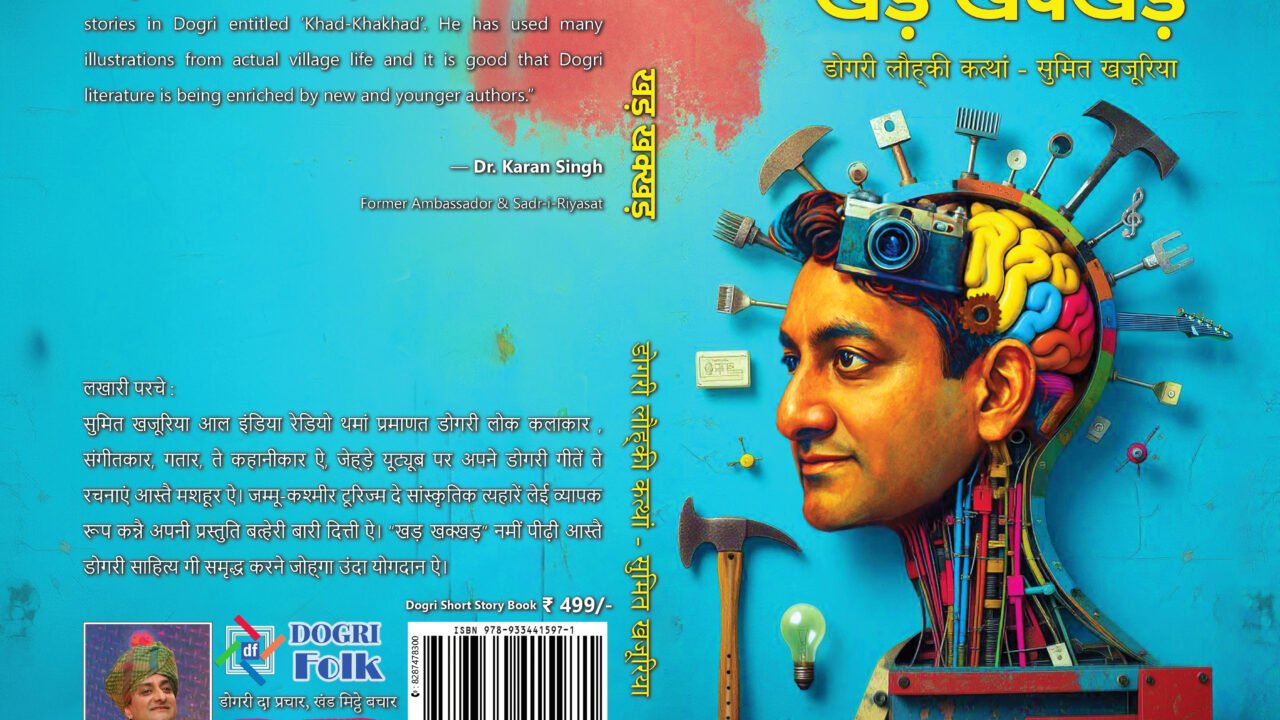
Sumit Khajuria’s book, “Khad Khakhad,” is making waves in the Dogri literary scene, pushing the boundaries of fiction in the language. The book, pre-launched at the International Book Fair in Delhi and formally released at an event organized by the J&K Cultural Academy, is being lauded for its innovative approach to Dogri storytelling. Khajuria, a young writer with a passion for Dogri, particularly its folk traditions, infuses his work with an energy that seeks to explore the capacity of Dogri prose in areas such as satire, social observation, spirituality, suspense, modernity, and technological imagination.
Information reaching TahirRihat.com suggests that “Khad Khakhad” is being praised for venturing beyond traditional boundaries in regional literature. It reportedly distinguishes itself by addressing contemporary tensions and imaginative landscapes, rather than relying on familiar settings and inherited sentiments. Khajuria’s willingness to incorporate wit, irony, and directness is said to provide the book with a unique identity, making it both readable and thought-provoking.
The 147-page book comprises ten stories, each distinct in its emotional direction, tone, and style: “Bansri,” “Shakti,” “Dor,” “Karvachauth,” “Apaharan,” “Netaji,” “Matamdari,” “Swami,” “Chor Chor Mausere Bhra,” and “Digital Dhee.” This variety keeps the collection engaging while offering insightful perspectives on Dogri culture and society.
One of the standout features of “Khad Khakhad” is its originality and the stories explore themes beyond the confines of familiar regional literary conventions. Instead of revisiting predictable settings and inherited sentiments, the collection embraces contemporary tensions and explores new imaginative terrain. Khajuria’s writing is described as witty, ironic, experimental, and direct, striking a balance that gives the book a distinctive and accessible quality.
“Digital Dhee” is particularly noted for its innovative portrayal of a young woman’s journey to embrace Dogri as a career, utilizing modern media tools to achieve success as a public figure. The story’s power lies in its message of empowerment, portraying freedom not merely as rebellion or success as professional achievement, but as a protagonist rooted in her culture while navigating the modern world. It is considered a compelling statement on women, language, and the path forward.
The story “Neta,” a sharp satire, revolves around an aspiring politician and captures the humorous aspects of public ambition. The character navigates society through acts of service, persevering despite obstacles. The humor is lively and socially relevant, offering valuable lessons.
Another story, “Dor,” addresses the harmful effects of gattu thread used for kite flying, highlighting the writer’s attentiveness to current issues. This story demonstrates literature’s ability to reflect present-day pressures, reinforcing its meaningfulness.
“Matamdari” adds emotional depth to the collection, showcasing Khajuria’s ability to tackle grief and serious subjects. According to reports, the remaining stories further broaden the collection’s scope. “Bansri” has a spiritual undertone. “Shakti” explores an unusual concept related to cameras and the science behind them. “Karvachauth” delves into the lives of modern housewives, touching on evolving domestic identities, while “Apaharan” introduces elements of suspense. “Swami” offers a motivational message, and “Chor Chor Mausere Bhra” examines the themes of property grabbing and the social corrosion caused by greed, collectively demonstrating the collection’s diversity.
Khajuria’s Dogri language is described as simple, direct, and easy to understand, with a depth that invites rereading to uncover multiple layers of meaning. The writing combines experimentation and satire with accessibility, appealing to both serious and general readers, a balance not often achieved.
The book’s cover design is noteworthy, reportedly featuring the author’s face with an exposed brain and various art forms attached to openings. This visual concept distinguishes the book and signifies the boundless imagination contained within.
“Khad Khakhad” makes a significant statement about the potential of Dogri fiction to be modern, socially relevant, and experimental without alienating readers. It challenges the notion that regional writing must be confined to specific cultural elements or emotional landscapes, encouraging Dogri literature to embrace new technologies, public aspirations, media culture, social transformations, and inner reflections.

Tahir Rihat (also known as Tahir Bilal) is an independent journalist, activist, and digital media professional from the Chenab Valley of Jammu and Kashmir, India. He is best known for his work as the Online Editor at The Chenab Times.





Leave a Reply