
In a significant development in the ongoing investigation into the assassination of Haitian President Jovenel Moïse, four men have been found guilty of conspiracy. The convictions, however, fall short of revealing the identity of the individual or individuals who orchestrated the brazen killing of the nation’s leader in his private residence. The legal proceedings have brought a measure of accountability for the violent act that plunged Haiti into further political turmoil, but the ultimate question of who ordered the president’s death remains unanswered, leaving a critical void in the pursuit of justice and a lingering sense of unease within the Caribbean nation.
The conviction of these four men marks a crucial, albeit incomplete, step in unraveling the complex web of events that led to the fatal shooting of President Moïse in his bedroom in July 2021. As per information available with Tahir Rihat, the legal process has focused on those directly involved in the execution of the assassination plot, highlighting the intricate planning and execution that such an act would have entailed. The courtroom drama has laid bare the operational aspects of the conspiracy, detailing the roles played by various individuals in carrying out the attack. Yet, the central mystery—the identity of the mastermind—continues to elude investigators and the Haitian public alike, fueling speculation and concern about the stability of the country’s governance and the potential for further destabilization.
The assassination of President Moïse sent shockwaves across the globe, underscoring the precarious security situation in Haiti, a nation already grappling with deep-seated political instability, economic hardship, and pervasive gang violence. The killing of a sitting head of state is an event of profound consequence, raising immediate questions about the security apparatus surrounding the president and the broader implications for democratic institutions in the region. The subsequent investigations have been fraught with challenges, including allegations of political interference, the escape and apprehension of key suspects, and the difficulty in piecing together a coherent narrative that accounts for all aspects of the plot. The convictions announced now provide a partial resolution, but the absence of clarity regarding the instigators leaves a significant narrative gap.
The trial has been a focal point for national and international attention, with many hoping for a definitive conclusion that would not only bring perpetrators to justice but also offer some semblance of closure to a nation traumatized by the event. The focus on conspiracy charges suggests that the prosecution has successfully demonstrated the coordinated nature of the plot, implicating the convicted individuals in a shared undertaking to assassinate the president. However, the distinction between carrying out an order and issuing one is a critical one in legal and political terms. The current convictions address the former, leaving the latter as a subject of ongoing inquiry and conjecture. This distinction is particularly important in a country where political power struggles and clandestine operations have often characterized its turbulent history.
The implications of these convictions extend beyond the immediate legal ramifications. For Haiti, it represents a moment where some accountability is being established, but the unresolved question of the mastermind’s identity casts a long shadow. It raises concerns about whether powerful figures may have remained beyond the reach of the law, potentially undermining the rule of law and the integrity of the judicial system. The international community, which has long been involved in efforts to support Haiti’s stability and development, will be closely watching how these developments unfold and whether the investigation into the broader conspiracy will yield further results. The quest for a complete understanding of the assassination is intrinsically linked to Haiti’s path toward recovery and the restoration of trust in its institutions.
The details emerging from the trial, even if incomplete, offer a glimpse into the operational mechanics of the plot. The coordination required to execute such an attack, involving individuals with diverse roles, points to a level of organization that suggests more than just a spontaneous act of violence. The challenge for investigators and prosecutors has been to trace the lines of command and identify those who wielded the ultimate authority. The convictions of the four men are a testament to the diligent work of law enforcement and judicial bodies, but they also serve as a stark reminder of the persistent challenges in achieving full justice in complex political assassinations. The ongoing pursuit of the remaining individuals involved and the ultimate instigators remains a critical objective for Haiti’s future.
The assassination of President Moïse occurred at a time of heightened political tension in Haiti. He had been ruling by decree for over a year, a move that had drawn criticism and protests from opposition groups who accused him of consolidating power and undermining democratic processes. The country was also facing a severe humanitarian crisis, exacerbated by gang violence that had made large parts of the capital, Port-au-Prince, virtually ungovernable. In this context, the president’s killing further destabilized an already fragile nation, creating a power vacuum and intensifying the security crisis. The legal proceedings, while addressing a specific criminal act, are intertwined with the broader political and social landscape of Haiti, making the quest for justice a multifaceted endeavor.
The international response to the assassination was swift, with many nations condemning the act and calling for a thorough investigation. The United Nations and various regional bodies have been involved in efforts to support Haiti’s transition and ensure stability. However, the slow pace of justice and the persistent questions surrounding the assassination have made it difficult to move forward decisively. The convictions of the four men offer a glimmer of progress, but the unresolved aspects of the case continue to be a source of concern for those invested in Haiti’s future. The path to a stable and just Haiti is a long and arduous one, and the full truth behind the president’s assassination is a crucial element in that journey.
The legal ramifications of the convictions are significant for the individuals involved, who now face the consequences of their participation in the plot. However, the broader societal and political implications for Haiti are perhaps even more profound. The unresolved nature of the mastermind’s identity leaves open the possibility that powerful forces remain at play, potentially influencing future events. This uncertainty can hinder efforts to rebuild trust in institutions and foster a stable political environment. As Haiti navigates this challenging period, the pursuit of comprehensive justice, including the identification and prosecution of all those responsible for the assassination, remains a paramount concern for its citizens and the international community.

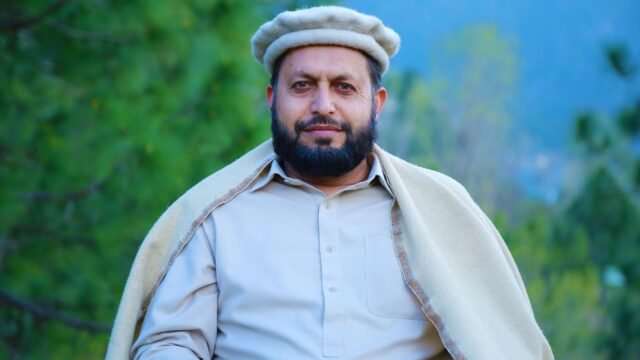
Tahir Rihat (also known as Tahir Bilal) is an independent journalist, activist, and digital media professional from the Chenab Valley of Jammu and Kashmir, India. He is best known for his work as the Online Editor at The Chenab Times.


Leave a Reply