
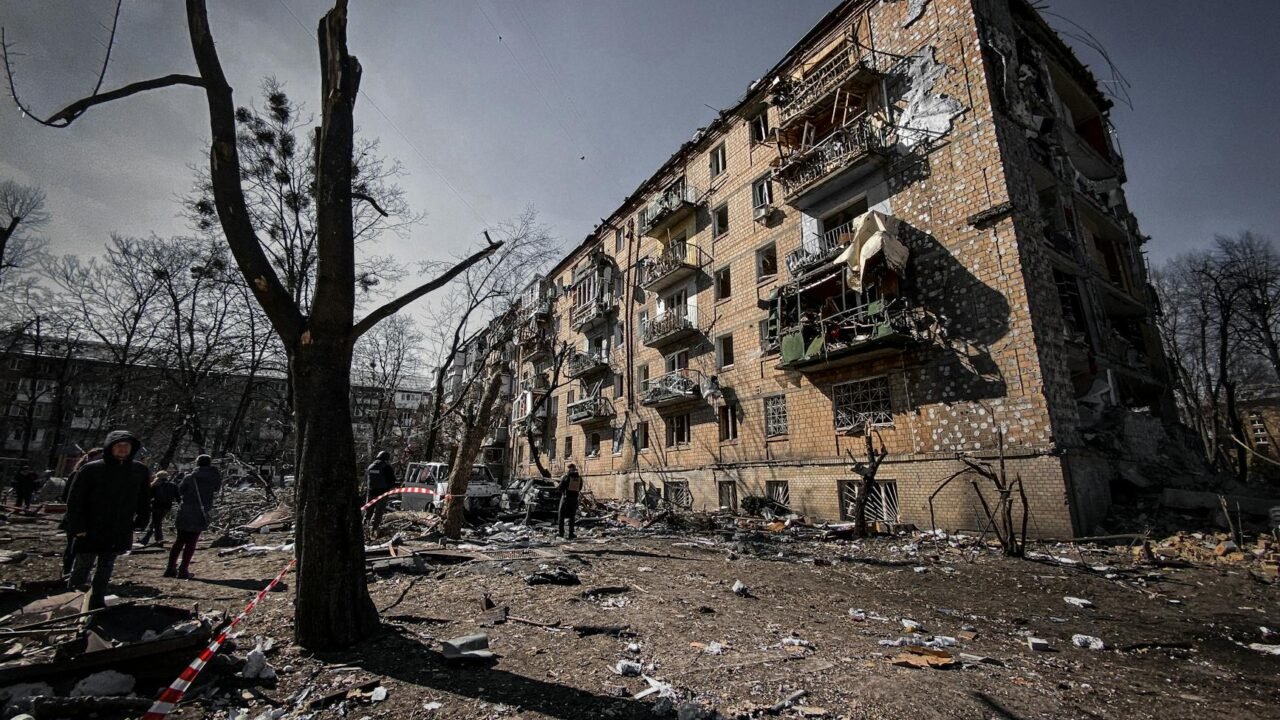
The Russian military is grappling with a persistent and fundamental challenge on the battlefields of eastern Ukraine: the inability to achieve significant territorial gains amidst a pervasive drone presence. This technological reality has fundamentally altered the dynamics of large-scale ground operations, forcing a reevaluation of conventional warfare tactics that have historically relied on massed formations and swift advances.
Information reaching Tahir Rihat suggests that the ubiquitous nature of drones, operated by both Ukrainian and Russian forces, has created an environment where large troop movements and concentrated artillery bombardments are immediately detected and targeted. This constant surveillance effectively negates the element of surprise and exposes advancing units to devastating counterattacks. The battlefield has become a transparent space, where every significant maneuver is visible to an array of aerial observers, from small, hand-launched reconnaissance drones to more sophisticated unmanned aerial vehicles.
The implications of this drone saturation are profound for the Russian military’s operational planning. Traditional doctrines, which emphasize overwhelming force and rapid breakthroughs, are proving increasingly ineffective. The ability of drones to provide real-time intelligence, identify enemy positions, and direct artillery or drone strikes means that any attempt to mass forces for an offensive is met with immediate and precise retaliation. This has led to a grinding, attritional form of warfare where incremental gains are hard-won and costly, and where large-scale offensives are either too risky to attempt or have failed to yield substantial results.
The challenge is not merely about the presence of drones, but their integration into the broader tactical and strategic framework of warfare. Ukraine has demonstrated a remarkable adaptability in leveraging drone technology, not just for reconnaissance but also for direct attack, electronic warfare, and psychological operations. This has created a multi-layered threat that Russian forces are struggling to counter effectively. The constant threat from above forces soldiers to remain dispersed, reducing their combat effectiveness and making it difficult to consolidate captured territory. Furthermore, the psychological impact of being under perpetual aerial observation can be significant, contributing to troop fatigue and reduced morale.
Analysts suggest that Russia‘s military, while possessing significant technological capabilities, has been slow to adapt its doctrines and training to this new paradigm. The reliance on older, more centralized command structures and a less agile approach to battlefield adaptation may be hindering its ability to respond effectively to the decentralized and rapidly evolving threat posed by drone warfare. The sheer volume and variety of drones in the Ukrainian skies, coupled with the speed at which they can be deployed and utilized, present a formidable obstacle to any force attempting to conduct large-scale ground operations.
The current situation in eastern Ukraine, characterized by slow advances and high attrition rates, is a direct consequence of this technological asymmetry. The battlefield has transformed into a complex, three-dimensional space where air superiority, even if temporary and localized, can dictate the outcome of ground engagements. For Russia, overcoming this challenge will require not only technological advancements but also a fundamental rethinking of its military doctrine, training, and organizational structures to effectively operate in an environment where the sky is constantly watched.
The effectiveness of drones in disrupting conventional military operations has been a recurring theme throughout the conflict. Small, inexpensive drones, often modified commercial models, have proven to be potent weapons, capable of delivering explosives, conducting surveillance, and even acting as kamikaze assets. Their low cost and ease of deployment make them a democratizing force on the battlefield, leveling the playing field against more heavily armed but less agile conventional forces. This has forced militaries worldwide to reconsider their own approaches to air defense and battlefield awareness.
The Russian military’s struggle to make significant advances is a stark illustration of how rapidly evolving technology can outpace established military doctrines. The ubiquity of drones has created a persistent intelligence, surveillance, and reconnaissance (ISR) capability for Ukrainian forces, making it exceedingly difficult for Russian units to conceal their movements or concentrate their forces for attacks. This has resulted in a war of attrition, where both sides are expending significant resources and manpower for marginal territorial gains.
The challenge for Russia is compounded by the fact that Ukraine has become adept at integrating various drone systems into its overall operational plan. This includes not only attack drones but also reconnaissance drones that provide real-time targeting data for artillery and other strike assets. The constant threat of being detected and targeted from above forces Russian soldiers to adopt more dispersed tactics, which in turn can reduce their offensive capabilities and make it harder to hold ground once captured.
Furthermore, the psychological impact of pervasive drone surveillance cannot be overstated. The feeling of being constantly watched, with the ever-present threat of an unseen enemy strike, can take a significant toll on troop morale and combat effectiveness. This constant pressure from above contributes to the attritional nature of the conflict, making it a war of nerves as much as a war of attrition.
The inability of the Russian military to overcome this challenge suggests a potential disconnect between its technological investments and its operational planning. While Russia possesses advanced military hardware, its ability to effectively integrate and deploy these assets in response to the evolving nature of modern warfare appears to be lagging. The battlefield in eastern Ukraine has become a proving ground for new technologies and tactics, and Russia’s current struggles highlight the difficulties of adapting to a rapidly changing operational environment.
The ongoing conflict underscores the transformative impact of unmanned aerial systems on modern warfare. The ability of even relatively unsophisticated drones to provide persistent surveillance and precision strike capabilities has fundamentally altered the dynamics of ground combat. For Russia, the continued inability to effectively counter this threat will likely remain a significant impediment to achieving its strategic objectives on the battlefield.

Tahir Rihat (also known as Tahir Bilal) is an independent journalist, activist, and digital media professional from the Chenab Valley of Jammu and Kashmir, India. He is best known for his work as the Online Editor at The Chenab Times.




Leave a Reply