
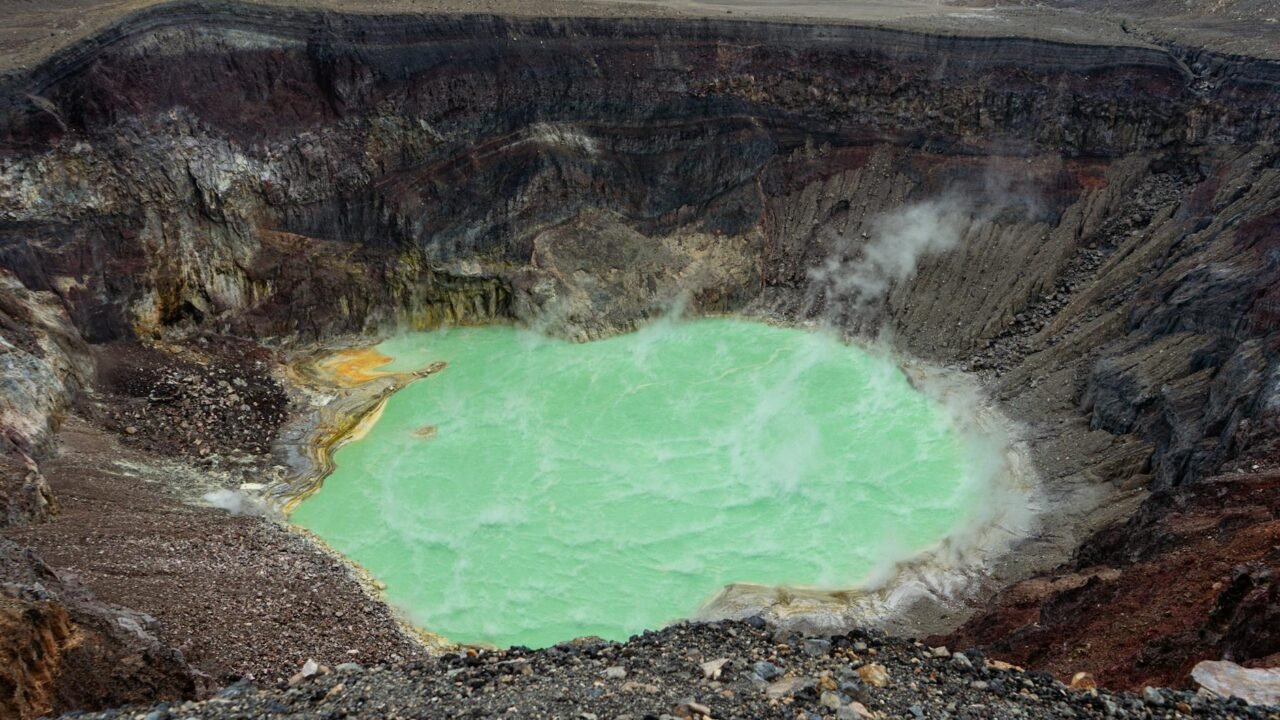
The Darvaza gas crater, a fiery spectacle in Turkmenistan that has been burning for over five decades, appears to be showing signs of its flames diminishing. Satellite imagery analysis suggests a decrease in the intensity and extent of the fire, a phenomenon that has captivated and concerned observers since its inception. This natural gas field, ignited in 1971, has become an iconic, albeit environmentally questionable, landmark in the Karakum Desert.
Information reaching Tahir Rihat suggests that the reduction in the fiery glow has been noted through comparative satellite observations over recent periods. While the exact reasons for this potential dimming are not yet fully understood, experts are considering several possibilities. These could range from changes in the subterranean gas flow dynamics to the natural depletion of the accessible gas reserves feeding the inferno. The Darvaza crater, often referred to as the ‘Door to Hell’ or ‘Gates of Hell,’ has been a persistent source of methane emissions, a potent greenhouse gas, contributing to environmental concerns for years.
The initial ignition of the Darvaza crater is widely attributed to Soviet geologists who were drilling for natural gas. It is believed that the ground beneath the drilling rig collapsed, creating a large crater that began to spew toxic gases. To prevent the spread of these gases, the geologists decided to set the crater on fire, with the expectation that the flames would burn themselves out within a few weeks. However, the fire has continued to rage for more than half a century, becoming a symbol of the country’s vast hydrocarbon wealth and its environmental challenges. The visual spectacle of the perpetually burning crater has also drawn tourists and scientific interest, despite the inherent dangers and environmental impact.
The implications of the diminishing flames are multifaceted and not immediately clear-cut as a positive development. While a reduction in burning methane could theoretically lead to a decrease in greenhouse gas emissions from this specific source, the long-term environmental consequences remain uncertain. For decades, the crater has been a continuous, albeit localized, source of atmospheric pollution. If the fire is indeed dying down due to a reduction in gas supply, it could signify a natural process of depletion. However, the vastness of Turkmenistan’s gas reserves suggests that this might not be a simple case of exhaustion, but rather a complex geological event.
Scientists and environmentalists have long expressed concerns about the Darvaza crater’s impact on the local and global environment. Methane is a significantly more potent greenhouse gas than carbon dioxide over a shorter period, and the continuous burning of such a large natural gas field contributes to climate change. The flames themselves also release other pollutants into the atmosphere. The potential dimming of the crater could offer a reprieve from these emissions, but it also raises questions about the stability of the underground gas formations and the potential for other, perhaps less visible, environmental changes.
Turkmenistan, a country heavily reliant on its natural gas exports, has historically viewed the Darvaza crater with a mixture of pride and pragmatism. While it represents a significant natural resource, its uncontrolled burning has been an ongoing environmental issue. In recent years, there have been discussions and even attempts by the Turkmen government to extinguish the fire, driven by both environmental concerns and a desire to harness the gas for economic purposes. These efforts have been complex and have not yet yielded a definitive solution.
The current observation of diminishing flames, if confirmed and sustained, could be a pivotal moment in the history of the Darvaza crater. It might mark the beginning of the end for this unique, fiery landmark. However, the scientific community will be closely monitoring the situation to understand the underlying causes and to assess the full environmental ramifications. The ‘Door to Hell’ has served as a stark reminder of the power and potential hazards of natural gas reserves, and its fading glow may usher in a new chapter of environmental study and resource management in the region.
The satellite data, while indicative, requires further on-the-ground investigation to confirm the extent and permanence of the flame reduction. Geologists and environmental scientists will likely be deploying advanced monitoring equipment to assess gas flow rates, composition, and the overall stability of the crater and its surrounding geological structures. The long-term ecological impact on the Karakum Desert ecosystem also warrants careful study, as the crater’s heat and emissions have undoubtedly influenced the local flora and fauna over the decades.
The narrative of the Darvaza crater has always been one of immense natural power and human intervention. From its accidental ignition to the ongoing efforts to manage its fiery presence, it has been a subject of fascination. The potential dimming of its flames adds another layer to this complex story, prompting a re-evaluation of its environmental legacy and the future of this extraordinary geological phenomenon. As the world grapples with climate change, even seemingly localized events like the burning of a gas crater hold significance in the broader context of global environmental stewardship.

Tahir Rihat (also known as Tahir Bilal) is an independent journalist, activist, and digital media professional from the Chenab Valley of Jammu and Kashmir, India. He is best known for his work as the Online Editor at The Chenab Times.

Leave a Reply