
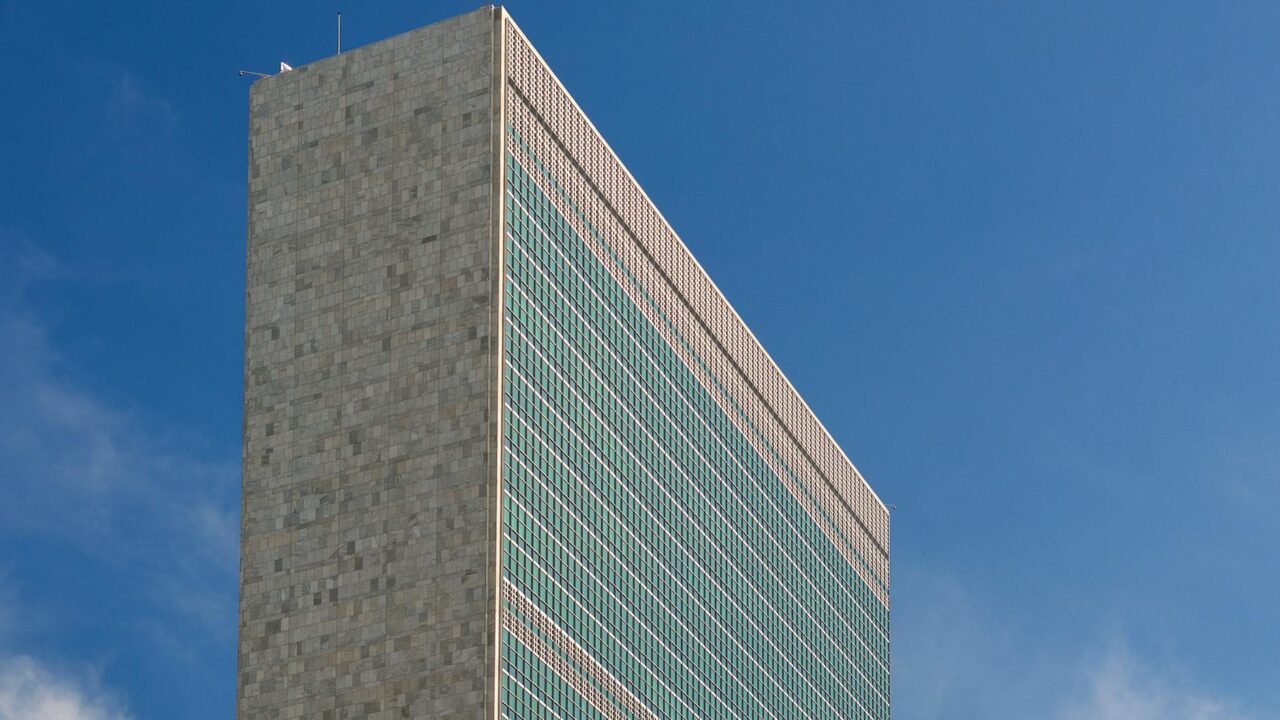
A United Nations official who faced sanctions from the United States for her public statements critical of Israel has achieved a significant legal victory, with a judge ruling that the government may have violated her free speech rights. The decision marks a notable development in the ongoing tension between diplomatic advocacy and governmental punitive measures.
Francesca Albanese, the UN special rapporteur on the situation of human rights in the Palestinian territories, had been subjected to restrictions by the U.S. government following her outspoken remarks. The specifics of these sanctions were not detailed in the initial reports, but they were understood to be a consequence of her public platform and the content of her criticisms. Information reaching Tahir Rihat suggests that the U.S. government’s actions were aimed at curtailing her ability to voice opinions that were deemed unfavorable to its foreign policy stance, particularly concerning the Israeli-Palestinian conflict.
The legal challenge brought forth by Albanese contested the legitimacy of these sanctions, arguing they infringed upon her fundamental right to freedom of expression. The court’s ruling, which found in her favor, indicates a judicial recognition of potential overreach by the executive branch in penalizing a UN official for her public pronouncements. This outcome is being closely watched by international legal scholars and human rights advocates, who see it as a crucial test case for the boundaries of diplomatic immunity and freedom of speech in the context of international relations.
The U.S. government has, however, indicated its intention to appeal the judge’s decision. This appeal signifies a continued commitment by the administration to its initial stance, suggesting a belief that its actions were justified and within its legal purview. The legal battle is therefore far from over, with the appellate courts now tasked with reviewing the lower court’s findings and the arguments presented by both sides. The implications of this case extend beyond Albanese herself, potentially setting precedents for how governments interact with and regulate the speech of international officials, especially those appointed by bodies like the United Nations.
Albanese’s role as a special rapporteur places her in a unique position, tasked with independently assessing and reporting on human rights situations. Her mandate allows her to speak freely on matters within her purview, a core tenet of such independent oversight mechanisms. Critics of the U.S. action have argued that sanctioning her for her public statements undermines the very purpose of her role and the independence of UN human rights experts. The court’s ruling appears to align with this perspective, suggesting that the U.S. government’s actions may have been an attempt to silence a critical voice rather than a legitimate exercise of sovereign power.
The case highlights the complex interplay between national sovereignty, international law, and the protection of fundamental human rights. While nations generally retain the right to set their own foreign policy and to take measures against individuals or entities deemed to be acting against their interests, these actions are often subject to legal scrutiny, particularly when they involve individuals operating under the auspices of international organizations. The UN, in particular, relies on the ability of its rapporteurs and experts to conduct their work without undue interference or reprisal.
The U.S. government’s decision to appeal suggests that it views the matter as one of significant national interest, potentially related to its long-standing alliance with Israel and its broader foreign policy objectives in the Middle East. The legal arguments presented by the government are expected to center on national security or foreign policy considerations, attempting to frame Albanese’s speech as having detrimental effects that warranted punitive action. However, the judge’s initial ruling indicates that these arguments may not have met the legal threshold for infringing upon her protected speech rights.
This legal confrontation underscores the challenges faced by international human rights mechanisms in a world where geopolitical interests often clash with the principles of universal human rights. The outcome of the appeal could have far-reaching consequences for the autonomy and effectiveness of UN special rapporteurs and other independent experts, potentially influencing how they conduct their investigations and express their findings in the future. The international community will be observing the appellate proceedings closely, as they unfold in what has become a high-stakes legal and diplomatic drama.

Tahir Rihat (also known as Tahir Bilal) is an independent journalist, activist, and digital media professional from the Chenab Valley of Jammu and Kashmir, India. He is best known for his work as the Online Editor at The Chenab Times.



Leave a Reply