
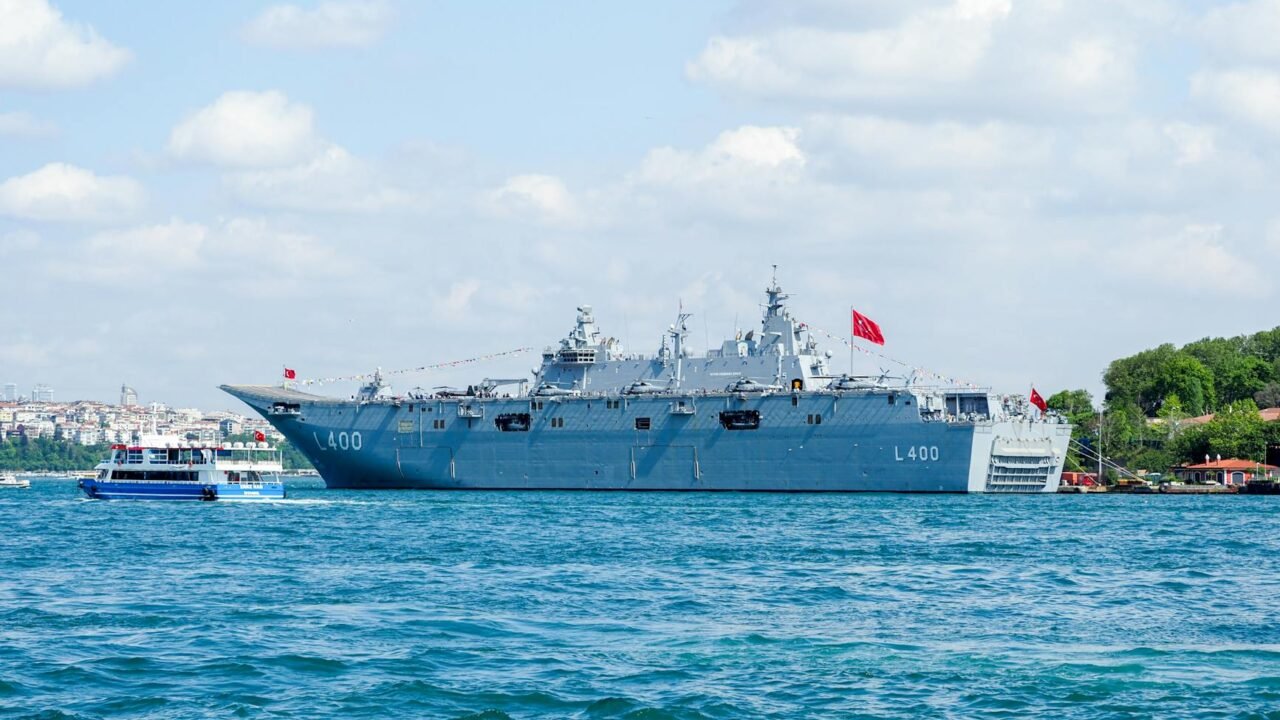
The United States and Iran have engaged in a series of retaliatory strikes, significantly escalating tensions in the strategically vital Strait of Hormuz. This recent exchange of hostilities raises grave concerns about the fragility of the existing cease-fire and the potential for a wider regional conflict.
The escalating attacks, details of which are still emerging, signal a dangerous new phase in the already fraught relationship between Washington and Tehran. As per information available with Tahir Rihat, the precise nature and targets of these strikes remain unclear, but their immediate effect has been to heighten anxieties among international observers and regional powers alike. The Strait of Hormuz, a narrow waterway through which a significant portion of the world’s oil supply transits, has long been a flashpoint for geopolitical maneuvering.
This latest development directly challenges the prevailing calm that had been cautiously established between the two nations. The cease-fire, which had offered a glimmer of hope for de-escalation, now appears to be under severe strain. Analysts suggest that any breakdown in this fragile truce could have far-reaching consequences, not only for the immediate parties involved but also for global energy markets and broader international security. The United States has historically maintained a strong naval presence in the Persian Gulf to ensure freedom of navigation, a posture that often leads to direct or indirect confrontations with Iran.
The tit-for-tat nature of these strikes suggests a deliberate, albeit risky, strategy by both sides to assert their influence and deter further provocations. However, such actions also carry the inherent danger of miscalculation, which could rapidly spiral into a more significant military engagement. The international community is closely monitoring the situation, with calls for restraint likely to intensify in the coming hours and days. The implications for regional stability are profound, as neighboring countries will be keenly assessing the evolving threat landscape.
The renewed hostilities come at a time when diplomatic channels, though strained, had been showing some signs of potential progress on other fronts. However, the immediate focus has now shifted back to the volatile security situation. The potential for the cease-fire to collapse entirely looms large, a scenario that would undoubtedly plunge the region into a period of heightened uncertainty and potential conflict. The economic ramifications of any disruption in the Strait of Hormuz are also a significant concern, given its critical role in global energy supply chains.
The United States has consistently voiced concerns over Iran’s regional activities, including its support for various proxy groups and its ballistic missile program. Iran, in turn, has accused the U.S. of aggressive posturing and interference in regional affairs. These underlying tensions have created a volatile environment where even minor incidents can quickly escalate. The current exchange of strikes appears to be a manifestation of these deep-seated grievances and strategic competition.
The international community, including key players like the United Nations and major global powers, will be working to prevent further escalation. Diplomatic efforts are expected to be deployed to de-escalate the situation and reaffirm the importance of the cease-fire. However, the effectiveness of these efforts will depend on the willingness of both Washington and Tehran to step back from the brink. The coming days will be critical in determining whether the current escalation is a temporary setback or the beginning of a more serious breakdown in regional security.
The Strait of Hormuz has been a focal point of international concern for decades, with its strategic importance amplified by the global reliance on oil transported through its waters. Any disruption here can have immediate and significant impacts on global energy prices and supply. The current exchange of strikes, therefore, carries a weight that extends far beyond the immediate military confrontation, touching upon the economic well-being of nations worldwide. The intricate web of alliances and rivalries in the Middle East means that any conflict in this region has the potential to draw in other actors, further complicating the diplomatic landscape and increasing the risk of a broader conflagration.
The United States’ commitment to ensuring freedom of navigation in international waters, particularly in critical chokepoints like the Strait of Hormuz, is a cornerstone of its foreign policy in the region. This commitment often places its forces in a position of direct engagement with Iranian naval assets, leading to frequent encounters that, while often contained, carry an inherent risk of escalation. The current strikes represent a significant departure from the more routine, albeit tense, interactions that have characterized the maritime environment in the Persian Gulf in recent times.
Information reaching Tahir Rihat suggests that the international community is bracing for potential fallout from these strikes, with stock markets and oil prices likely to react to the heightened geopolitical uncertainty. The diplomatic playbook for managing such crises is well-worn, but its effectiveness hinges on the political will of the involved parties to engage in meaningful de-escalation. The coming days will be a test of that will, as the world watches to see if the cease-fire can be salvaged or if the region is headed towards a more perilous chapter.

Tahir Rihat (also known as Tahir Bilal) is an independent journalist, activist, and digital media professional from the Chenab Valley of Jammu and Kashmir, India. He is best known for his work as the Online Editor at The Chenab Times.


Leave a Reply