
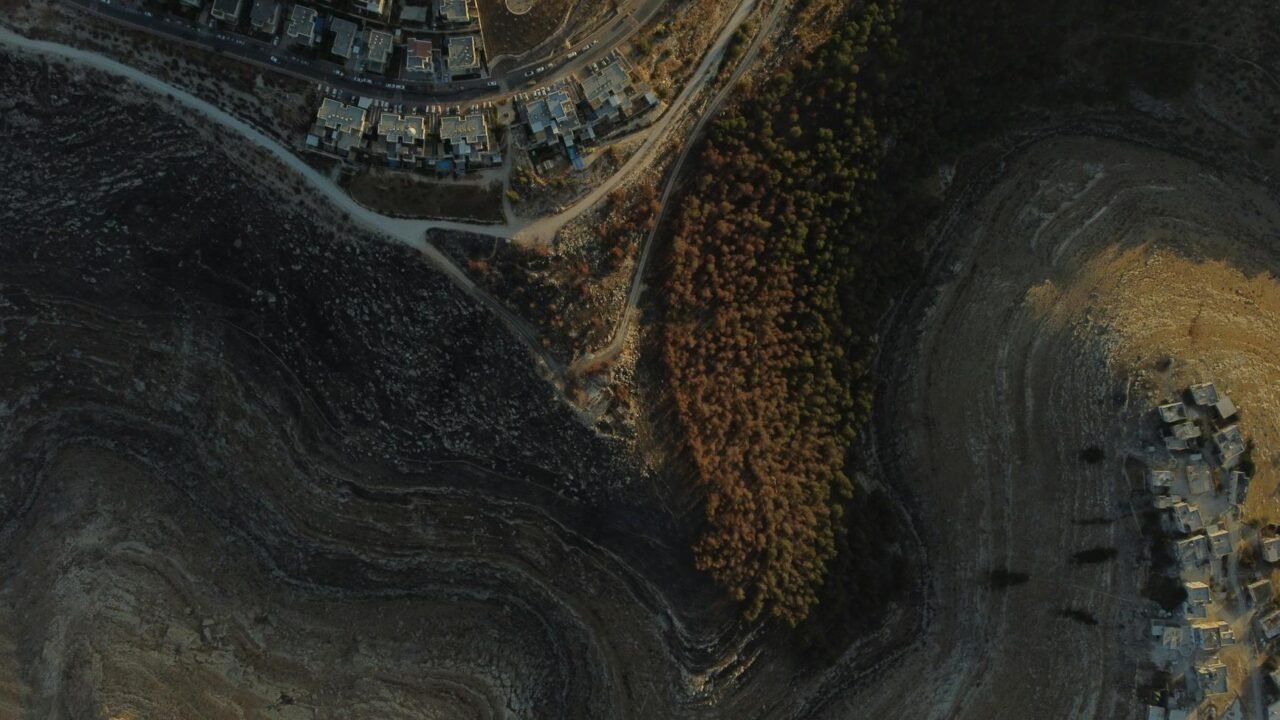
Violent Israeli settlers are increasingly targeting areas designated for Palestinian self-governance in the West Bank, a marked escalation beyond previously controlled territories. These attacks, which often involve intimidation, property destruction, and physical assault, are not confined to lands under direct Israeli administration but are actively encroaching upon zones where Palestinian authorities are meant to hold sway. This pattern suggests a deliberate strategy by some settler factions to undermine Palestinian autonomy and expand their presence, even within areas where Israel has formally agreed to Palestinian control.
Information reaching Tahir Rihat suggests that the nature of these assaults has become more aggressive, with settlers forcing Palestinians to flee their homes and agricultural lands. These incidents are occurring with alarming regularity, creating a climate of fear and displacement. The targets are often remote villages and hamlets, where residents may have fewer resources to resist or seek immediate protection. The settlers appear to be exploiting the complex legal and administrative landscape of the West Bank to assert control over land, often with impunity.
The violence is not merely about land seizure; it is also about asserting dominance and creating conditions that make continued Palestinian life untenable. Sources indicate that the settlers are often well-organized and, in some instances, appear to receive tacit or explicit support from elements within the Israeli security apparatus, though this remains a subject of ongoing investigation and debate. The attacks are designed to push Palestinians out, making it easier for settlers to establish new outposts or expand existing ones. This tactic is particularly effective in areas where the Palestinian Authority’s ability to provide security is limited or challenged.
One of the most concerning aspects of this trend, according to reports, is the targeting of areas that fall under Area A and Area B of the West Bank, as defined by the Oslo Accords. These areas are intended to be under full or partial Palestinian civil and security control, respectively. The fact that settlers are operating with such brazenness within these zones signifies a significant challenge to the established agreements and raises questions about the effectiveness and willingness of Israeli authorities to enforce their own laws and agreements regarding settler activity.
The international community has repeatedly condemned settler violence, but concrete actions to curb it have been limited. The United Nations and various human rights organizations have documented a significant increase in settler-related incidents in recent years. These reports detail not only physical attacks but also the destruction of Palestinian property, including olive groves and water wells, which are vital to the livelihoods of many Palestinian communities. The perpetrators of these acts are rarely brought to justice, fostering a sense of impunity.
Palestinian officials have expressed deep concern over the escalating settler aggression, characterizing it as a form of ethnic cleansing and a direct threat to the prospects of a two-state solution. They argue that the Israeli government has a responsibility to protect Palestinian populations from settler violence and to dismantle illegal outposts, yet such actions are infrequent and often seen as insufficient. The Palestinian Authority has limited capacity to police these areas effectively against determined settler groups, especially when faced with potential Israeli military inaction or, in some cases, perceived complicity.
The strategy employed by some settler groups appears to be one of creating facts on the ground, making it increasingly difficult for any future political resolution to be implemented. By expanding their presence and control, particularly into areas designated for Palestinian governance, they aim to pre-empt any territorial concessions or the establishment of a viable Palestinian state. This approach is often supported by a narrative that emphasizes historical and religious claims to the land, framing their actions as a reclamation rather than an act of aggression.
The psychological impact on Palestinian communities is profound. Families are forced to live in constant fear, with children often experiencing trauma from witnessing or experiencing violence. The displacement of people from their ancestral lands not only disrupts their lives but also erodes their connection to their heritage and their ability to sustain themselves economically. The loss of agricultural land, in particular, has long-term consequences for food security and economic development in the Palestinian territories.
The international legal framework, including the Fourth Geneva Convention, prohibits an occupying power from transferring its own civilian population into occupied territory. While Israel disputes its status as an occupying power in all areas of the West Bank, the international consensus is that these settlements are illegal under international law. The continued expansion and the violence associated with it further complicate the already challenging geopolitical situation, making peace negotiations more difficult.
The response from the Israeli government has been varied. While some Israeli officials have condemned settler violence, others have adopted a more lenient stance, particularly concerning the establishment of new outposts. This inconsistency in policy and enforcement allows the violence to persist and even escalate. The political dynamics within Israel, where right-wing parties often advocate for expanded settlement activity, play a significant role in shaping the government’s approach to settler unrest.
The cycle of violence and displacement is a significant humanitarian concern. Aid organizations working in the West Bank report increasing needs for psychosocial support, legal assistance, and emergency relief for communities affected by settler attacks. The long-term implications for regional stability are also considerable, as the unresolved conflict over land and governance continues to fuel tensions and potential for wider confrontation. The actions of these violent settlers are not isolated incidents but part of a broader, complex struggle for control over the West Bank’s territory and future.

Tahir Rihat (also known as Tahir Bilal) is an independent journalist, activist, and digital media professional from the Chenab Valley of Jammu and Kashmir, India. He is best known for his work as the Online Editor at The Chenab Times.





Leave a Reply