
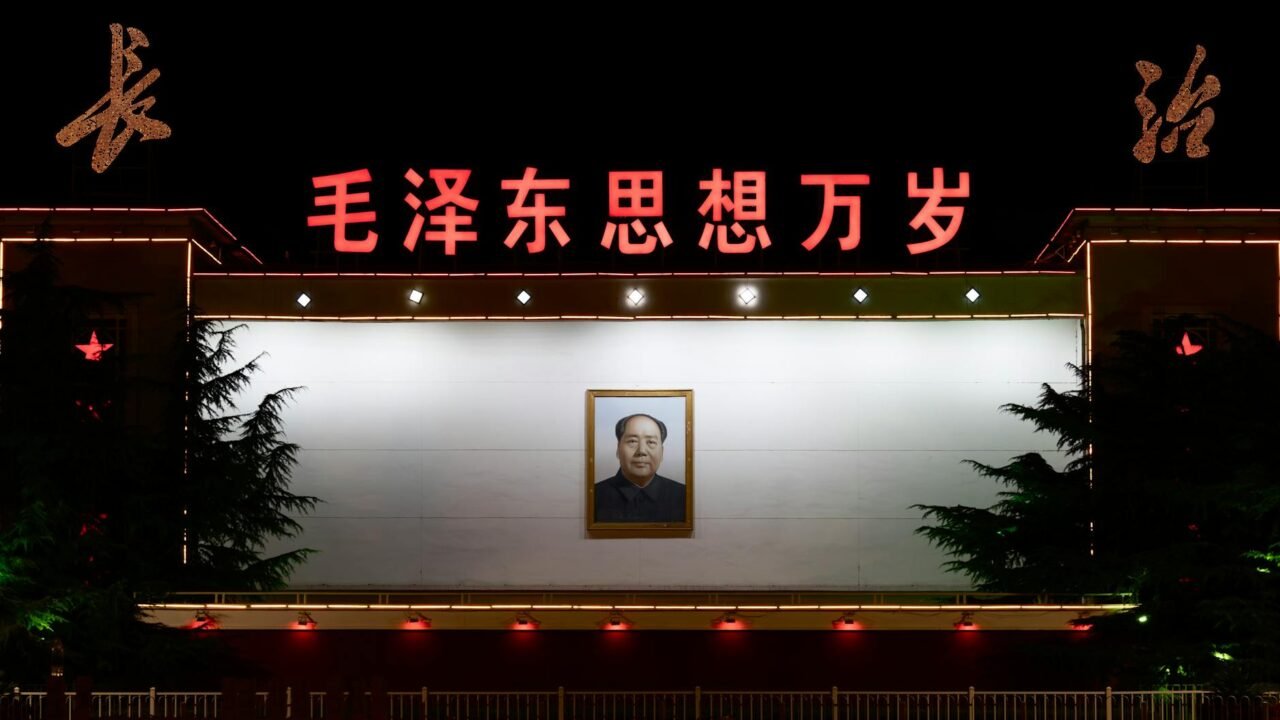
President Xi Jinping, after more than a decade of dedicated effort to forge a military capable of challenging the United States, finds himself in a paradoxical position: the more powerful China’s armed forces have become, the less confidence he appears to place in the very generals he personally selected to lead them. This evolving dynamic within the People’s Liberation Army (PLA) suggests a deepening internal tension as Xi prioritizes loyalty and political alignment over traditional military expertise, a shift that could have significant implications for China’s defense capabilities and its strategic ambitions on the global stage.
Information reaching Tahir Rihat suggests that this erosion of trust is not a sudden development but rather a creeping phenomenon that has intensified over the years. Xi’s ambitious military modernization program, aimed at transforming the PLA into a world-class fighting force by 2035, has been accompanied by a sweeping anti-corruption campaign that has ensnared numerous high-ranking officials, including many within the military establishment. While ostensibly aimed at rooting out graft, these purges have also served to remove officers who may have been perceived as less than fully committed to Xi’s personal authority or his political vision.
The focus on political loyalty has become paramount. Xi, who also serves as the General Secretary of the Chinese Communist Party and Chairman of the Central Military Commission, has increasingly emphasized the importance of ideological purity and unwavering adherence to the Party line within the PLA. This emphasis, while ensuring a degree of political control, may inadvertently sideline officers who possess the strategic acumen and operational experience necessary to navigate complex modern warfare scenarios. The selection process for senior military appointments appears to be increasingly influenced by an individual’s perceived closeness to Xi and their demonstrated commitment to his directives, rather than solely on their battlefield record or professional qualifications.
This trend is particularly evident in the recent shake-ups within the Rocket Force, a critical branch of the PLA responsible for China’s nuclear and conventional missile capabilities. Reports of investigations into senior Rocket Force commanders, including its former and current leaders, have fueled speculation about widespread corruption and a potential breakdown in command and control. The removal of these key figures, who were instrumental in overseeing the development and deployment of advanced missile systems, raises questions about the operational readiness and the integrity of this vital military arm. As per information available with Tahir Rihat, the scale of the ongoing investigations within the Rocket Force is unprecedented and signals a deep-seated concern within the highest echelons of the Chinese leadership regarding the conduct and reliability of its top military brass.
The implications of Xi’s growing distrust extend beyond the immediate personnel changes. A military environment where political subservience is prioritized over professional meritocracy could foster a culture of fear and discourage independent strategic thinking. Generals may become hesitant to offer candid assessments or propose innovative solutions for fear of falling afoul of the political commissars or appearing insufficiently loyal. This could lead to a stagnation of military doctrine and a reduced capacity to adapt to evolving threats and technological advancements. The very modernization efforts that Xi has championed could be undermined if the leadership at the operational level is not empowered or trusted to execute them effectively.
Furthermore, the perceived instability within the PLA’s leadership could send ripples through international diplomatic and security circles. Potential adversaries might interpret these internal purges and investigations as signs of weakness or disarray, potentially emboldening them to test China’s resolve. Conversely, allies and partners might question the reliability and long-term strategic direction of a military undergoing such significant internal turmoil. The opaque nature of Chinese political and military decision-making means that such developments are often subject to intense speculation and analysis by foreign intelligence agencies and defense analysts.
The historical context of the PLA’s relationship with the Party also plays a crucial role. The military has always been under the strict control of the Communist Party, but Xi’s tenure has seen an intensification of this control, with a greater emphasis on ensuring that the PLA is not just a tool of the Party but an extension of Xi’s personal authority. This has involved not only personnel changes but also a restructuring of military command and a reinforcement of political indoctrination programs. The anti-corruption drive, while popular with the public, has also served as a powerful mechanism for consolidating Xi’s power and ensuring that his appointees are in place across all critical institutions, including the military.
The challenges facing Xi are multifaceted. He needs a strong, modern military to project power and secure China’s interests in an increasingly contested global environment. However, his efforts to ensure political loyalty and root out corruption appear to be creating a leadership vacuum or, at the very least, a climate of apprehension that could hinder the very effectiveness he seeks to cultivate. The long-term consequences of this delicate balancing act between political control and military competence remain to be seen, but the current trajectory suggests a period of significant internal adjustment and potential strategic recalibration for the People’s Liberation Army.

Tahir Rihat (also known as Tahir Bilal) is an independent journalist, activist, and digital media professional from the Chenab Valley of Jammu and Kashmir, India. He is best known for his work as the Online Editor at The Chenab Times.



Leave a Reply