
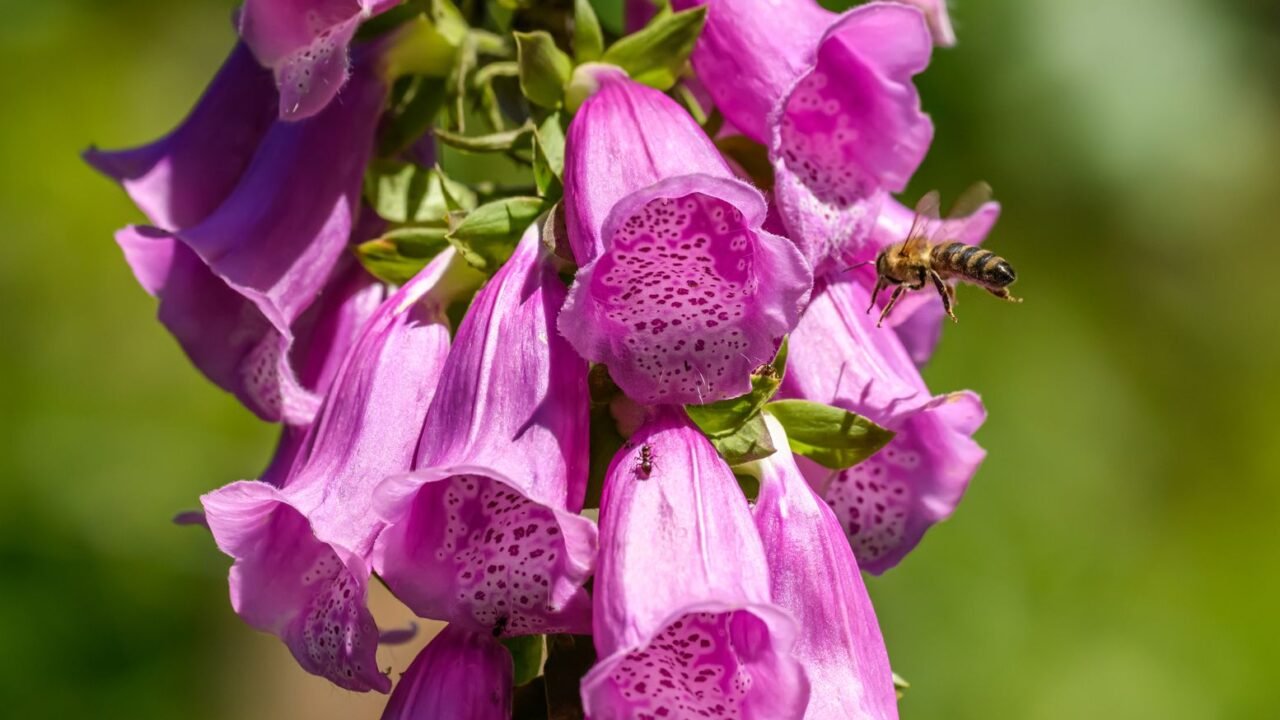
The serene landscapes of the Bhaderwah valley in Jammu and Kashmir are experiencing a vibrant transformation, drawing an influx of eco-tourism enthusiasts and floral aficionados. Vast expanses of bell-shaped foxglove flowers, displaying hues of white, pink, and purple, are now a prominent feature, captivating visitors with their natural proliferation in the Himalayan terrain. This unique botanical spectacle has spurred local communities and tourism stakeholders to advocate for the region’s promotion as a distinctive floral destination.
The plant, scientifically known as Digitalis purpurea and commonly referred to as foxglove, is native to Europe and parts of the Mediterranean. Its presence and flourishing across significant patches of high-altitude meadows and slopes in Bhaderwah have become a talking point among locals and tourists alike. Officials have noted that these striking blooms are currently at their peak in various areas, including Jaie Valley, Guldanda, Thanthera, Hanga, Padri, Bhal Padri, Khanni Top, and Bach Dhar. Furthermore, the flowering plants are visible along the upper reaches of the Bhaderwah-Pathankot and Bhaderwah-Chamba interstate highways, adding a splash of color to these vital travel routes.
The unexpected beauty of these European wildflowers in the Indian Himalayas has left many visitors astounded. Akshay Paul, a tourist from Maharashtra, expressed his surprise upon encountering extensive displays of foxglove lining the nearly 35-kilometer stretch from Basti to Chattergalla. He remarked that he had previously believed these flowers were exclusive to Europe, and witnessing them in such abundance transformed his trip into a memorable experience. Similarly, Kavita, a flower enthusiast from Nagpur, specifically journeyed to Bhaderwah after discovering information about the foxglove blooms online. She highlighted that Bhaderwah stands out as one of the few locations in India where these flowers grow so prolifically, making it a must-visit for anyone passionate about flowers.
The visual impact of the foxglove blooms has been described as almost surreal. Simriti Sharma, another visitor, likened the experience to stepping into a fairy tale, suggesting that with proper promotion, this natural phenomenon could become a significant draw for Jammu and Kashmir‘s tourism industry. Adventure tourism operators are seizing this opportunity, urging authorities to capitalize on this natural occurrence and market Bhaderwah as a seasonal flower tourism hotspot. Vikas Sharma, an adventure tour organizer based in Bhaderwah, observed that visitors to areas like Jaie Valley and other meadow destinations are increasingly captivated by the foxglove. He noted that while many tourists are fascinated by the flowers and some even extend their stays to explore the blooming landscapes, there has been a notable lack of effort in promoting this natural asset.
Sharma further elaborated that while considerable resources are often allocated to cultivating seasonal flower attractions in other regions, Bhaderwah boasts naturally occurring stretches of foxglove that carpet miles of landscape for approximately three months each year, typically from April through June. He emphasized that if marketed effectively, the foxglove blooms have the potential to become a major tourism attraction in Jammu and Kashmir, offering a unique and enchanting experience for visitors. Information reaching TahirRihat.com suggests that the seeds of the foxglove may have been introduced to the valley by European travelers during the early 19th century. This historical connection could explain the plant’s widespread growth and abundance in the region, enhancing the scenic beauty of the valley.
Sanajeev Sharma, the Chief Executive Officer of the Bhaderwah Development Authority (BDA), acknowledged the growing interest in the floral displays. He indicated that studies point to the possibility of European travelers introducing the foxglove seeds to the valley in the early 19th century. This historical context, he believes, contributes to the significant numbers in which these flowers now grow, augmenting the natural allure of the bowl-shaped valley. In response to this burgeoning attraction, the administration is reportedly planning to leverage the floral spectacle to attract a larger number of visitors. As a concrete step towards this goal, the BDA intends to organize a Foxglove Festival by the end of the current month, aiming to further popularize Bhaderwah as a unique floral tourism destination.
The natural phenomenon of foxglove blooming across the high-altitude meadows and slopes of Bhaderwah presents a compelling case for a new niche in eco-tourism. The European species, flourishing unexpectedly in the Himalayan landscape, has already garnered significant attention from tourists who are captivated by its beauty and abundance. This organic development offers a unique selling proposition for the region, distinct from cultivated floral attractions elsewhere. The local tourism industry, recognizing the potential, is actively pushing for strategic marketing initiatives to highlight Bhaderwah as a premier floral destination. The timing of the blooms, spanning nearly three months from April to June, provides a substantial window for tourism, and the accessibility along major highways further enhances its appeal.
The historical hypothesis regarding the introduction of foxglove seeds by 19th-century European travelers adds an intriguing layer to the narrative, potentially drawing in cultural and historical tourism alongside nature enthusiasts. The planned Foxglove Festival by the Bhaderwah Development Authority is a proactive measure to consolidate this emerging attraction. Such events can serve as catalysts for increased visitor numbers, generate economic opportunities for local communities, and foster a greater appreciation for the region’s natural biodiversity. The success of this initiative will hinge on effective promotion, infrastructure development to support the influx of tourists, and sustainable tourism practices to preserve the delicate ecosystem of the meadows where the foxgloves thrive.
The widespread coverage of foxglove across Jaie Valley, Guldanda, Thanthera, Hanga, Padri, Bhal Padri, Khanni Top, and Bach Dhar, as well as along the Bhaderwah-Pathankot and Bhaderwah-Chamba highways, signifies a natural canvas of unparalleled beauty. This visual spectacle is not only a delight for the senses but also a powerful economic driver if harnessed correctly. The anecdotal evidence from tourists like Akshay Paul and Kavita underscores the profound impact of this natural wonder. Their experiences, highlighting a sense of discovery and wonder, are precisely the kind of narratives that can fuel destination marketing. The call from adventure tour operators to capitalize on this natural asset is timely, emphasizing the need for a strategic approach that balances tourism growth with environmental conservation.
The comparison made by Vikas Sharma, an adventure tour organizer, between the significant resources spent on cultivating flower attractions elsewhere and the naturally occurring, extensive foxglove blooms in Bhaderwah, highlights a unique advantage. This natural abundance reduces the cost of developing such attractions and offers an authentic, unmanicured beauty. The challenge now lies in translating this natural asset into a sustainable tourism model that benefits the local economy and preserves the ecological integrity of the region. The BDA’s initiative to organize a festival is a crucial first step in this direction, aiming to create a focal point for tourism and generate buzz around this remarkable floral phenomenon.

Tahir Rihat (also known as Tahir Bilal) is an independent journalist, activist, and digital media professional from the Chenab Valley of Jammu and Kashmir, India. He is best known for his work as the Online Editor at The Chenab Times.



Leave a Reply