
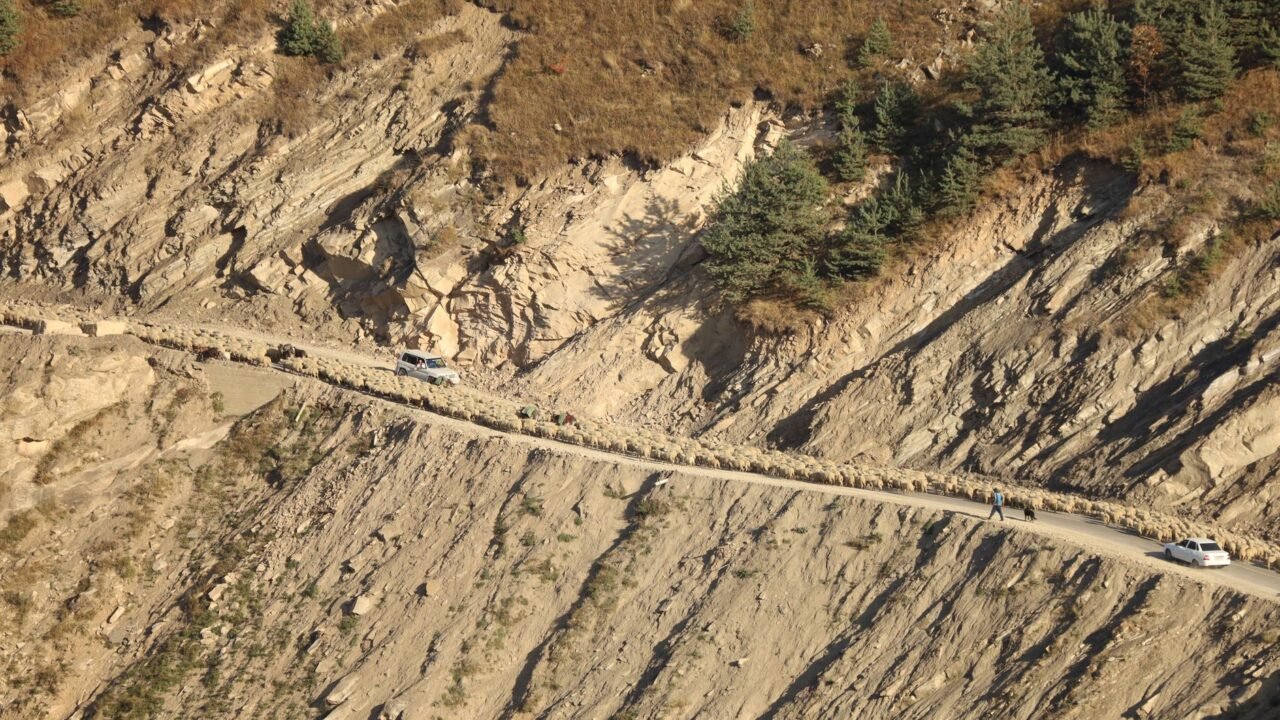
Hundreds of vehicles found themselves stranded on the vital Mughal Road following a significant mudslide triggered by persistent heavy rainfall. The disruption has brought traffic to a standstill on this crucial artery connecting the districts of Rajouri and Poonch in Jammu with the Kashmir valley. Officials confirmed that the mudslide occurred near Pir Ki Gali, inundating a stretch of the road extending over half a kilometre.
The continuous downpour is cited as the direct cause of the landslide, which has effectively severed the link between the Jammu region’s border districts and the Shopian district of Kashmir. As a consequence, a large number of passenger cars and commercial goods carriers are currently held up on both sides of the affected section, awaiting clearance. Information reaching TahirRihat.com suggests that the situation has caused considerable inconvenience to commuters and logistical challenges for transporters.
Emergency response teams, equipped with necessary machinery, have been mobilized and are actively engaged in clearing the debris from the roadway. The primary objective is to restore normal traffic flow as swiftly as possible. However, authorities have issued advisories urging the public to postpone non-essential travel along the Mughal Road until the clearance operations are complete and the weather conditions show marked improvement. The Mughal Road is a strategically important alternative route, providing a vital link for connectivity and trade between the Jammu and Kashmir regions.
The incident underscores the vulnerability of critical infrastructure in the region to adverse weather patterns. Heavy monsoon rains and landslides are recurring challenges in the mountainous terrain of Jammu and Kashmir, often leading to prolonged disruptions. The Mughal Road, in particular, is susceptible to such events due to its geographical location and the nature of the terrain it traverses. The economic implications of such blockades can be substantial, affecting the supply chain of essential goods and the movement of people. The timely intervention of road clearance teams is crucial in mitigating the impact of these natural occurrences.
Officials are closely monitoring the weather situation and the progress of the clearance work. The restoration of traffic on the Mughal Road is a priority, given its importance for regional connectivity. The stranded vehicles represent a significant logistical challenge, and efforts are being made to ensure the safety and well-being of those affected. The long-term implications of such events also highlight the need for robust disaster preparedness and infrastructure resilience measures in the face of increasingly unpredictable weather patterns. The incident serves as a stark reminder of the challenges posed by the region’s topography and climate to its transportation networks.

Tahir Rihat (also known as Tahir Bilal) is an independent journalist, activist, and digital media professional from the Chenab Valley of Jammu and Kashmir, India. He is best known for his work as the Online Editor at The Chenab Times.



Leave a Reply