
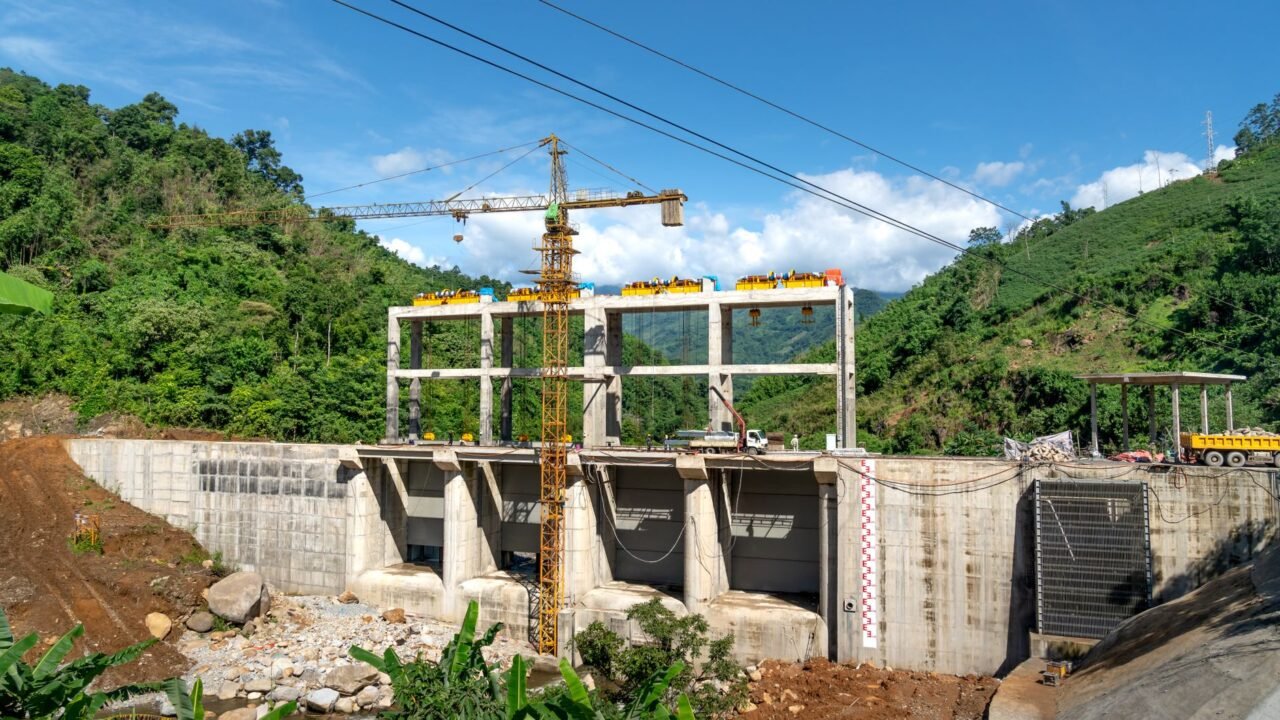
The long-stalled Shahpur Kandi dam project, a significant infrastructure initiative aimed at bolstering irrigation and agricultural output in the border regions of Jammu and Kashmir and Punjab, is now nearing its final stages of completion. Union Minister Jitendra Singh announced on Thursday that the project, which had languished for decades, has been revitalized under the current administration and is on the cusp of transforming the socio-economic landscape of the affected districts.
The Shahpur Kandi project represents a narrative of sustained effort and developmental progress, according to Minister Singh. Its successful conclusion is anticipated to usher in an era of enhanced agricultural productivity and economic growth for the areas situated along the international border. The minister elaborated on the project’s historical context, referencing the Indus Valley Treaty of 1960, which allocated India control over three rivers: the Ravi, Beas, and Sutlej. He highlighted that the Ravi, being the largest of these, held substantial potential for Indian utilization.
Information reaching TahirRihat.com suggests that a national project was conceived in the late 1970s with the specific objective of harnessing the waters of the Ravi River for use within India, thereby preventing its flow into Pakistan. The foundation stone for the Shahpur Kandi project was symbolically laid by the then Prime Minister Indira Gandhi in 1984. However, following her assassination later that year, the project was relegated to a secondary priority and remained largely neglected for numerous years. This inertia was attributed to a perceived lack of commitment from successive governments at the national level and within the erstwhile state of Jammu and Kashmir.
The impetus for reviving the Shahpur Kandi project gained significant momentum after the Bharatiya Janata Party-led government assumed office at the Centre in 2014. The minister detailed that concerted efforts were initiated to breathe new life into the stalled initiative. This revival involved the active participation of the chief secretaries of both Jammu and Kashmir and Punjab, necessitating the preparation of updated project documentation and the resolution of various outstanding issues that had impeded progress for years. Prime Minister Narendra Modi formally declared the revival of the project during a public gathering in Jammu in February 2019, signaling a renewed commitment to its completion.
The successful completion of the Shahpur Kandi project is expected to fulfill a long-standing aspiration of the people residing in the region, promising substantial irrigation benefits. This, in turn, is projected to significantly boost agricultural productivity in the border districts of Jammu and Kashmir and Punjab. The minister emphasized that the project’s impact would extend beyond agricultural enhancements, contributing notably to the overall socio-economic development of the region. The enhanced water availability for irrigation is anticipated to support a wider range of crops, improve yields, and potentially introduce new agricultural practices, thereby creating employment opportunities and improving the livelihoods of farmers and associated communities.
The strategic importance of the Shahpur Kandi project is intrinsically linked to India’s water resource management policies, particularly in the context of the Indus Water Treaty. By ensuring that India’s allocated share of the Ravi River’s water is utilized for domestic purposes, the project aligns with national objectives of self-sufficiency and efficient resource utilization. The transformation of border districts through improved agricultural infrastructure is also seen as a measure to strengthen regional economies and enhance the resilience of communities living in these sensitive areas. The project’s completion is a testament to the government’s focus on completing long-pending infrastructure projects that have the potential for significant developmental impact.
The Minister’s remarks underscore the government’s commitment to addressing the developmental needs of border areas, which have historically faced unique challenges. The Shahpur Kandi dam, when fully operational, will not only irrigate vast tracts of land but also contribute to power generation, further supporting the economic activities in the region. The project’s revival and near-completion serve as a prominent example of how focused political will and administrative coordination can overcome decades-old hurdles in executing critical infrastructure projects. The anticipated agricultural boom is expected to have a multiplier effect, stimulating ancillary industries and improving the overall quality of life for the residents of Jammu and Kashmir and Punjab’s border districts.

Tahir Rihat (also known as Tahir Bilal) is an independent journalist, activist, and digital media professional from the Chenab Valley of Jammu and Kashmir, India. He is best known for his work as the Online Editor at The Chenab Times.




Leave a Reply