
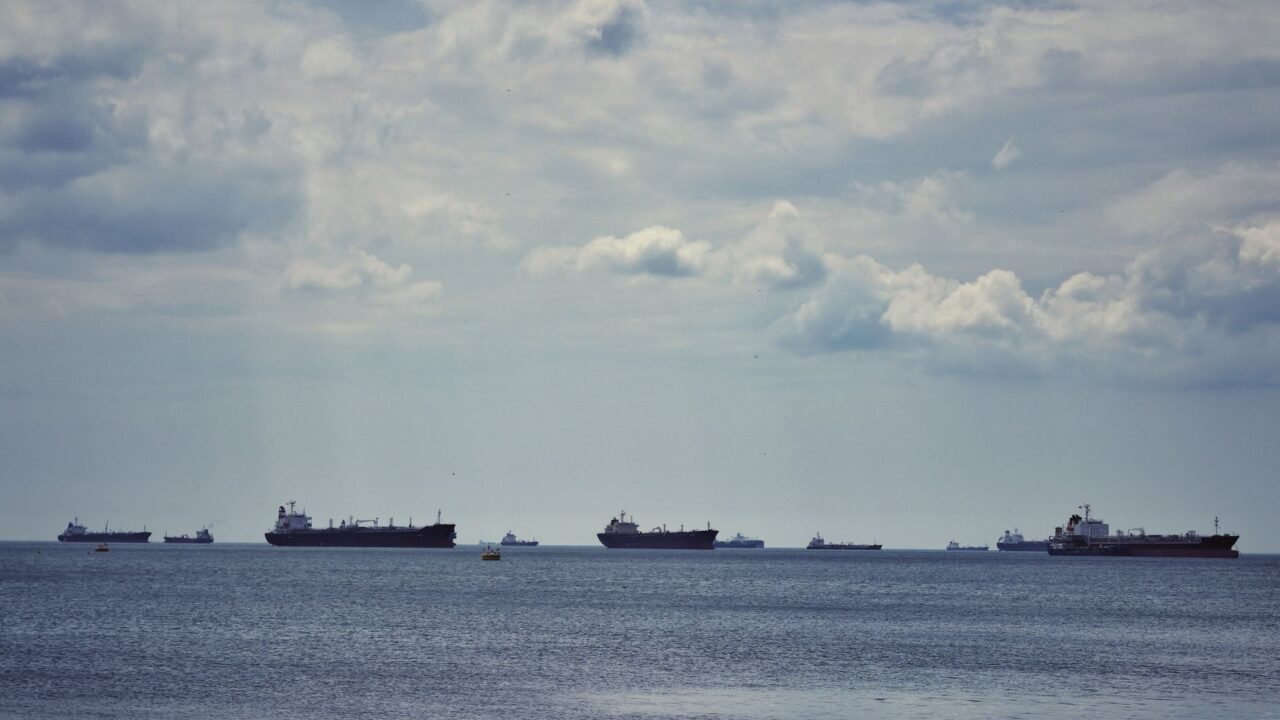
President Trump has indicated a significant potential diplomatic breakthrough concerning the Strait of Hormuz, asserting that an agreement with Iran could render the vital waterway “permanently toll free.” This assertion, made during a call with The New York Times, suggests a dramatic shift in the long-standing tensions that have frequently threatened maritime traffic in the Persian Gulf.
The President’s remarks, as reported by The New York Times, paint a picture of high-level engagement and a personal conviction that a resolution is within reach. While details of any such proposed agreement remain scarce, the implication of a permanently toll-free passage through the Strait of Hormuz signifies a potentially transformative outcome for global trade and energy security. The Strait, a narrow chokepoint through which a significant portion of the world’s oil supply transits, has been a persistent flashpoint, with Iran having previously threatened to disrupt shipping. Information reaching Tahir Rihat suggests that the proposed deal, if realized, would aim to de-escalate these threats and ensure unimpeded passage for all vessels.
Beyond the specifics of the Iran deal, President Trump also offered his assessments of other global leaders. He reportedly praised the leaders of Russia and China, indicating a complex and evolving geopolitical landscape. In contrast, he described Israel‘s prime minister as “a very difficult guy,” hinting at the intricate diplomatic challenges and personal dynamics involved in international relations. These comments, while seemingly tangential, provide a broader context for the President’s foreign policy approach, which appears to involve both assertive negotiation and a willingness to engage with a range of international actors.
The prospect of a permanently toll-free Strait of Hormuz, should it materialize, would represent a significant diplomatic achievement for the Trump administration. For decades, the strategic importance of the Strait has made it a focal point of international concern, particularly regarding the potential for military conflict and its impact on oil prices. Any agreement that guarantees its continued openness would have far-reaching economic implications, potentially stabilizing energy markets and reducing the risk of supply disruptions. The New York Times report did not elaborate on the specific concessions or terms that might be involved in such an agreement with Iran, nor did it detail the timeline for any potential implementation. However, the President’s confident pronouncements suggest that discussions, or at least a framework for discussion, are actively underway.
The geopolitical implications of such an accord would extend beyond the immediate region. A stable Strait of Hormuz is crucial for the global economy, influencing shipping costs, insurance rates, and the overall flow of goods. The potential for Iran to forgo any leverage it might possess over this critical artery of global commerce would be a significant concession, likely requiring substantial reciprocal assurances or benefits. The President’s framing of the waterway as “permanently toll free” implies a long-term, perhaps even indefinite, commitment to open passage, a stark contrast to the periodic tensions that have characterized the region.
The comments about other world leaders, while secondary to the main announcement, offer a glimpse into the President’s personal diplomacy. His praise for the leaders of Russia and China, two nations with whom the United States has had complex and often contentious relationships, suggests a pragmatic, deal-oriented approach. Conversely, his characterization of the Israeli prime minister indicates that even among allies, diplomatic relationships can be fraught with difficulty. These observations, made in the context of discussing a potential major foreign policy achievement, underscore the multifaceted nature of the President’s international engagements.
The announcement, if it leads to a verifiable and lasting agreement, would undoubtedly be a significant development in international affairs. The Strait of Hormuz has been a symbol of regional instability for years, and its transformation into a permanently open and accessible waterway would mark a considerable shift. The world will be watching closely for further details and the concrete steps that would be taken to solidify such an agreement, particularly given the history of complex negotiations and fluctuating relations between the United States and Iran.

Tahir Rihat (also known as Tahir Bilal) is an independent journalist, activist, and digital media professional from the Chenab Valley of Jammu and Kashmir, India. He is best known for his work as the Online Editor at The Chenab Times.



Leave a Reply