
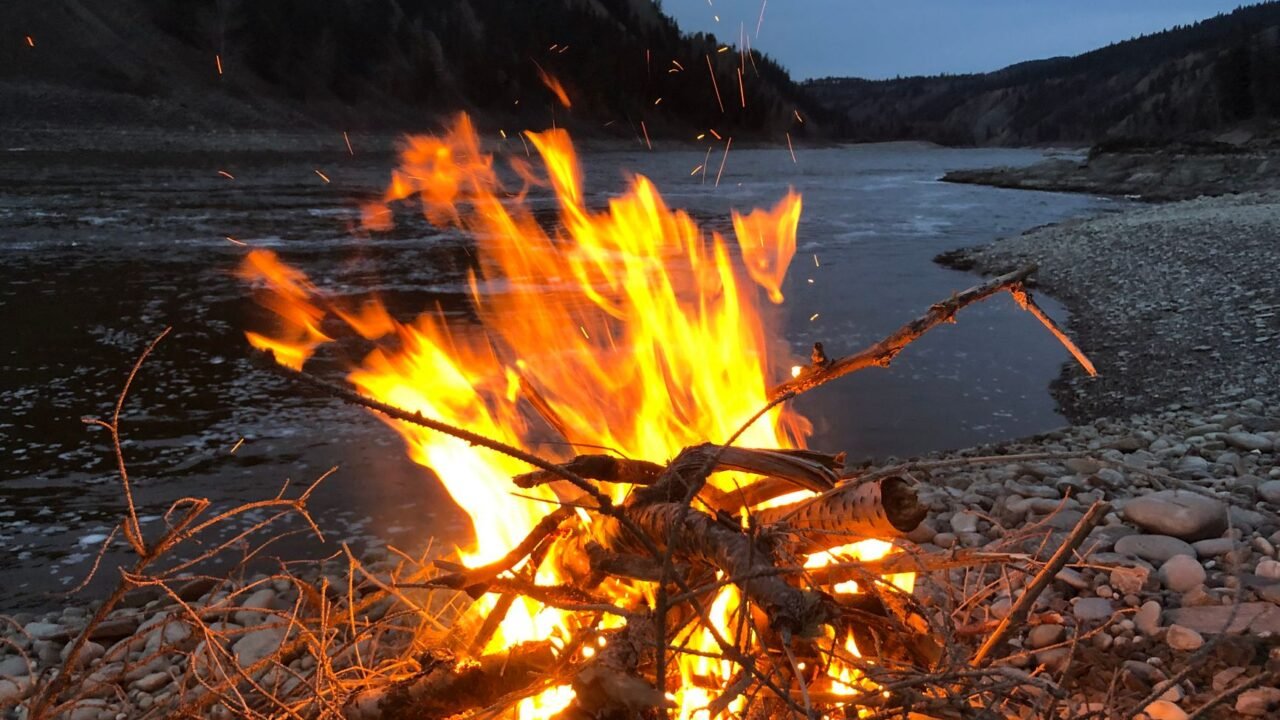
A significant portion of Canada‘s wildfires, estimated at half of the total, are located in remote areas that are virtually impossible to access and subsequently extinguish. This reality forces authorities to adopt a strategy of letting these fires burn themselves out, a stark contrast to the intensive firefighting efforts seen in more accessible regions.
The sheer scale and remoteness of these fires present an insurmountable challenge for conventional firefighting methods. Many of these blazes occur in vast, undeveloped wilderness areas with no road access, making it impractical and often dangerous to deploy ground crews or heavy equipment. Information reaching Tahir Rihat suggests that the logistical hurdles alone are prohibitive, requiring extensive aerial support that may not be feasible or effective for the entirety of a fire’s lifespan.
The decision to let these remote fires burn is not taken lightly. It is a calculated approach based on resource allocation and the assessment of risk. Firefighting resources, including personnel, aircraft, and equipment, are finite. When faced with fires in inaccessible locations, authorities must prioritize areas where intervention can have a meaningful impact and where human life and infrastructure are at risk. The fires that are left to burn are typically those in wilderness areas far from communities and critical infrastructure, where their natural role in the ecosystem is also a consideration.
This phenomenon highlights a critical aspect of wildfire management in a country like Canada, which possesses immense tracts of undeveloped land. The strategy employed for these remote fires is often referred to as ‘managed wildfire’ or ‘defensive suppression,’ where the goal is not necessarily to extinguish the fire completely but to monitor its behavior and mitigate its potential spread towards populated areas or sensitive ecological zones. This approach acknowledges the natural role of fire in many Canadian ecosystems, which can be essential for forest regeneration and health.
The implications of this strategy extend beyond immediate firefighting concerns. The long-term impact of these unmanaged fires on the environment, including carbon emissions and habitat alteration, is a subject of ongoing study and concern. While these fires may be deemed too remote to fight, their cumulative effect on the global climate and local biodiversity is significant. The smoke plumes generated by these large, uncontained fires can also travel vast distances, impacting air quality in communities hundreds or even thousands of miles away, as has been observed in previous fire seasons.
The challenges are compounded by Canada’s vast geography and the increasing frequency and intensity of wildfires, often linked to climate change. Warmer temperatures, drier conditions, and changes in precipitation patterns create a more conducive environment for fires to ignite and spread rapidly. This exacerbates the problem of remote fires, as the window for effective intervention shrinks, and the sheer number of ignitions can overwhelm available resources.
Fire management agencies in Canada continuously assess the risks associated with each wildfire. Factors such as the fire’s proximity to communities, its rate of spread, the type of vegetation it is consuming, and prevailing weather conditions all play a role in determining the response. For fires in remote locations, the assessment often concludes that the cost and risk of attempting suppression outweigh the potential benefits, especially when compared to fires threatening populated areas.
The economic and social costs associated with these fires, even those left to burn, are substantial. While direct firefighting costs may be lower for remote fires, the long-term consequences, including the loss of timber resources, impacts on tourism, and the cost of managing smoke-related health issues, are significant. Furthermore, the psychological impact on communities affected by smoke, even if they are not directly threatened by flames, can be considerable.
Experts in wildfire science emphasize that this approach is a necessary adaptation to the realities of managing fires across a continent with extensive wilderness. It requires a sophisticated understanding of fire behavior, ecological processes, and resource management. The focus shifts from a blanket approach of extinguishing all fires to a more nuanced strategy that prioritizes where and how resources are deployed to achieve the greatest overall benefit in terms of safety and environmental stewardship.
The ongoing debate surrounding wildfire management in Canada often centers on the balance between suppression and allowing natural fire regimes to operate. For remote fires, the balance is heavily tipped towards non-intervention, a decision driven by the practical impossibility of direct action. This situation underscores the need for continued investment in remote sensing technologies, advanced weather forecasting, and research into the long-term ecological impacts of fire to inform future management strategies.

Tahir Rihat (also known as Tahir Bilal) is an independent journalist, activist, and digital media professional from the Chenab Valley of Jammu and Kashmir, India. He is best known for his work as the Online Editor at The Chenab Times.


Leave a Reply