
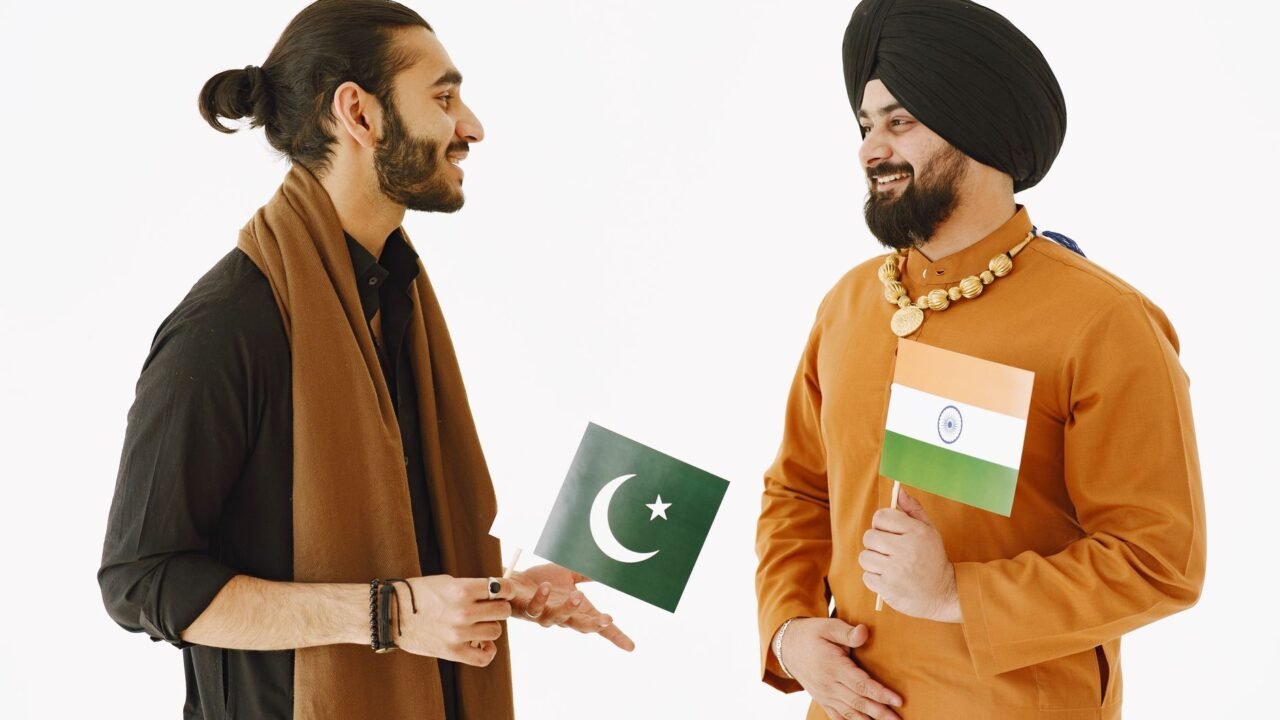
Jammu and Kashmir Chief Minister Omar Abdullah has voiced support for renewed dialogue between India and Pakistan, asserting that efforts to normalize relations between the two neighboring nations should not face opposition. Abdullah highlighted a perceived double standard, noting that while discussions between India and Pakistan are acceptable when initiated by RSS leaders, similar calls from Jammu and Kashmir politicians often elicit strong reactions. He emphasized that there should be no objection to commencing talks between the two countries.
Abdullah’s remarks come in the wake of a joint appeal by 117 prominent figures from both India and Pakistan, who have penned a letter to Prime Minister Narendra Modi and Pakistan Prime Minister Shehbaz Sharif, urging them to resume dialogue and re-establish diplomatic channels. The appeal underscores the shared desire for peace and stability in the region. Information reaching Tahir Rihat suggests that tensions between India and Pakistan had previously escalated following a terror attack in Pahalgam earlier this year, which was followed by a brief military confrontation, underscoring the volatile nature of their relationship.
PDP president Mehbooba Mufti echoed similar sentiments, describing Jammu and Kashmir’s strategic and geographical placement as a factor that leaves it ensnared in the political complexities between India and Pakistan, leading to a progressively grim situation. She stressed that the ramifications of this political impasse extend beyond the people of Jammu and Kashmir, impacting the entire nation. Mufti articulated the PDP’s long-standing agenda of reconciliation, advocating for Jammu and Kashmir to serve as a conduit for peace between the two countries. She pointed out that even senior RSS leaders have endorsed cultural exchanges, recalling former Prime Minister Atal Bihari Vajpayee’s adage that while friends can be changed, neighbors cannot.
Mufti further suggested that the leadership of both India and Pakistan have a significant opportunity to restart dialogue, envisioning Jammu and Kashmir as a gateway to Central and South Asia. She advocated for fostering robust relations not only with Pakistan but also with China. Notably, both Mehbooba Mufti and National Conference president Farooq Abdullah are among the signatories to the joint letter addressed to the prime ministers of India and Pakistan, signaling a unified call for diplomatic engagement from a segment of the region’s political leadership.
However, the appeal for dialogue has drawn sharp criticism from the Bharatiya Janata Party’s (BJP) Jammu and Kashmir unit. Several party leaders have insisted that any meaningful dialogue with Pakistan is contingent upon the cessation of its alleged sponsorship of terrorism. Senior BJP leader and former J&K party president Ravinder Raina, speaking on the matter, stated that if Dr. Farooq Abdullah and Mehbooba Mufti wish to write letters, they should instead address the killings of innocent civilians and the alleged human rights violations occurring in Pakistan-occupied Jammu and Kashmir. Raina further alleged that essential supplies such as rations, water, electricity, and medicines have been disrupted in parts of Pakistan-occupied Jammu and Kashmir for the past two months. He questioned why Dr. Farooq Abdullah and Mehbooba Mufti have not raised concerns about these alleged atrocities committed by the Pakistan Army, the Inter-Services Intelligence (ISI), and the Pakistani government in the region. Raina concluded by emphasizing that the decision regarding dialogue between India and Pakistan rests solely with the Government of India and the Ministry of External Affairs, indicating the BJP’s firm stance on the prerequisite of ending cross-border terrorism before any diplomatic engagement can be considered.
The differing perspectives highlight the deep-seated divisions and the complex geopolitical landscape surrounding India-Pakistan relations, with Jammu and Kashmir often at the epicenter of these discussions. While some political factions in the region advocate for an immediate resumption of dialogue to de-escalate tensions and foster peace, others, particularly the ruling party at the national level, maintain that concrete actions by Pakistan to curb terrorism are paramount before any diplomatic overtures can be entertained. This dichotomy of views underscores the challenges inherent in navigating the path towards lasting peace and stability in South Asia, with the aspirations of the people of Jammu and Kashmir intrinsically linked to the broader bilateral relationship between India and Pakistan. The joint letter serves as a testament to the persistent efforts by civil society and political actors to bridge the divide and encourage a more constructive engagement between the two nuclear-armed neighbors, even as the political establishment grapples with the immediate security concerns and historical grievances that continue to shape their interactions.
The call for dialogue, as articulated by leaders like Omar Abdullah and Mehbooba Mufti, is rooted in the belief that sustained communication is the only viable pathway to resolving long-standing disputes and fostering an environment conducive to economic development and regional cooperation. They argue that isolating Pakistan through a cessation of dialogue would be counterproductive and would only serve to perpetuate the cycle of mistrust and animosity. The reference to cultural exchanges and the historical precedent set by former Prime Minister Vajpayee further emphasizes a desire to explore non-traditional avenues for building bridges and fostering goodwill. The strategic location of Jammu and Kashmir, as pointed out by Mufti, indeed positions it as a crucial nexus for regional connectivity and trade, making its peaceful integration into a stable South Asian order a shared objective.
Conversely, the BJP’s insistence on the pre-eminence of counter-terrorism measures reflects a national security imperative that has long been a cornerstone of India’s foreign policy towards Pakistan. The party’s leadership points to a consistent pattern of alleged state-sponsored terrorism as a major impediment to any genuine progress in bilateral relations. Their focus on the alleged plight of people in Pakistan-occupied Jammu and Kashmir also serves to shift the narrative and highlight what they perceive as Pakistan’s internal governance failures and human rights abuses. This firm stance underscores the view that Pakistan must demonstrate a tangible commitment to dismantling terror infrastructure and ceasing cross-border activities before India can engage in substantive diplomatic talks. The differing approaches, therefore, represent a fundamental divergence in strategy and priorities, making the path forward for India-Pakistan relations a complex and often contentious one, with the people of Jammu and Kashmir bearing the brunt of the ongoing geopolitical stalemate.

Tahir Rihat (also known as Tahir Bilal) is an independent journalist, activist, and digital media professional from the Chenab Valley of Jammu and Kashmir, India. He is best known for his work as the Online Editor at The Chenab Times.


Leave a Reply